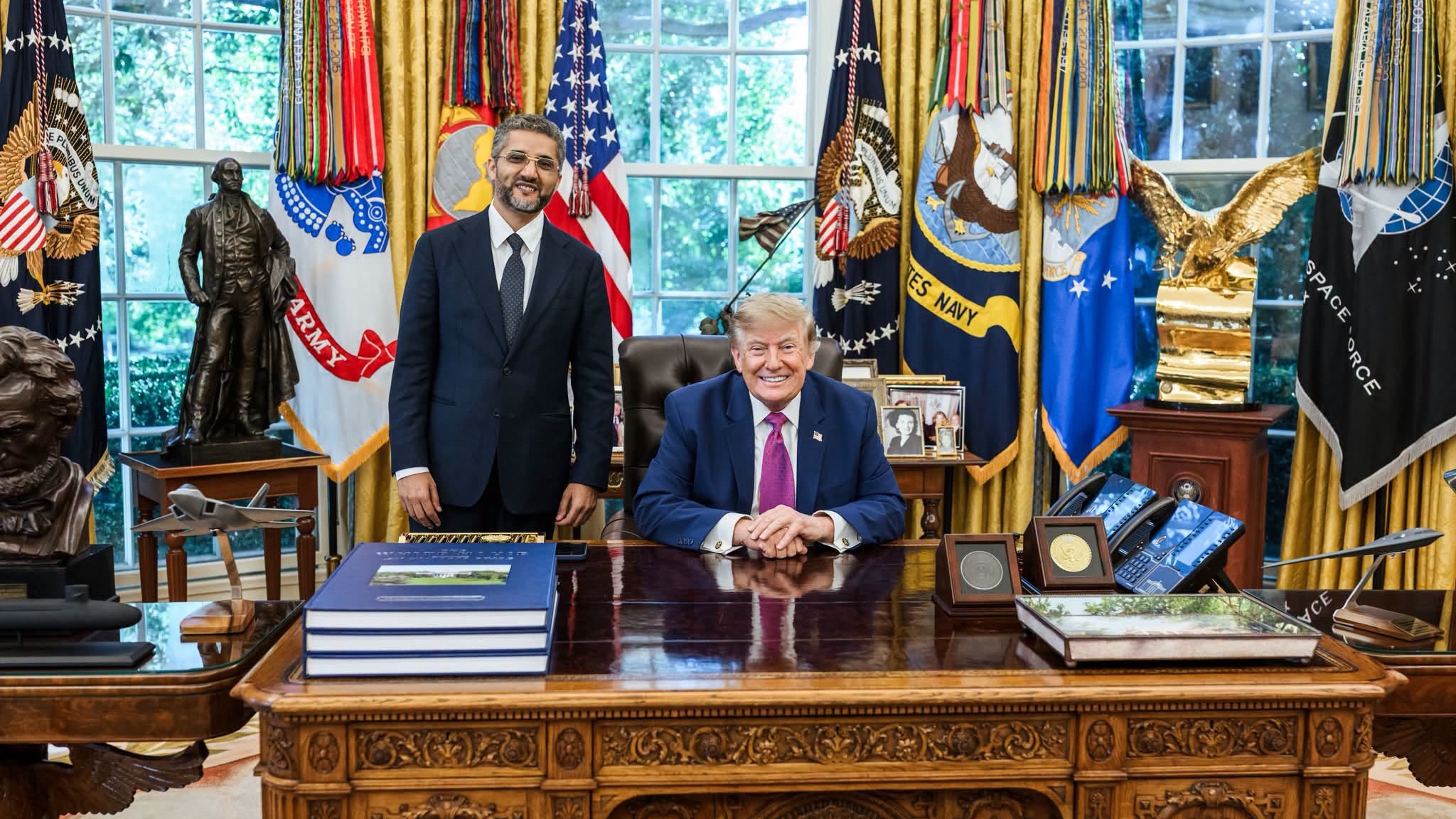
Former Hamtramck, Michigan mayor Amer Ghalib, who made history as the first Arab and Muslim-American elected official to endorse Donald Trump’s 2024 presidential campaign, has now accepted an appointment as Trump’s special envoy and advisor on Arab-American affairs.
Ghalib made the announcement public via his Facebook account late Wednesday local time, from Washington DC. In his social media post, he wrote: “I would like to express my sincere gratitude to President Trump for appointing me as his Envoy and Advisor for Arab American Affairs, and for his continued trust and support.” He added, “While I cannot promise to resolve every challenge facing Arab Americans across the United States, I can promise to be a strong and dedicated voice for Arab American communities in the White House, ensuring that their concerns are heard and their perspectives are represented.”
Currently, Ghalib serves as a senior advisor for strategic partnerships at AmeriCorps, the federal agency focused on expanding civic engagement across the U.S. He stepped into this role after Senate Republicans blocked his earlier nomination, which was a reward for his 2024 endorsement: the position of U.S. Ambassador to Kuwait, a key U.S. ally that hosts multiple American military installations.
Ghalib’s public criticism of Israel and past social media comments from his time as a private citizen became the primary roadblock to his Senate confirmation, with the staunchly pro-Israel Anti-Defamation League and several right-wing news outlets amplifying those comments to turn opposition against him. Middle East Eye reached out to the White House for official comment on Ghalib’s new appointment but received no response prior to publication.
Speaking with MEE from Michigan on Thursday, Ghalib declined to outline formal parameters for the new role, but confirmed it is not a full-time position. He explained that he will “meet the president and White House staff as needed to discuss our concerns,” and emphasized that “the president granted me direct access to him whenever I need and that’s what matters the most.” Ghalib also noted that this specific advisory position “never existed in any previous administration.”
A physician who entered politics in 2021, when he took leadership of the first all-Muslim city council in the Detroit suburb, Yemeni-born Ghalib upended the 2024 presidential race with his early endorsement of Trump. This endorsement came even though Trump’s first presidential term was marked by the controversial Muslim travel ban and unwavering close ties to former Israeli Prime Minister Benjamin Netanyahu, during which Trump unilaterally recognized all of Jerusalem and the Golan Heights as Israeli territory.
By late October 2024, driven by the “Arab Americans for Trump” movement and widespread anger over President Joe Biden’s handling of Israel’s military assault on Gaza, many Arab and Muslim majority neighborhoods in Michigan began shifting their support from the Democratic Party to Trump and the Republicans. During the campaign, Trump ran on a platform promising to end foreign wars and made a point to visit Dearborn, Michigan’s hub for Arab-American communities, while his Democratic opponent Kamala Harris declined to do so.
Since Trump took office for his second term, however, he has only overseen a superficial temporary ceasefire in Gaza and has joined Israel in the widely unpopular conflict against Iran. Domestically, multiple sources told MEE that the political environment for Arab and Muslim communities in the U.S. is now worse than it was in the years immediately following the 9/11 attacks. This comes as congressional and White House Republicans, including President Trump himself, have amplified anti-Palestinian and anti-Muslim rhetoric, even as progressive Muslim political figures such as New York City Mayor Zohran Mamdani and Michigan Democratic Senate candidate Abdul El-Sayed have risen in prominence.
Ghalib told MEE that during his most recent 45-minute one-on-one meeting with President Trump, he opened the discussion by addressing immigration policy, the need to build stronger connections between the White House and Arab-American communities, and the urgency of reining in hate speech from extremist groups. In a follow-up text exchange with MEE, Ghalib said: “I found an opportunity to continue having direct access to the president so I can deliver the people’s concerns to him and try to get them addressed. It’s going to add more work and more stress to me, but I’m willing to go through it – perhaps I can help and continue to be the voice of our community in the White House.”
Middle East Eye provides independent, in-depth coverage and analysis of the Middle East, North Africa and surrounding regions. For information on republishing this content and associated licensing fees, please visit the contact form on their official website.