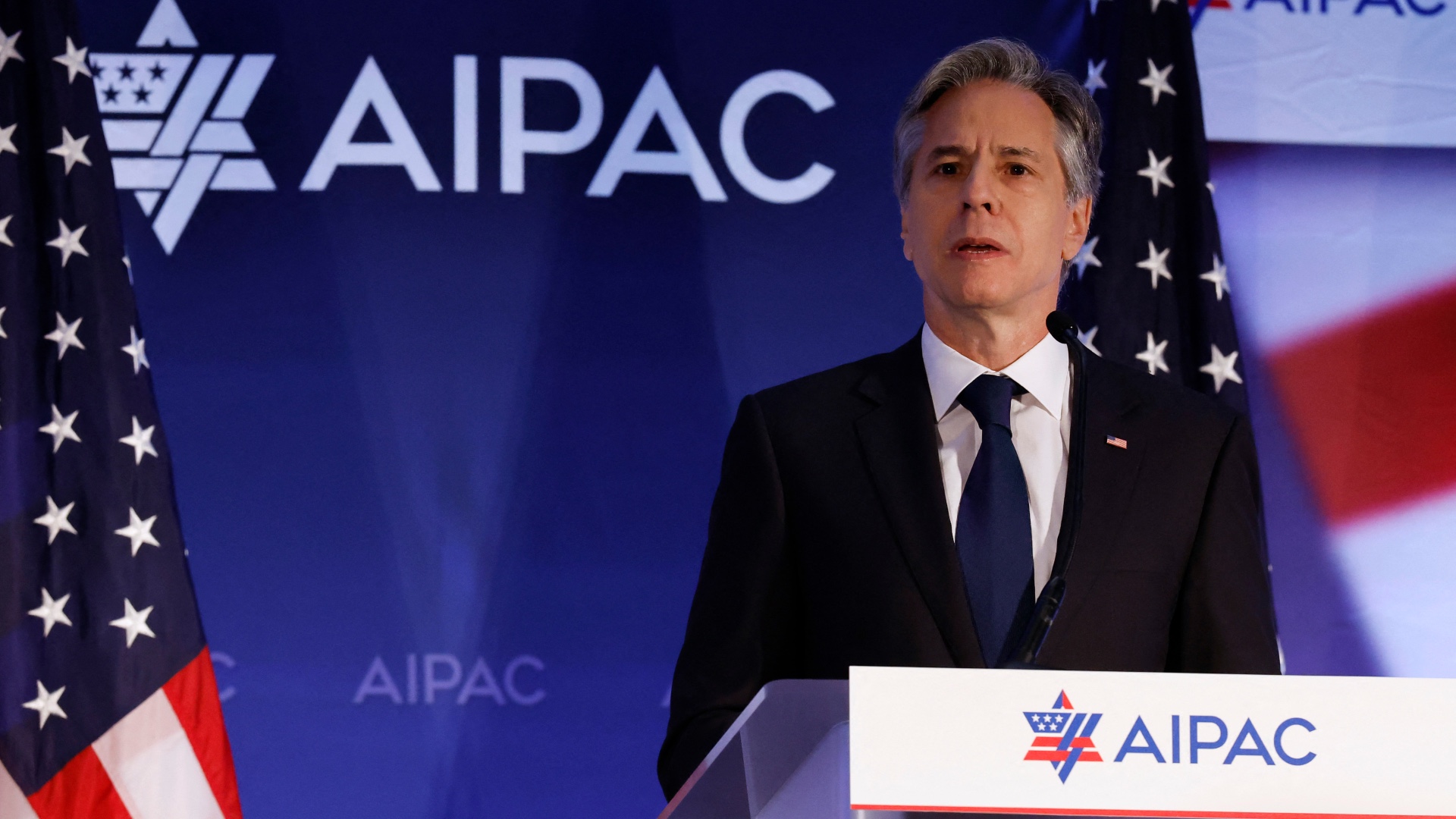
Against a backdrop of rapidly shifting public opinion in the United States toward Israel, the nation’s most influential pro-Israel lobbying entity has announced a major restructuring of its political playbook, ending its longstanding practice of public candidate endorsements and direct financial contributions to electoral hopefuls.
The American Israel Public Affairs Committee (AIPAC) laid out the new approach in a mass email to supporters Wednesday, framing the shift as a strategic adjustment to align with the evolving political landscape. The organization will move toward a less publicly visible operating model to continue backing pro-Israel candidates from both major U.S. political parties.
“To win the fight for the future of the country and the US-Israel alliance, we must build a more strategic, consequential, and nimble political operation,” the organization’s statement read.
Under the revised framework, AIPAC will prioritize expanding direct, coordinated donations from individual American supporters to candidates, while leaning into newly emerging political fundraising tools. Public endorsements, direct contributions from AIPAC’s political action committee (PAC), and earmarked funding will be eliminated from the group’s strategy to make room for scaled individual giving and innovative campaign tools.
As a registered PAC, AIPAC is legally capped at $5,000 in direct contributions per candidate per election cycle. By contrast, independent super PACs face no limits on outside spending, which can heavily sway the outcome of electoral contests.
AIPAC already operates a well-funded super PAC, the United Democracy Project (UDP), which is exclusively focused on advancing pro-Israel policy goals and ranks among the top spenders in U.S. federal elections. UDP has already poured more than $60 million into influencing the 2024 midterm election cycle, and its independent spending will continue uninterrupted under the new strategy, as it does not qualify as direct candidate contribution. In past cycles, AIPAC has also used so-called “shell PACs” to aggregate funds that are later transferred to UDP before the shell entities are dissolved.
“We believe this approach positions us to capitalize on new innovations and deliver even greater political impact to influence policy,” AIPAC’s statement added. “We will focus our time and resources on what is most effective — disciplined, organized giving directly to candidates by individual Americans — and on the ability to adapt quickly in an ever-changing changing environment.”
The strategic overhaul comes three years into the Israel-Hamas war in Gaza, amid rising global backlash against Israel’s military campaign and a growing split in traditional U.S. pro-Israel consensus. Even the American right, long a stalwart backer of Israel through the lens of Evangelical Christian ideology, has increasingly begun questioning the massive flow of U.S. foreign aid to Israel, as the country remains the top recipient of U.S. assistance worldwide.
The shift in opinion comes ahead of the November 3 U.S. midterm elections, where soaring cost of living has emerged as the dominant issue on the campaign trail. After Israeli Prime Minister Benjamin Netanyahu’s years-long push to convince the U.S. to declare war on Iran culminated in a formal U.S. escalation, former President Donald Trump’s base has openly broken ranks on the issue. Some of the most vocal critics of unchecked pro-Israel policy today are pro-Trump Republicans, including high-profile names like former talk show host Tucker Carlson, far-right commentator Nick Fuentes, and former Congresswoman Marjorie Taylor Greene.
Repeated public opinion polling confirms that unfavorable views of Israel have grown steadily across all segments of the U.S. public. Within the Democratic Party, even potential 2028 presidential candidates have begun publicly distancing themselves from AIPAC, even as many retain formal support for Israel.
This growing transparency around AIPAC’s influence has been driven in large part by the work of AIPAC Tracker, a independent project that publishes detailed data on how much funding candidates receive to advance Israeli policy priorities.
Still, Waleed Shahid, a former spokesperson for progressive PAC Justice Democrats, noted on social media platform X Wednesday that the political slogan “reject AIPAC money” will carry far less practical weight moving forward. This is because direct AIPAC contributions amounted to only around $3 million in the current cycle, compared to the $90 million donated by AIPAC’s individual members.
Progressive Palestinian rights advocates, who have seen unprecedented electoral success in recent cycles despite starting as longshot underdogs, have long run without pro-Israel financial support. New York City Councilmember Zohran Mamdani and Michigan Democratic Senate candidate Abdul el-Sayed are two high-profile examples of candidates who have advanced progressive, pro-Palestine platforms without AIPAC backing.
Leading Senate progressive Bernie Sanders amplified opposition to AIPAC in a post on X Thursday, writing: “AIPAC is now spending as much as $9 million against Abdul El-Sayed. AIPAC is why we’re at war in Iran. AIPAC is why the US has supported genocide in Gaza. We must say NO to AIPAC. YES to electing Abdul as Michigan’s next US Senator.”
If el-Sayed secures victory on November 3, he will not only become the first Muslim senator in U.S. history, but his win will also signal that left-leaning popular policies, including diplomatic and economic pressure on Israel, can gain traction in the industrial Midwest and competitive swing state of Michigan.