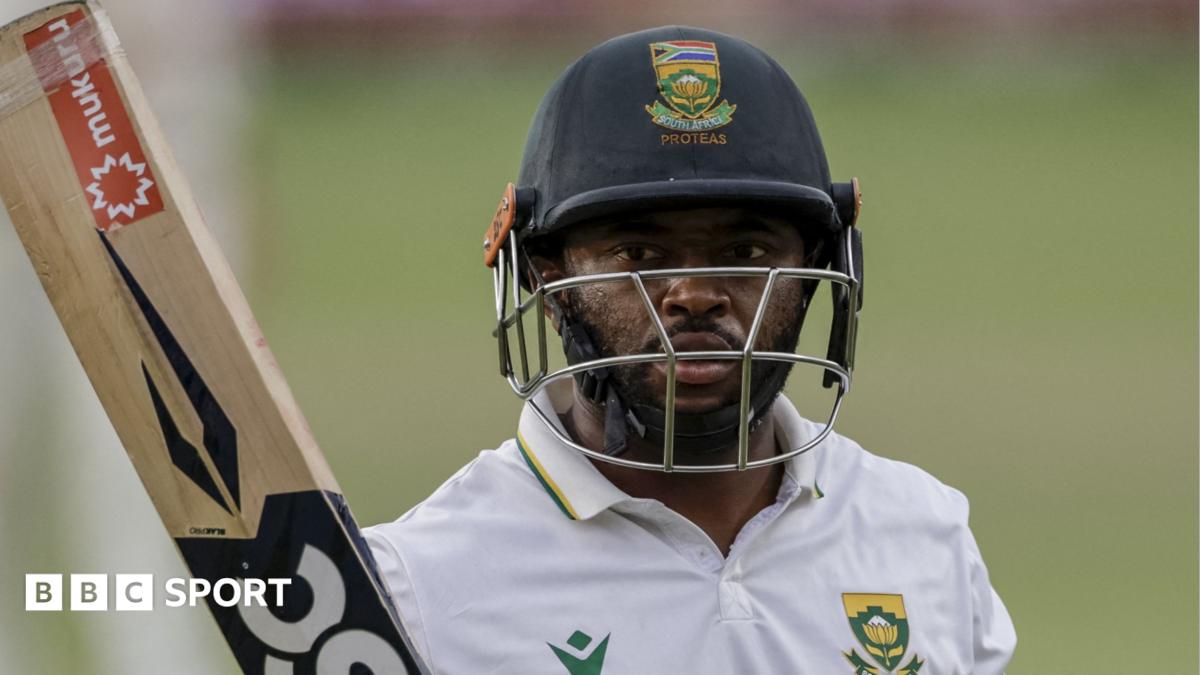
On the third day of the second Test at Gqeberha, South African captain Temba Bavuma produced a career-defining innings that turned the tide of the match against Australia, handing the Proteas a historic advantage heading into the final two days of play.
When South Africa slumped to a fragile 12-2 on day one, and later crashed to 110-6 early on day three, the match looked set to follow the pattern of the first Test, where Australia dominated the Proteas’ batting line-up to claim an opening win. But Bavuma defied the odds, spending a marathon 552 minutes at the crease across three days to score a personal best 179, beating his previous Test high of 172. The knock not only marked his fifth Test century, but also anchored two game-changing partnerships that dragged South Africa into a commanding position: a 132-run stand with Marco Jansen, and an 183-run eighth-wicket partnership with Simon Harmer – the highest of its kind in South African Test history.
This landmark century comes 10 years after Bavuma made history as the first Black African to score a Test century for South Africa, and cements his status as one of the Proteas’ most impactful modern captains. Across his 14 Tests leading the national side, Bavuma has now notched four centuries, boasting a stunning batting average of 54.36 as skipper – a massive jump from his 34.53 average across 93 innings before taking the captaincy. Few international batters have recorded such a dramatic improvement after taking on leadership duties.
After Bavuma was caught behind off Mitchell Starc, South Africa declared their first innings at 425-9 with 30 minutes of play remaining in day three. The Proteas immediately turned the screws: fast bowler Kagiso Rabada dismissed Australian opener Nic Maddinson with just his fourth delivery of Australia’s reply, leaving the tourists reeling at 3-1 at stumps, trailing by a massive 422 runs. Scott Boland was the pick of the Australian bowlers, finishing with five wickets for 81 runs, a fine performance that could not prevent South Africa’s massive first innings total.
Umpires ultimately called off play early due to poor light, cutting short South Africa’s opportunity to bowl more overs in favourable seam-friendly conditions. Speaking after the day’s play, Bavuma acknowledged the hesitation to declare earlier due to uncertain weather, but stressed the team had achieved their key goal of claiming an early wicket. “If we [had declared] a bit early we would have got one or two more overs. Saying that we got the one we wanted,” he said.
Heading into days four and five, South Africa now holds an unlikely outside shot at victory: if they can dismiss Australia cheaply, they can enforce the follow-on to press for a series-leveling win. Even if the result does not go their way, Bavuma noted the lengthy time his batters spent at the crease against Australia’s top-ranked attack will pay dividends ahead of the third Test in Cape Town and the upcoming Christmas tour by England.
“We have given ourselves a chance,” Bavuma said. “There is the other side of the draw but going into Cape Town whatever the confidence we can get here, being able to put their bowlers on their feet for a considerable amount of time, hopefully that can pay off in the long run.”
Many observers have already labelled Bavuma’s innings more impressive than Matthew Renshaw’s match-winning 190 in Australia’s first Test victory, given the Proteas’ early batting collapse and the world-class quality of Australia’s attack, which features three bowlers ranked in the global top 10 for Test bowling. “That bowling attack, at least three are in the top 10 of the bowling rankings,” Bavuma said. “There is a reason why.”