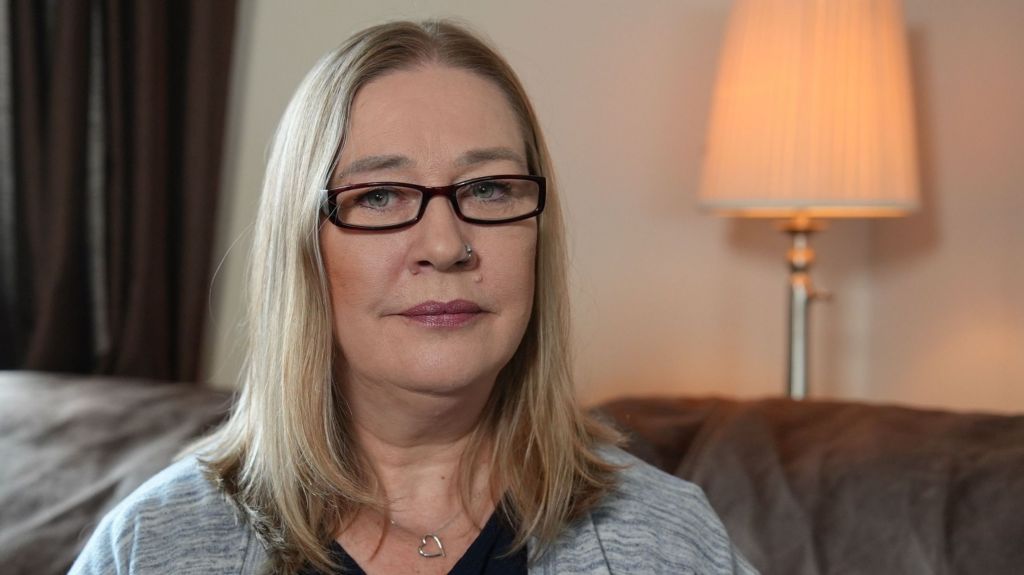
For nine months, a Newcastle-based mother has clung to fragile hope that her 30-year-old son, missing while fighting for Russia in Ukraine, will be found alive, after he was left with what the family describes as an impossible choice: deportation away from his newborn child or enlistment in the Russian military.
Valerie Stobbart’s life fractured overnight in December 2025, when a panicked text arrived from her daughter-in-law Ksenia, who lives in Russia with Nathan Stobbart and their young family. The message revealed Nathan, who had hidden his military service from his UK family for eight months, had vanished on the front lines in Ukraine. No trace of him has been found since.
Before the shocking revelation, Valerie had believed her son was working as an electrical contractor in Russia, building a quiet new life after relocating there on Christmas Day 2024 to be with Ksenia, whom he met online. The couple married, welcomed their first child together, and were also raising Ksenia’s three children from a previous relationship. Relocating the entire family to the UK was financially out of reach, Valerie explains, and the conflict in Ukraine felt distant from their home in Russia, so she eventually supported her son’s decision to move. Regular updates and photos of the new grandchild left her with no reason to suspect anything was amiss.
What Valerie only learned after Nathan went missing is that Russian authorities had forced her son into a devastating ultimatum: sign up for one year of military service, or face deportation for not being granted a residency visa. Under existing Russian policy, foreign men residing in the country have been offered legal status in exchange for military service in the invasion of Ukraine, a requirement that left Nathan with no acceptable options: leave his wife and newborn baby behind to return to the UK, or take up arms against Ukraine. “He was so desperate to stay with his family he would do anything,” Valerie says.
Nathan is not the first British national without dual Russian-UK citizenship to fight for Russia in Ukraine. Prior cases include Ben Stimson and Aiden Minnis, who were granted Russian citizenship for fighting in occupied Donbas, and Bradley Townsend, who became the first British national fighting for Russia to be killed in the conflict in June 2025. But Valerie stresses that Nathan’s situation is fundamentally different: he did not move to Russia to fight, and only enlisted to stay with his family. Valerie also makes clear that she condemns Russia’s full-scale invasion of Ukraine, and does not expect public sympathy for her son’s choice.
Officially, Nathan was declared missing in action by his Russian military unit on 12 December 2025, nine months before the report, with no body recovered. His last communication via military radio came a week before Ksenia sent her urgent message to the UK. The family later discovered Nathan had recorded a private goodbye video for his mother, to be released only if he was killed, a recording Valerie says she has only been able to watch once before turning it off.
Valerie’s relentless search for answers has run into constant roadblocks. She approached UK government officials, Russian authorities, and cross-border charities for help, but has hit dead end after dead end. The UK Foreign, Commonwealth & Development Office confirms it is in contact with the family, but notes its ability to provide consular assistance in this context is severely limited, and it advises against all travel to Russia. When the family reached out to Russian officials for information on Nathan’s last known location, they were told all details are classified, with no further information provided.
The search also cost Valerie her longtime job as an asylum decision maker at the UK Home Office. After she contacted a journalist investigating a Ukrainian prisoner of war camp for information on Nathan, she informed her employer of the outreach. She was immediately suspended, then fired for gross misconduct, on the grounds that speaking to media violated her employment contract. Valerie says she only contacted the reporter to find information on her son and never disclosed her workplace, but lost her appeal against the termination. The Home Office declined to comment on individual personnel cases when approached by the BBC.
With all official avenues exhausted, Valerie now spends every free hour trawling online for any clue of her son’s whereabouts. She follows reports of prisoner exchanges between Russia and Ukraine closely, holding out hope that Nathan is being held captive and will be identified through the DNA the Russian military collected from him, linked to his infant child. Despite facing harsh online criticism from people who condemn Nathan’s decision to fight for Russia, and nine months without any new leads, Valerie refuses to abandon her search.
“Every single day I think my phone could go and somebody somewhere is going to say ‘we’ve found him’,” she says. “I have read reports of Russians that have turned up after a year of being in captivity, or whatever, and their families thought they were dead. So every day there is a new hope he could be found.”