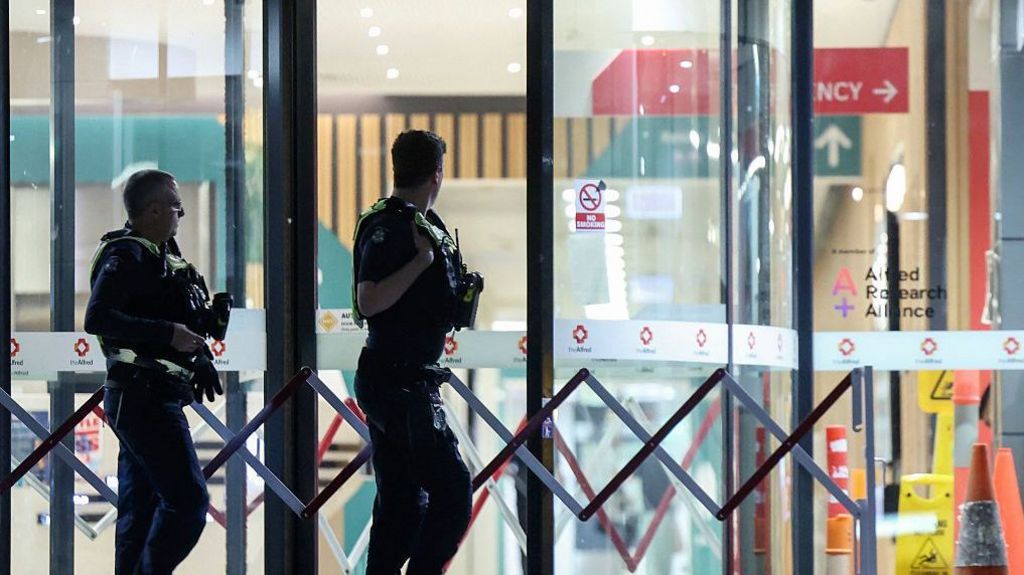
For years, as high-profile assaults on elected officials have grown more common across the globe, Australia has carried a quiet, conflicting anxiety: that such chaos could never take root in its traditionally peaceful political culture, yet that it was only a matter of time before the country faced its own deadly incident. That moment arrived this Monday, when independent Member of Parliament Helen Haines suffered severe injuries after being hit by a vehicle outside her electoral office in Wangaratta, a regional town in the state of Victoria.
Local law enforcement took a 43-year-old male suspect into custody at the scene and seized a knife from his possession, though investigators have not yet publicly confirmed that Haines was targeted intentionally. Prime Minister Anthony Albanese, however, has publicly stated that the incident appears to be a deliberate attack, following a briefing from federal counter-terrorism officers who are assisting local investigators with the probe. Albanese, who was evacuated from his official residence earlier this year over a bomb threat and currently has roughly 20 violent threat cases against him working through Australian courts, spoke emotionally of the pervasive fear that has spread among the nation’s political class in recent years.
Long perceived as a largely peaceful nation with a civil tradition of public discourse, Australia has until recently treated political violence as a rare anomaly. The botched 1966 assassination attempt on Labor Party leader Arthur Calwell has faded into a distant, almost forgotten piece of national history. But for years, elected officials and security experts have sounded the alarm over a steady buildup of threats, fueled by fraying social cohesion, deepening political polarization, and increasingly heated public rhetoric around key policy issues. Monday’s incident, many warn, has turned long-held worst-case fears into reality.
A closer look at recent data paints a stark picture of the growing crisis. In the 12-month period ending in June, Australian authorities recorded 1,067 reports of harassing and threatening behavior targeting high-level elected officials, marking a continued increase from the previous year. That trend extends far beyond threats against the prime minister: in recent years, politicians have received bullets in the mail; female MPs and even their minor children have been targeted with sexual violence threats; a Jewish lawmaker’s office was firebombed; a Sydney mayor’s vehicle was set on fire; and hundreds of other elected officials have had their constituency offices vandalized. Just one week before Haines’ injury, Small Business Minister Anne Aly revealed she had been inundated with death threats after an opposition politician publicly called for her to be “shamed and stoned in the square” over a tax policy dispute.
Josh Roose, a Deakin University professor specializing in violent extremism research, told reporters that Australia has spent far too long ignoring the slow creep of political violence, dismissing warnings with the refrain “it can’t happen here.” He explained that multiple interconnected factors have driven the dramatic escalation of threats since the COVID-19 pandemic, including widespread socioeconomic strain, rising unaddressed mental health needs across communities, bad-faith actors that profit politically and financially from stoking public anger, and a toxic online discourse that normalizes violent rhetoric against public figures. Roose added that the political class itself bears partial responsibility for the shift, noting that long-held unwritten rules against targeting individual politicians and their family members have been abandoned by actors across the entire political spectrum. He also warned that politicians are not the only targets: journalists, academic researchers, judicial officials, and other public figures also face growing risk of violence.
Australia’s top intelligence officials have been sounding the alarm on this growing threat for years. Mike Burgess, director-general of the Australian Security Intelligence Organisation, reiterated the warning in the agency’s 2026 annual threat assessment, comparing rising political violence to climate change: while specific attacks cannot be predicted, broader systemic shifts make politically motivated violence, including potential terrorist attacks, far more likely than in decades past. Federal Police Commissioner Krissy Barrett added earlier this month that ideology is not the only driver of radicalization today. Many attackers are motivated by personal grievance, she explained, feeling disconnected and isolated from their communities and turning to political violence to give their anger purpose.
Many members of Australia’s parliament have grown frustrated with the slow pace of security reform, arguing that existing protection protocols have not kept up with the changing threat landscape. If the attack on Haines is ultimately confirmed to be politically motivated, experts warn, one of the core traditions of Australian democracy could be put at risk. Unlike many other Western nations, Australia has long prided itself on the accessibility of its politicians: it is common for constituents to run into their local member at a grocery store, chat with them at a local football match, and walk into their constituency office at any time to share concerns. Haines, Prime Minister Albanese emphasized, was particularly well-known and respected for her commitment to open, accessible community engagement.
“That accessibility is a core strength of our democracy,” Albanese said Monday night. “I don’t want to see a system where we can’t have open conversations with constituents in the supermarket, on the street, at public meetings and forums. That’s what makes our democracy work for Australians.” The attack on Haines has now forced the nation to confront a growing crisis that many have spent decades ignoring, leaving open questions about how the country will protect its elected leaders while preserving the open political culture it has long cherished.