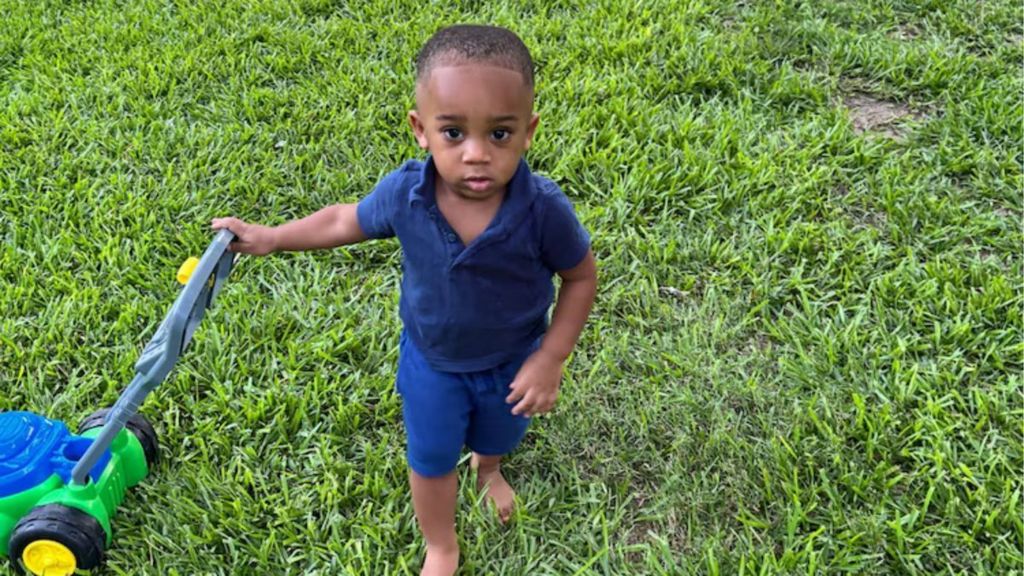
A controversial ruling from Mississippi’s top law enforcement official has reignited anger and demands for accountability after a one-year-old black boy, Kohen Wiley, was killed by police gunfire during a June shoplifting probe in the small town of Senatobia. State Attorney General Lynn Fitch announced Monday that the officer’s use of lethal force in the incident was legally justified, a conclusion that has been met with fierce pushback from the child’s family and their legal team.
The fatal encounter unfolded on June 14, when local police were dispatched to a local Walmart following a report that baby items including diapers and clothing had been shoplifted. When officers arrived at the scene, they encountered two black women — Vellesiya Wiley, Kohen’s mother, and Latoya Ferrell, the vehicle’s driver — with the toddler sitting in Wiley’s lap in the passenger seat. According to official accounts from the Mississippi Bureau of Investigation, officers attempted to halt the vehicle before Ferrell allegedly drove it directly toward an officer, putting the law enforcement official in immediate danger. One officer responded by opening fire, striking Kohen fatally and leaving Ferrell with critical injuries.
Wiley has publicly refuted the theft allegations, disputing the official narrative of the encounter. She says she lifted Kohen up from her lap to clearly show officers he was present in the vehicle moments before gunfire rang out. To date, neither Wiley nor Ferrell have faced any criminal charges connected to the alleged shoplifting or the incident itself.
In her brief public statement confirming the ruling, Fitch confirmed that her office had concluded the officer’s use of force was justified under law. But the decision has done little to resolve tensions in the community, particularly as all investigative footage — including the officer’s body camera recording and Walmart parking lot security footage — remains sealed from the public and the victim’s family.
Benjamin Crump, the high-profile civil rights attorney representing the Wiley family, slammed the ruling Monday, questioning how any impartial conclusion could be accepted without full transparency. “How can anyone accept that conclusion when Kohen’s family and the public still have not been allowed to see the body-camera footage?” Crump said, pushing state officials to release all available footage immediately. “If the footage supports the state’s decision, release it,” he added. “We will not stop fighting until this family gets the truth.”
Legal representation for the officer who fired the fatal shots has defended his actions, maintaining that the use of force was unavoidable. Martin Zummach, the officer’s attorney, told the Associated Press that Ferrell had intentionally attempted to kill his client, leaving the officer with no other option than to use his weapon. “He had no choice but to fire his weapon,” Zummach said.
The shooting, which occurred on Juneteenth — the U.S. federal holiday commemorating the end of chattel slavery in America — immediately sparked widespread protests in Senatobia, with demonstrators raising long-simmering concerns about racial bias in local law enforcement. Kohen and the two women involved are Black, while the officer who opened fire is reported to be white. Just last month, those concerns led to major leadership changes in the city’s police department: Senatobia’s former white police chief was fired after local news outlets uncovered a series of text messages in which he repeatedly used violent anti-Black racial slurs.
The case remains a flashpoint for national conversations about police use of force, racial disparities in law enforcement, and transparency in officer-involved fatal shootings in the United States.