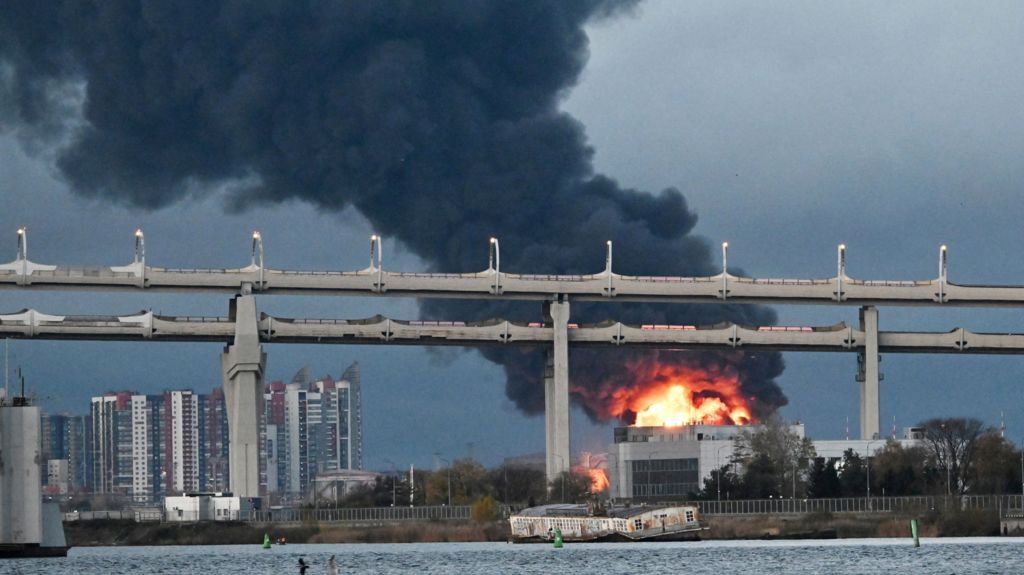
Escalating cross-border hostilities between Russia and Ukraine have spilled into Russia’s second-largest city St Petersburg, where an overnight drone attack left at least one civilian dead and five others injured, targeting critical energy infrastructure and major commercial facilities across the urban area. Regional Governor Alexander Beglov confirmed Saturday that emergency response teams were working to contain large blazes that broke out at two major energy sites: the city’s primary St Petersburg Oil Terminal and the Ruchyi oil depot. Additional targets in the coordinated strike included a logistics hub operated by Ozon – Russia’s leading e-commerce platform, often compared to Amazon – and a regional data center belonging to VKontakte, the country’s dominant domestic social media network that serves as a local alternative to Facebook.
Ukrainian officials have not yet issued an official claim of responsibility for the strikes, which come amid a sharply escalating cycle of energy infrastructure attacks ahead of the winter heating season. The strike also follows a recent breakdown in a temporary truce on energy targets brokered by former U.S. President Donald Trump during ongoing negotiations to secure Russian diesel supplies for the U.S. market.
Over the past week, the intensity of mutual attacks has surged rapidly. Zelensky stated Saturday morning that Russian forces have carried out 76 separate strikes on Ukraine’s energy sector since Trump announced his so-called “energy ceasefire” initiative just seven days prior. Ukraine initially paused its own campaign of strikes on Russian energy infrastructure – which Kyiv frames as a targeted effort to cut off Moscow’s primary source of revenue for its full-scale invasion – for three days following Trump’s announcement. But Ukrainian officials quickly accused Russia of violating the truce by continuing its own attacks on Ukrainian energy sites, prompting Kyiv to resume its strikes earlier this week. That resumption drew sharp public criticism from Trump, who has defended his deal with Russian President Vladimir Putin to import diesel to the U.S.
This is not the first time St Petersburg has come under Ukrainian drone attack: the city’s oil terminal was previously hit in a July strike, though strikes on Russian territory are far more frequent in regions directly bordering Ukraine. Following Saturday’s attack, Beglov confirmed that 12 multi-story apartment buildings and two private residential homes sustained damage in the attack, prompting authorities to temporarily suspend all flight operations at Pulkovo International Airport, the region’s main air hub. The governor also warned residents of potential temporary disruptions to mobile internet service across affected districts.
Both companies whose facilities were targeted confirmed the attack but sought to downplay long-term disruptions. VKontakte confirmed that a drone struck its regional data center, acknowledging early morning service outages reported by users but emphasizing that full functionality had been restored quickly and platforms were operating “as usual.” Ozon also confirmed a drone hit its St Petersburg logistics center, sparking a small fire that was contained by emergency crews. The company stated that all staff were safely evacuated before the fire was extinguished, and no injuries were reported at the site. Ozon added that it has temporarily stopped accepting new seller shipments at the location while structural and operational assessments are completed.
Ukraine’s recent drone campaign has expanded beyond energy infrastructure to target key Russian commercial and digital assets in an effort to disrupt broader economic activity tied to the war effort. Earlier this month, Kyiv launched a series of coordinated cyber and physical strikes against Yandex, Russia’s largest internet search engine and technology conglomerate, causing widespread temporary service disruptions across the country.
The U.S. deal to import Russian diesel has sparked significant political friction between Washington and Kyiv, as relations between the two allies have frayed in recent weeks. The deal, struck ahead of U.S. midterm elections, is designed to lower skyrocketing domestic U.S. energy prices that have surged amid the ongoing Iran war. Zelensky has publicly condemned the agreement, arguing that it amounts to the U.S. directly funding Russia’s war machine. Trump’s accompanying decision to temporarily suspend a broad package of economic sanctions on Russia has also drawn fierce criticism from political opponents, including a number of lawmakers within his own Republican party.
As Russia’s full-scale invasion of Ukraine enters its fifth year, both sides have ramped up attacks on each other’s energy infrastructure as winter approaches. Russian military officials maintain that all of their strikes target facilities tied to Ukraine’s war effort, but a United Nations report released Friday noted that the first two weeks of October marked the deadliest period for Ukrainian civilians in years. Russian strikes on energy infrastructure across Ukraine have already left hundreds of thousands of households without access to electricity, stoking widespread international concerns that Ukrainian civilians will face another deadly freezing winter without reliable heating or power. Speaking Saturday, Zelensky confirmed that tens of thousands of Ukrainians remain without power as of Saturday, adding that Russian forces launched nearly 2,700 drones, 1,700 aerial bombs, and 66 guided missiles against Ukrainian targets over the past week – the vast majority targeting energy infrastructure sites.
Russian defense ministry officials claimed overnight into Sunday that their air defense systems had intercepted and destroyed more than 1,000 Ukrainian drones launched across Russian territory.