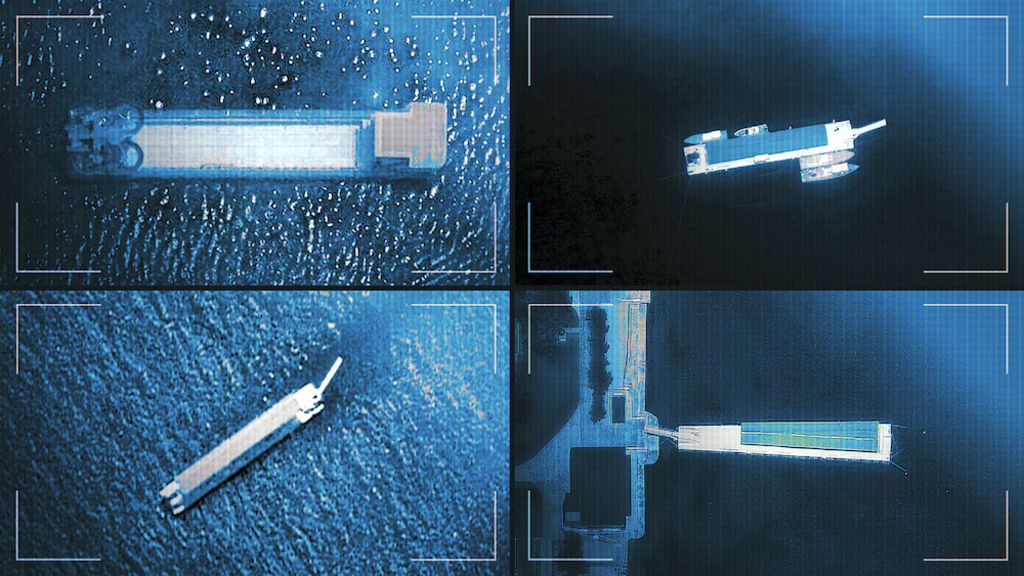
Between July and mid-October 2026, repeated satellite imagery captures a striking 80-meter luxury superyacht anchored off North Korea’s Wonsan coast, its 50-meter on-deck swimming pool and adjacent cluster of waterslides standing out as an unmistakable marker of extreme opulence. After months of docked storage at a maintenance facility, the massive vessel relocated to waters off Kalma Peninsula in early July, just a short distance from Kim Jong Un’s sprawling private seaside villa and family retreat. This superyacht is not alone: analysis of satellite data by the BBC identifies three additional large vessels, measuring 50, 55, and 60 meters respectively, that have also been repeatedly sighted in waters close to the leadership’s Wonsan estate.
Industry and intelligence sources widely agree that these vessels are exclusively owned and used by Kim Jong Un and his inner circle. Former senior North Korean officials, defectors, and regional experts emphasize that no private citizen unconnected to the top ruling regime could possibly possess or operate vessels of this size and cost within the country’s closed system. Ri Jong Ho, a former official with the Workers’ Party’s Office 39 — the department tasked with managing foreign currency reserves for the North Korean leadership — confirmed the seasonal pattern of these vessels: stored at shipyards through the cold winter months, they are deployed to the Wonsan coast and Kalma Peninsula every summer for the leadership’s swimming and leisure activities.
The stark contrast between the leadership’s luxury and the daily reality of most North Koreans could not be clearer. The United Nations classifies North Korea as one of the world’s poorest nations, with a 2025 UN report documenting systematic, widespread human rights violations, total state control over daily life, widespread forced labor, and chronic food insecurity that leaves an estimated 40 percent of the population undernourished. North Korea’s 2024 per capita GDP sits at just $667, a tiny fraction of neighboring South Korea’s $36,227. While comparable luxury superyachts typically cost between tens of millions and more than $100 million, Kim Jong Un already owns a smaller 29-meter Princess yacht previously valued at roughly $7 million.
Wonsan has long held personal and symbolic significance for the Kim family. Biographers and intelligence reports note that Kim Jong Un spent part of his childhood in the area with his mother, and the city has served as a favored elite retreat since the rule of his father, Kim Jong Il. A defector who guarded Kim Jong Il’s residences for 13 years between the 1990s and early 2000s told the BBC that Wonsan’s coastal villas were used as getaways for the ruling elite, recalling dozens of elite children and teenagers waterskiing along the coast every summer.
The newly opened Wonsan Kalma resort, which launched in July 2025, is marketed by North Korean state media as a world-class leisure destination with high-rise hotels, restaurants, retail, sports facilities, and water parks capable of hosting up to 20,000 visitors. State media and Russian outlets have shared images of small groups of Russian tourists visiting the site, which is also open to domestic North Korean travelers. A South Korean report cites an unnamed source noting that four-night domestic tour packages at the resort cost roughly $100 — a sum out of reach for the vast majority of North Koreans.
For most ordinary citizens in the country, leisure travel remains an unattainable luxury. While North Korean law technically grants 14 days of annual leave to workers, office employees, and cooperative farmers, defectors confirm this entitlement is almost never honored. Consecutive days off for travel are extremely rare, with most people limited to short weekend trips or travel during state-designated national holidays rather than personal summer vacations. Even if leave is approved, domestic travel requires official government permission to leave one’s home city or county, making free movement itself a luxury reserved for a tiny elite.
Satellite imagery analysis tracks the movements of all four large yachts in detail over recent months. The 80-meter flagship superyacht has remained anchored off Kalma Peninsula continuously since its July relocation. The 50-meter and 55-meter vessels were repeatedly sighted near the secluded Tae and Sin islands close to Wonsan through the end of August, with four smaller support boats regularly alongside the 50-meter yacht to ferry passengers, fuel, and supplies. Jeong Seong-hak, a satellite imagery expert, explained that small, remote islands like Tae and Sin offer the ruling leadership isolated, private maritime getaways shielded from public view. The 60-meter yacht was still being spotted near Kim Jong Un’s Wonsan villa as recently as mid-October.
Historical satellite analysis confirms that a large vessel matching the 80-meter yacht’s distinctive profile was already present in Wonsan back in 2002, during Kim Jong Il’s rule, indicating the yacht has been part of the leadership’s leisure fleet for decades. Former NBA star Dennis Rodman, who made a high-profile visit to North Korea in 2013, previously recalled spending much of his seven-day trip in Wonsan with Kim Jong Un, where the pair went jet-skiing and horseback riding. Rodman described a 60-meter vessel they used as a hybrid between a ferry and a “Disney boat,” though it remains unconfirmed whether this is the same 60-meter yacht captured in recent satellite imagery.
The gap between the leadership’s leisure lifestyle and the struggles of ordinary North Koreans undermines state propaganda that frames Kim Jong Un as a selfless leader dedicated to prioritizing the needs of the nation. As Ri Jong Ho put it: “Kim Jong Un is supposed to be a ‘leader of the people’, yet he has four luxury vessels like these while ordinary people are struggling just to get one meal a day.” While the location of the yachts cannot definitively confirm the Kim family’s whereabouts at any given time, their seasonal movements align with gaps in Kim Jong Un’s public schedule, shining a rare light on the private luxury enjoyed by North Korea’s ruling circle that is almost always hidden from public view.