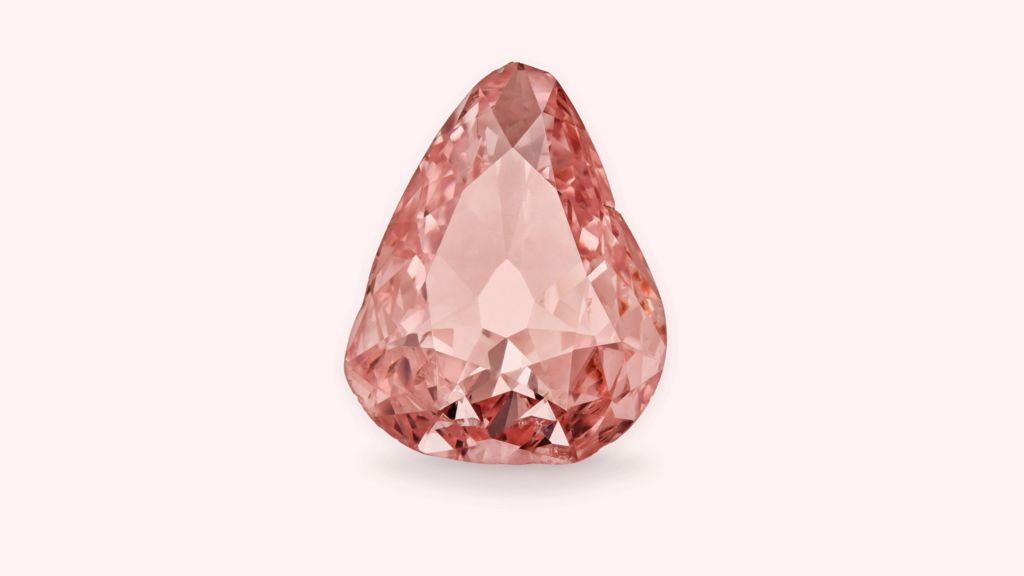
Nearly a century to the day after it was stolen from its permanent home, one of the world’s rarest historically significant pink diamonds is making its long-awaited return to public exhibition in northern France. The 9-carat pear-shaped gem, famously known as the Grand Condé, holds a dramatic, one-of-a-kind history that places it among the most intriguing royal jewels still in existence today.
As one of the handful of royal French gems that managed to survive the chaos and widespread looting of the French Revolution, the diamond’s modern story took an equally sensational turn in October 1926. Thieves carried out an overnight raid on the Château de Chantilly, the historic estate located 31 miles north of Paris, and made off with the priceless stone. In a plot that sounds like it was pulled straight from a heist film, the thieves hid the stolen diamond inside a hollowed-out apple, planning to retrieve it once the search for the gem died down.
Their clever plan fell apart completely when a hungry maid working at the hotel where the thieves were staying bit into the apple just weeks after the robbery, uncovering the hidden gem and leading to the diamond’s swift recovery. For nearly 100 years after that bizarre incident, the Grand Condé has not been shown to the general public — a drought that ends this season with a new special exhibition at the Condé Museum housed within the Château de Chantilly, which will run through January 3.
Mathieu Deldicque, director of the Condé Museum, addressed the widely shared skepticism around the incredible hollowed-out apple story, confirming that the unusual event was extensively documented in contemporary newspaper reports from 1926, proving it is far more than a colorful local myth. Deldicque has also faced questions about the decision to put the one-of-a-kind gem on public display amid a recent wave of high-profile jewelry and art heists targeting major European cultural institutions over the past year, including the brazen daytime robbery of precious jewelry from Paris’s Louvre Museum.
While Deldicque declined to share details of the diamond’s insurance value with CNN, he confirmed that the museum has carried out extensive academic analysis of the diamond’s unique physical properties, creating a complete record that makes the stone fully identifiable, should any theft attempt be made. The exhibition itself will not only showcase the rare diamond: it will also present the full results of this new academic study, alongside never-before-seen archival documents that detail the gem’s long history and its 1926 theft.
Naturally occurring pink diamonds are among the rarest gemstones on Earth, with high-quality examples regularly selling for tens of millions of dollars at auction. According to auction house Sotheby’s, the current world record for a pink diamond sold at auction stands at $71.2 million, set back in 2017.
The full origins of the Grand Condé remain shrouded in mystery to this day. The first surviving written record of the gem appears in a 1740 inventory drawn up after the death of Louis Henri de Bourbon, Prince of Condé, the French nobleman for whom the diamond is named. After passing through the Bourbon family, the diamond entered the collection of Queen Marie-Amélie of Bourbon-Sicily, wife of King Louis Philippe I of France, before being inherited by her son Prince Henri of Orléans, Duke of Aumale. The Duke eventually bequeathed the entire Château de Chantilly estate, along with the Grand Condé and thousands of other artworks and manuscripts that form the Condé Museum collection, to the Institut de France, which still owns the site today.