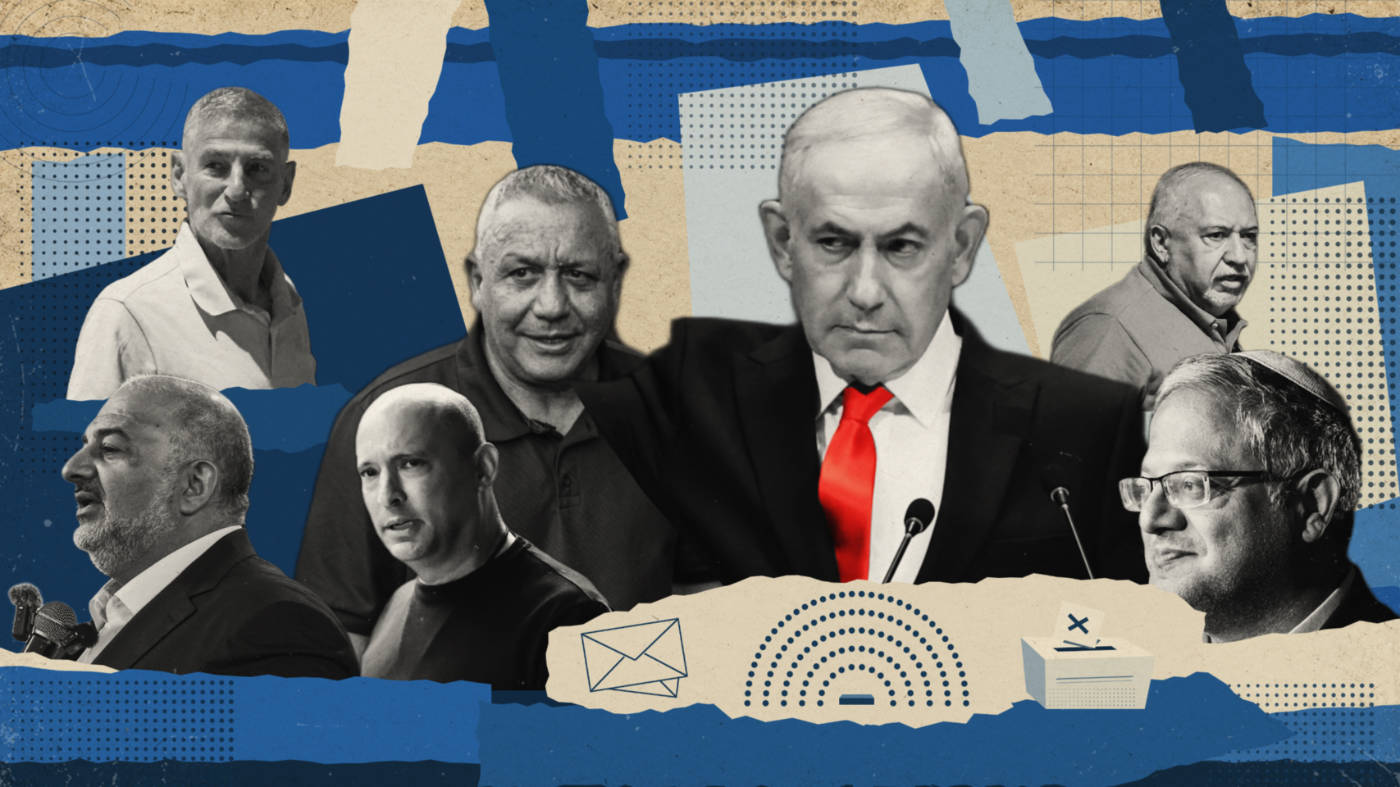
Scheduled for 27 October, Israel’s upcoming national election stands as one of the most consequential votes in the nation’s 78-year history. Marking the first national election since late 2022, and unfolding in the aftermath of the 7 October 2023 Hamas-led attacks, the ongoing Gaza conflict, and the recent Israeli campaign against Iran, the vote is shaping up to be a defining referendum on years of controversial policy and failed security strategy. At its center is long-serving Prime Minister Benjamin Netanyahu, who is seeking a seventh term in office while facing widespread international isolation and fierce domestic backlash over his handling of multiple concurrent conflicts. Beyond the war and security crises, the election is also being fought over deeply divisive domestic issues: ongoing settlement expansion in the occupied West Bank, the decades-long debate over compulsory military conscription for ultra-Orthodox (Haredi) Jewish communities, and the future of judicial independence. Unlike presidential systems, Israel elects 120 members of its Knesset, the unicameral national legislature, through a proportional representation system. Since the state’s founding in 1948, no single party has ever secured the 61-seat majority required to form a government alone, forcing all ruling administrations to emerge from post-election negotiations and multi-party coalition deals. This election cycle is no exception, with pre-election polling consistently pointing to a parliamentary deadlock, meaning small niche and fringe parties will once again hold outsized power to dictate the shape of the next government. One of the most striking inequities of this election is the disenfranchisement of millions of Palestinians. For nearly 60 years, Israel has occupied the West Bank, East Jerusalem, and Gaza; Palestinian residents of these territories hold no Israeli citizenship and are barred from voting, a right that is extended to all Israeli settlers living in the same occupied areas. For Palestinian citizens of Israel – the roughly 2.1 million people descended from Palestinians who remained within Israel’s 1948 borders – the path to political participation has been fraught this cycle. In September, all major Arab-led parties were initially banned from competing over unsubstantiated claims they rejected Israel’s identity as a Jewish and democratic state, a ban that was only overturned by the Supreme Court earlier this month. Historically, Arab voter turnout has lagged well below the national average, driven in part by widespread boycotts of a political system that has systematically marginalized Palestinian citizens. However, pre-election polls indicate a significant jump in turnout this cycle, with the Palestinian-led Joint List projecting a 70% turnout among its base, marking a major shift in political engagement. Below is a breakdown of the key parties and candidates vying for power in this historic election: 1. Likud (Incumbent, 32 current seats) Led by Benjamin Netanyahu, who first won election as prime minister in 1996 and has held the office for 20 of the past 30 years, this election marks the toughest challenge of his decades-long political career. Netanyahu has built his political brand on hawkish, uncompromising stances against Israel’s perceived adversaries, championing aggressive expansion of Israeli settlements in the West Bank and consistently blocking all efforts to establish an independent Palestinian state. His current governing coalition, formed after 2022, is the most right-wing administration in Israeli history, and Netanyahu faces an active arrest warrant from the International Criminal Court (ICC) over allegations of war crimes and crimes against humanity tied to Israel’s military campaign in Gaza. Domestic critics have repeatedly questioned Netanyahu’s decisions in the lead-up to the 7 October 2023 attacks, including his policy of dividing Palestinian factions by playing Hamas against Fatah to weaken the Palestinian Authority, as well as widespread allegations he ignored repeated intelligence warnings of an impending large-scale attack that ultimately killed roughly 1,200 people. Netanyahu has repeatedly refused to allow an official independent commission of inquiry into the attacks. Netanyahu’s broader security agenda has also faced widespread criticism: the Israeli-US military campaign against Iran failed to deliver a decisive victory, and tens of thousands of Israelis in northern Israel remain displaced by ongoing cross-border attacks from Hezbollah in Lebanon. A controversial government push to weaken the independence of the Israeli judiciary, which sparked mass nationwide protests last year, has largely been shelved amid political infighting. Despite these controversies, Netanyahu and Likud retain strong, loyal support among Israel’s hardline right-wing electorate, where he is framed as a no-nonsense defender of Israeli security. He and his party have pledged to fully disarm Hamas and maintain permanent Israeli “security zones” in southern Lebanon, and the administration continues to push forward with the controversial E1 settlement project east of Jerusalem, a plan that would permanently split the West Bank into disconnected segments and draw widespread global condemnation. 2. Yashar (New Party) Leading the anti-Netanyahu opposition bloc, known as the Change Bloc, is former Israeli military chief of staff Gadi Eisenkot, the 66-year-old founder of the newly launched Yashar (meaning “Honest” in Hebrew) party. Eisenkot has served as a Knesset member since 2022, and only held brief ministerial experience during the eight-month emergency unity government formed after 7 October 2023. Of Moroccan Jewish heritage, Eisenkot would be Israel’s first Mizrahi prime minister if elected; raised in the southern coastal city of Eilat, far from the country’s dominant Tel Aviv and Jerusalem political elite, and known for his halting English, he has cultivated a strong image as a political outsider. Eisenkot’s personal story is widely known across Israel: his son Gal and two of his nephews were killed in fighting in Gaza between 2023 and 2024, and Gal’s nationally televised funeral resonated deeply with Israeli audiences. Politically, Eisenkot positions himself as a moderate alternative to Netanyahu, and has been critical of the prime minister’s mismanagement of the Gaza war and the stalled negotiations to release the remaining Israeli hostages held by Hamas. However, human rights campaigners and Palestinian observers have raised deep concerns over his military background: during Israel’s 2006 invasion of Lebanon, he developed the controversial Dahieh Doctrine, which explicitly advocated for the use of “disproportionate force” against civilian areas to deter adversary attacks. On core policy issues, Eisenkot rejects the two-state solution to the Israeli-Palestinian conflict, which he argues is no longer viable after 7 October, and also opposes the formal annexation of the entire West Bank, which he argues would only worsen Israeli security. While he has currently leads in pre-election polling and serves as the de facto leader of the Change Bloc, he will almost certainly need to secure coalition agreements with smaller parties to form a government. Eisenkot has set three core conditions for potential coalition partners: recognition of Israel as a Jewish and democratic state, a commitment to universal mandatory military service for all communities, and a shared commitment to dismantling Hamas. His requirement for universal conscription effectively rules out any alliance with the major Haredi parties, which have long fought to maintain draft exemptions for their communities. While Eisenkot has explicitly ruled out relying on Arab-led parties for a governing majority, his pledge to form a government “even if we don’t have 61 seats” has left open the possibility of some form of informal cooperation with Palestinian factions. 3. Otzma Yehudit (6 current seats) Once shunned as too extreme for mainstream Israeli politics, Otzma Yehudit (or “Jewish Power”), led by Itamar Ben Gvir, has pulled the entire Israeli political spectrum sharply to the right over the past four years as a key coalition partner for Netanyahu. In September, the party narrowly avoided an attempt by the Central Election Committee to bar it from competing in the election, and pre-election polls predict the faction will gain seats in the new Knesset. Otzma Yehudit draws its core support from hardline Israeli settlers in the West Bank, and openly advocates for the full annexation of the territory; Ben Gvir, 50, is a resident of the Kiryat Arba settlement outside Hebron. Relations between Ben Gvir and Netanyahu have been strained for decades, and Ben Gvir claimed recently that the prime minister intends to form a government without his party. A Knesset member since 2021, Ben Gvir became national security minister in 2022 after his party won an unexpected seven seats, despite prior criminal convictions for incitement to racism and support for terrorist groups. He has been sanctioned by multiple European governments, including the UK and France, for his open support of Israel’s military campaign in Gaza. He has repeatedly led provocative incursions into Jerusalem’s al-Aqsa Mosque compound, where he claims exclusive Jewish sovereignty, and has publicly taunted detained Palestinian and international activists. The party openly advocates for the “voluntary emigration” of all Palestinians from Gaza, and its political rallies regularly feature chants of “death to Arabs”. While in government, Otzma Yehudit has pushed for harsh judicial overhauls and legislation to introduce the death penalty for Palestinians, and junior ministers from the party have publicly discussed the option of nuclear strikes against Gaza. Like other hardline factions, Otzma Yehudit supports universal military conscription, putting it at odds with the major Haredi parties. 4. Religious Zionist Party (7 current seats) Once a marginal far-right fringe faction, the Religious Zionist Party (RZP) rose to power as a key partner in Netanyahu’s ruling coalition after the 2022 election. RZP ran on a joint electoral list with Otzma Yehudit in 2022, but the two factions have split to compete separately this cycle, despite repeated pleas from Netanyahu for the far-right to re-unite. The party is led by 46-year-old Finance Minister Bezalel Smotrich, the son of an Orthodox rabbi, who draws support from a more religiously observant base than Ben Gvir. Smotrich has said that Jewish religious law (halacha) forms the foundation of his policy agenda, and has served as finance minister since 2022. Smotrich openly supports a full judicial overhaul to weaken the judiciary, the full abolition of the 1993 Oslo Accords, the dismantlement of the Palestinian Authority, and the expansion of Israeli settlements into all of Gaza and the West Bank. He has publicly described himself as a “proud homophobe”. Like Netanyahu, Smotrich is the subject of an active ICC arrest warrant on charges of war crimes and crimes against humanity against Palestinians in the West Bank. While RZP formally supports universal conscription for Haredi communities, the party has repeatedly backed Haredi legislative priorities while part of Netanyahu’s coalition, including voting for laws that halt arrests of Haredi draft dodgers. 5. B’Yachad (24 current seats) Former prime ministers Naftali Bennett, who held office from 2021 to 2022, and Yair Lapid, who served as prime minister for the second half of 2022, announced a joint electoral ticket in April of this year, branding the new alliance B’Yachad, or “Together”. If the alliance wins enough seats to form government, Bennett will serve as prime minister. The pair, who first joined forces to unseat Netanyahu in 2021, have maintained an on-again off-again political partnership for more than a decade. Bennett, 54, is a right-wing former software millionaire who previously served as head of the Yesha Council, the leading umbrella group for West Bank settlers, and is a longtime opponent of Palestinian statehood. He served as Netanyahu’s chief of staff from 2006 to 2008, before the pair had a high-profile falling out. Lapid, 62, a former television host and author, founded the centrist secular party Yesh Atid in 2012. Like most mainstream centrist and right-wing Israeli politicians, Lapid opposes Palestinian statehood and supports the settlement movement in principle, while distancing himself from the extremism of Ben Gvir and Smotrich. In announcing the alliance, Lapid described Bennett as “a clear right-winger, but he is a liberal, decent, law-abiding right-winger, who did not sell his values – neither to Haredi extortion nor to corruption.” Both Bennett and Lapid oppose the Haredi military draft exemption, and have pledged to establish an independent commission of inquiry into the failures leading up to the 7 October 2023 attacks. 6. The Democrats (4 current seats) Formed in 2024 from a merger of the center-left Labor Party and the smaller left-wing Meretz faction, The Democrats brand themselves as a “liberal-democratic Zionist party”, and are led by 64-year-old Yair Golan, one of the few major Israeli politicians to publicly criticize the mass killing of Palestinians in Gaza, which he once described as a “national psychosis”. Golan, a former deputy chief of staff of the Israeli military who re-enlisted on 7 October 2023 and is credited with saving multiple Israeli civilians during the initial attacks, faced massive domestic backlash for his comments, and later clarified that he blamed the sitting government, not the Israeli military, for the humanitarian crisis in Gaza. The party led mass public protests against the government’s 2023 judicial overhaul, opposes the annexation of the West Bank, and openly supports the two-state solution. It includes Arab candidate Soumaya Bashir on its list, and is the only major Jewish-led party that has openly committed to including Arab-led parties in a governing coalition. 7. Yisrael Beiteinu (6 current seats) Led by its 68-year-old founder Avigdor Lieberman, an immigrant from the former Soviet Union, the right-wing Yisrael Beiteinu draws its core support from Israel’s 1.5 million strong community of Russian-speaking immigrants. The party has never finished higher than third in national elections, but has served as a coalition partner in seven of the past 10 Israeli governments. Yisrael Beiteinu supports universal conscription, expanded West Bank settlements, and aggressively hawkish policies toward Iran, Hamas, and Hezbollah. Lieberman has held nearly every senior cabinet position, including deputy prime minister, and has faced repeated investigations over alleged corruption and plots to assassinate political opponents; he was convicted of physically assaulting a 12-year-old boy in 2001. Known for his brash, confrontational political style, Lieberman was once a close ally of Netanyahu, but their relationship has deteriorated sharply, and Yisrael Beiteinu is currently not part of Netanyahu’s ruling coalition. Lieberman claims he warned both Netanyahu and Eisenkot of an impending Hamas attack in the months leading up to 7 October 2023. 8. Joint List (5 current seats) Three of Israel’s four major Arab-led parties – Hadash, Ta’al, and Balad – are running together on a unified Joint List, led by Hadash leader Yousef Jabareen, 54. Like other Arab parties, the Joint List was initially banned from competing by the Central Electoral Committee in September, before the Supreme Court overturned the ban earlier this month. Balad leader Sami Abu Shehadeh was forced to drop out of the race after the court signaled it would uphold a personal ban against him over an article he wrote that was deemed to celebrate the 7 October attacks. All three parties in the alliance are secular, and advocate for expanded civil and political rights for Palestinian citizens of Israel, particularly around issues of crime and policing. The Joint List unanimously condemns Israeli policy in Gaza and settlement expansion in the West Bank, and supports the establishment of an independent Palestinian state. Jabareen has made the bloc’s priority clear in public statements: “Removing the threat called the Netanyahu-Ben Gvir-Smotrich government is our central goal, and we will act in every possible way to send this criminal government home.” Despite past internal ideological splits that have broken previous unified lists, the bloc is hoping to gain enough seats to become a decisive powerbroker in the next Knesset. However, no Arab-led party has ever been invited to join a governing coalition in Israeli history, and nearly all major Jewish-led parties have publicly ruled out working with the Joint List. 9. Ra’am (5 current seats) Ra’am, the United Arab List, is led by Mansour Abbas, a 52-year-old Palestinian citizen of Israel. It is the only Arab-led party to have ever served in an Israeli governing coalition, as part of the short-lived 2021-2022 Bennett-Lapid unity government. Like the Joint List, Ra’am was initially banned from the election in September, before the Supreme Court overturned the ban. Rooted in political Islam, Ra’am is socially conservative, and criticizes Israeli policy in Gaza and illegal settlement expansion in the West Bank, but takes a more moderate stance on engagement with the Israeli state than the Joint List, making it more acceptable to many Jewish Israeli politicians. Abbas has stated that his core priority for any potential coalition partnership is advancing the civil rights of Palestinian citizens of Israel, rather than focusing primarily on the situation of Palestinians in the occupied territories. For the first time in the party’s history, Ra’am has included a Jewish candidate on its electoral list: former police chief and ex-Yesh Atid lawmaker Yoav Segalovitz. 10. Shas and United Torah Judaism (11 and 7 current seats, respectively) Two major parties draw their core support from Israel’s Haredi (ultra-Orthodox) community, which makes up roughly 14% of Israel’s population, and both prioritize embedding religious authority into Israeli political life. Shas, the larger of the two, draws most of its support from Sephardic and Mizrahi Haredi communities, and has served in seven of the past 10 Israeli governments, including the current ruling coalition. In recent years, the party has shifted sharply to the right, aligning itself closely with Ben Gvir and the far-right. It is led in the Knesset by 67-year-old Rabbi Aryeh Deri, who has held 10 different cabinet positions since the 1980s, and served two years in prison for bribery convictions in the early 2000s. Shas’s core policy priority is protecting Haredi exemptions from military conscription and securing generous state funding for Haredi religious institutions and welfare programs; more than half of working-age Haredi men do not enter the workforce, instead prioritizing full-time Torah study. In exchange for policy concessions, Shas has consistently backed Netanyahu on key issues including the Gaza campaign and West Bank settlement expansion. In 2025, Shas ministers resigned from Netanyahu’s cabinet over the prime minister’s plan to end Haredi draft exemptions, though the party continued to back Netanyahu on other key votes. The second major Haredi party, United Torah Judaism (UTJ), draws most of its support from Ashkenazi Haredi communities, and is a union of two separate factions, the Hasidic Agudat Yisrael and the Lithuanian Degel HaTorah. Like Shas, UTJ
Israel’s 2026 election: Who are the main leaders and where do they stand on the key issues?