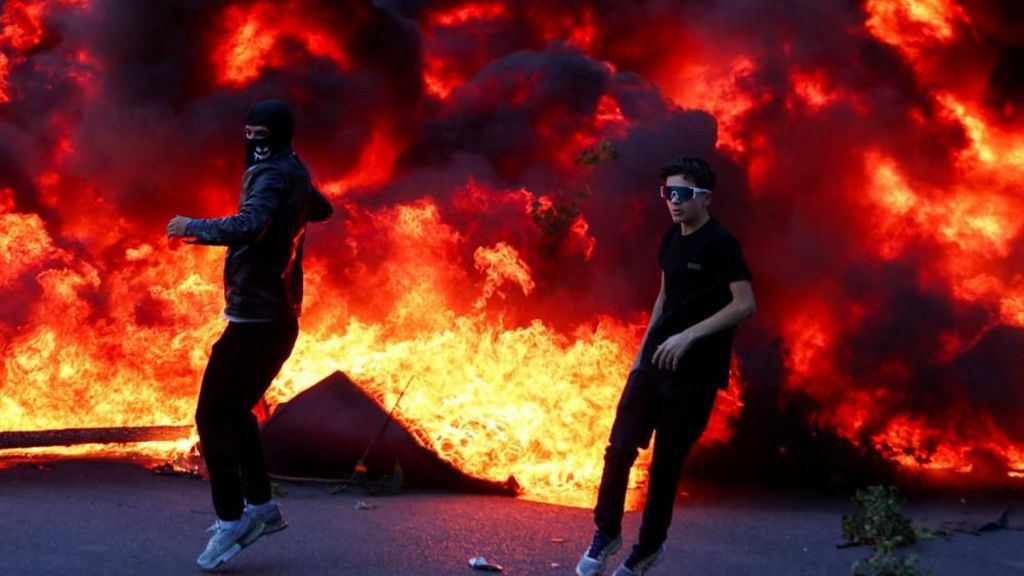
TIRANA, ALBANIA — Tens of thousands of student demonstrators have descended on the streets of Albania’s capital for a second consecutive day, turning a movement rooted in demands for educational reform into a widespread outburst of anti-government unrest that has left multiple government buildings damaged and dozens in custody. What began as a focused demonstration outside Albania’s Ministry of Education on Tuesday, with students calling for improved campus infrastructure, updated academic resources, and greater employment opportunities for graduates, escalated dramatically by Wednesday, when acts of vandalism and arson targeted multiple state facilities. Eyewitness reports and visual footage from the scene show that a section of the Ministry of Education building was set ablaze by protesters, while nearby structures including the Prime Minister’s official office, the Ministry of Finance, the Ministry of the Interior, and several adjacent private businesses were also targeted with projectiles and vandalism. Groups of protesters wearing gas masks and balaclavas were observed throwing rocks and firecrackers over the gated perimeter of the education ministry, clashing directly with lines of riot police deployed to contain the unrest. Law enforcement responded to the violence with tear gas and water cannons to disperse the crowds, marking one of the most intense confrontations between demonstrators and state security in recent Albanian history. The current wave of unrest is not an isolated incident, but rather the escalation of months of anti-government organizing under the banner of the so-called Flamingo Revolution, a movement that has demanded the resignation of Prime Minister Edi Rama over widespread allegations of systemic corruption and lack of governmental transparency. The movement gained initial momentum back in May, when a high-profile luxury tourism development linked to Jared Kushner, son-in-law of former U.S. President Donald Trump, sparked public fury over allegations that the Rama administration had cut opaque, insider deals to advance the project. Speaking to reporters on the ground, multiple protesters emphasized that their grievances extended far beyond poor university conditions. Enida Bimi, one demonstrator interviewed by Reuters, explained that the protest has grown into a broader movement for all Albanian citizens frustrated by systemic failure. “The people are very angry at the system. They need to change everything. With this corruption all around, the crime and everything else is happening. And the people now are angry. They need to change the system,” Bimi stated. Another protester, Arber Leshi, echoed that sentiment, saying that demonstrators believe the current administration is the most corrupt in Albania’s modern history. Albanian Deputy Prime Minister Albana Koçiu has publicly called for de-escalation, urging protesters to exercise calm and self-control in a statement released Wednesday. “Albania does not need to burn to change,” Koçiu said, emphasizing that peaceful dialogue is the only appropriate path to political reform. Senior government officials have also condemned the violent actions of a subset of demonstrators, noting that damage to public institutions puts civilian lives at risk. Economy Minister Delina Ibrahimaj pushed back against claims that the unrest constituted peaceful protest, saying, “Setting fire to an institution is not a peaceful protest. It is an act that endangers people’s lives.” As of Wednesday afternoon, Albania’s state-run news agency confirmed that 16 people have been arrested in connection with violent acts that occurred during Tuesday’s initial demonstration, with more arrests expected as law enforcement reviews footage from the clashes.