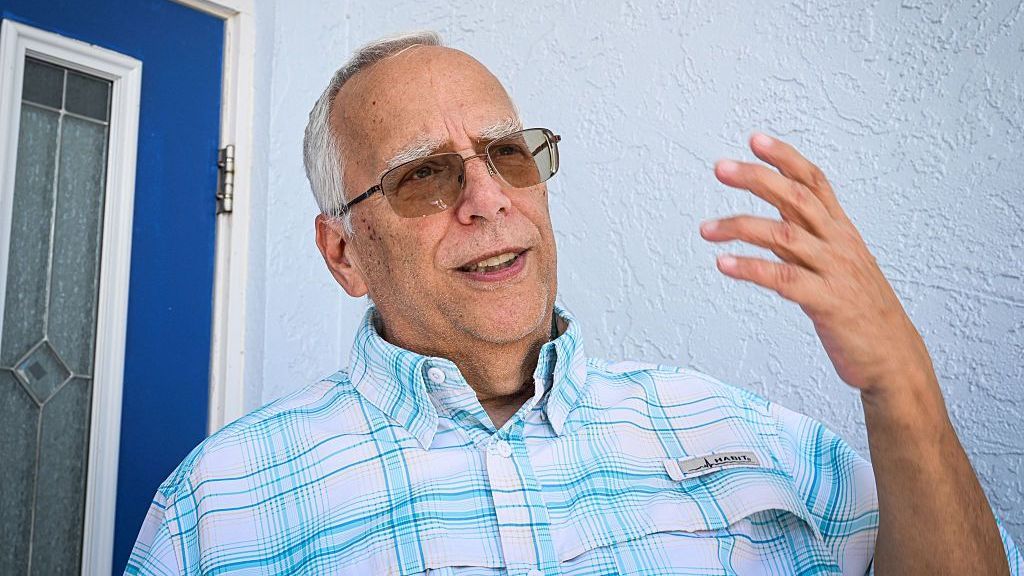
In a startling revelation that has drawn global attention to the health of one of the world’s most prominent religious families, Louis Prevost, the eldest brother of Pope Leo XIV — the first American-born head of the Roman Catholic Church — has confirmed he is currently undergoing active treatment for a form of blood cancer, just hours after the Pope completed what the Vatican has called a completely successful lung cancer surgery.
Deborah Prevost, Louis Prevost’s wife, spoke publicly about her husband’s condition in an interview with CBS News, the U.S. partner of the BBC, on Tuesday. She shared that Louis has been diagnosed with multiple myeloma, a blood cancer that impacts bone marrow and often affects kidney function. According to the UK’s National Health Service (NHS), while multiple myeloma remains incurable at this time, the Multiple Myeloma Research Foundation notes that patient survival rates have improved dramatically over the last 10 years, thanks to advances in new treatment modalities.
Louis Prevost later confirmed the diagnosis in a separate interview with U.S. news outlet Newsmax, adding that he is currently receiving CAR-T cell therapy as part of a clinical trial at a Florida hospital, where the couple resides. CAR-T therapy is an innovative immunotherapy treatment that works by reprogramming a patient’s own immune cells to identify and eliminate cancerous blood cells. The 71-year-old pontiff’s brother-in-law also shared that Louis was first diagnosed with cancer back in 2017, completed a round of treatment in 2019, and saw his cancer go into remission before relapsing three months ago.
The news of Louis Prevost’s ongoing cancer battle broke on the exact same day that 71-year-old Pope Leo underwent a scheduled 90-minute lung cancer surgery at Rome’s Gemelli Hospital. Following the procedure, the Vatican released an official medical bulletin confirming that surgeons removed the lower lobe of the Pope’s right lung after identifying a lung nodule during a routine pre-operative check-up. Post-surgery testing confirmed the growth was lung adenocarcinoma, the most common form of lung cancer, which develops in mucus-producing cells typically located in the outer regions of the lung.
Vatican officials emphasized that the surgery went entirely according to plan with no reported complications. “The operation was successful and there were no complications,” the Vatican statement read. “After the operation, the Pope awoke normally and returned after a brief period of observation to his room.” On Wednesday morning, the Vatican updated the public on the pontiff’s recovery, noting he had enjoyed a “peaceful night” and is expected to remain hospitalized for approximately one week of monitored recovery.
Speaking to reporters, Deborah Prevost acknowledged that the entire family is navigating an extraordinarily challenging period, but emphasized that they are remaining optimistic for both Louis and the Pope. “We’re going through a lot right now, but we’re keeping our spirits up for both of them,” she said, adding that the brothers spoke by phone last week shortly before Louis was set to check into the hospital for his most recent treatment. “He called to let us know what would be happening,” she said, referencing Pope Leo’s plan to undergo surgery shortly after the call. The Pope had publicly announced his upcoming surgery on Sunday, after the lung nodule was detected during a routine medical examination.
Louis Prevost shared that he was caught off guard by the news of his brother’s cancer diagnosis, but has received positive updates on the pontiff’s post-surgery condition. “I got a message from his right hand that he was out of surgery, awake, feeling good, and was in no pain,” he told Newsmax’s Finnerty programme. “So, we were all in high hopes and high spirits hoping for the best.” Deborah Prevost echoed that sentiment, reaffirming the family’s reliance on faith during this difficult stretch: “We keep praying, keeping spirits up for both of them.”
Medical experts note that long-term outcomes for lung adenocarcinoma depend on a range of factors, most notably the stage at which the cancer is detected and the patient’s overall pre-existing health. Early detection is consistently linked to far better prognoses, and treatment options for all forms of lung cancer have improved substantially over the past 20 years, with many early-stage cases achieving long-term remission after surgical intervention.