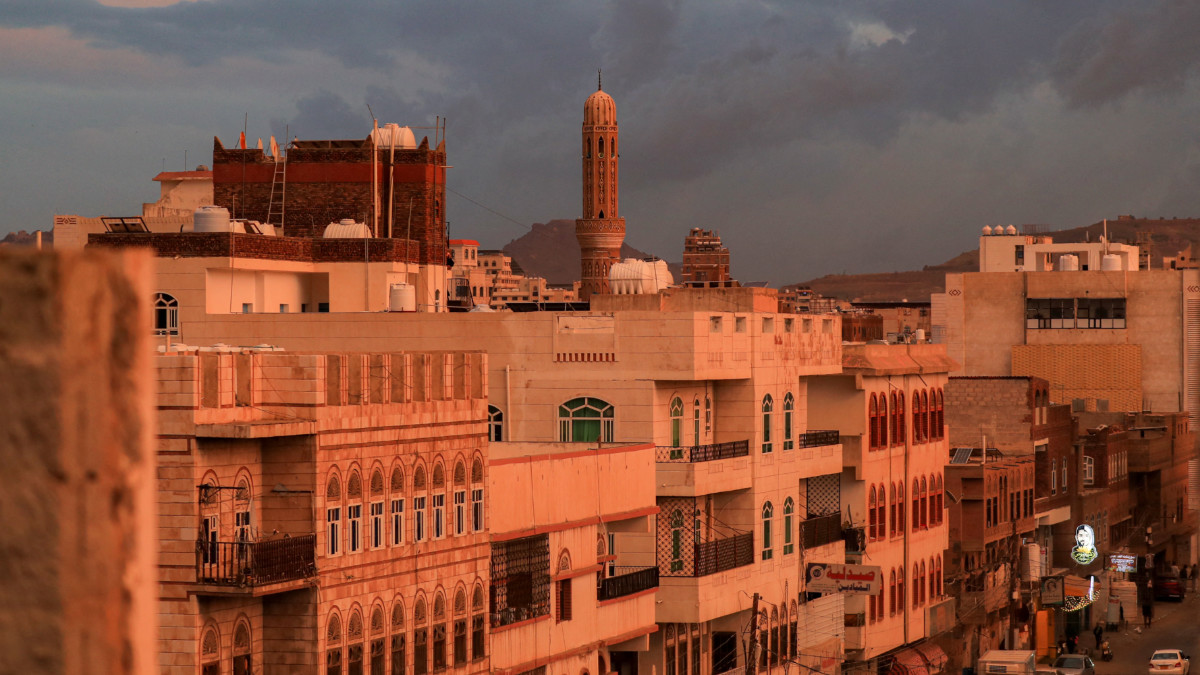
On a Tuesday night local time, a sharp new escalation of the long-running Yemen conflict sent shockwaves across two nations, as reciprocal strikes targeting critical energy infrastructure rocked cities from Yemen’s capital Sanaa to major Saudi urban and energy centers. The cycle of violence began when the Saudi-led coalition, which has been engaged in armed conflict against Houthi forces in Yemen since 2015, issued an official warning for civilians to leave the al-Sabaha central fuel station in Sanaa — a Houthi-held capital — before launching aerial strikes on the site, marking an intensification of the steadily worsening confrontation between the two sides.
Multiple witness accounts collected by The Associated Press confirmed several powerful explosions rocked Sanaa following the strike on the key fuel facility, with local footage circulating online showing a large plume of dark smoke rising from the targeted area. While Middle East Eye noted it could not immediately independently verify the authenticity of the footage, the strike aligns with the coalition’s new targeting of critical infrastructure in the Yemeni capital. This evacuation warning for a Sanaa site is the first the coalition has issued since the conflict reignited in July, and comes on the heels of a series of recent Houthi attacks on Saudi aviation and energy sites.
The Houthi movement, which had publicly threatened harsh retaliation for any strikes on Sanaa hours before the coalition operation, made good on its promise within hours. Houthi military spokesperson Yahya Saree had explicitly warned that “Any targets in the capital Sanaa will be met with a harsh and painful response in the Saudi enemy’s capital, Riyadh” earlier in the day, and the group carried out a coordinated missile and drone attack across multiple Saudi cities that same night.
Witnesses and local media reported loud explosions in Saudi Arabia’s capital Riyadh, as well as the eastern cities of Dammam and Dhahran — the latter home to global energy giant Saudi Aramco, the kingdom’s state-owned oil company. The Houthi movement had pre-emptively warned all civilian staff and people living near Aramco facilities and offices to evacuate hours before the attack, publicly designating the energy sites as “legitimate military targets” and confirming plans to strike targets across Riyadh. The Saudi-led coalition reported that its air defense systems successfully intercepted at least three ballistic missiles and two attack drones over Riyadh, but damage and blast impacts were still reported across the kingdom’s eastern energy hub.
In addition to the cross-border strikes on Saudi Arabia, the Houthi administration reported that two civilians were killed in a separate coalition strike on an oil facility in Yemen’s Red Sea coastal province of Hodeidah, a critical port for the country’s food and fuel imports.
The rapid sequence of back-to-back strikes targeting energy infrastructure on both sides has raised urgent international concerns that the conflict is entering a far more dangerous new phase, with direct implications for global energy markets. Analysts warn that sustained attacks on critical oil production and distribution facilities could push already volatile global energy prices sharply higher, with cascading impacts on the global economy.
The escalation also drew immediate comment from then-U.S. President Donald Trump, who linked the Houthi attacks to the upcoming November 3 U.S. midterm elections. Speaking on Tuesday, Trump claimed the Houthi movement was intentionally acting to drive up global energy prices to influence the election outcome, saying “The Houthis are behaving very badly” and adding “I’ll be there after the elections, and I will never forget!”