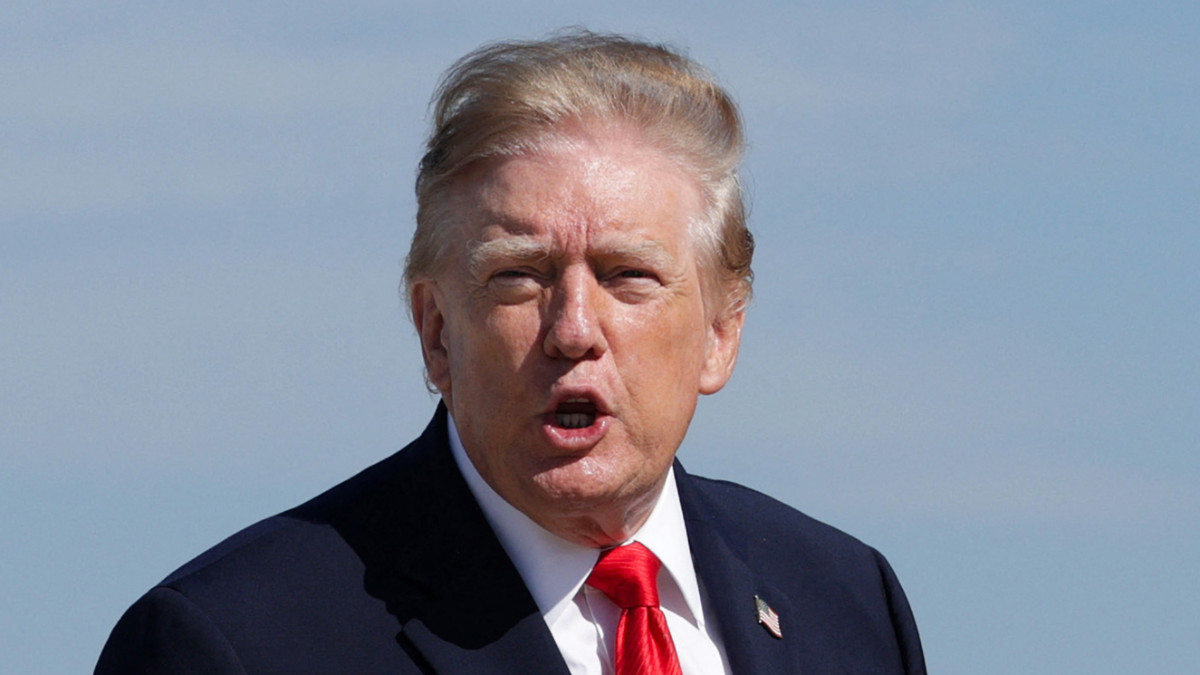
In an unexpected remark delivered during an Ohio campaign rally on Monday, former U.S. President Donald Trump announced that he recognizes the self-declared independence of Somaliland, framing the breakaway region as an entirely separate sovereign state – even as he demanded its name be changed. “I call it Somalia Land, not Somaliland, because actually it’s a totally different country. Some people like Somaliland that has nothing to do,” Trump told the crowd. “I said, you got to be kidding. I think they should change the name immediately.”
It remains unclear whether Trump’s off-the-cuff statement signals an official shift in United States policy toward the region, a move that would upend decades of diplomatic precedent. Currently, Somaliland’s independence is recognized by only one United Nations member state: Israel. Despite the ambiguity surrounding the comment, Somaliland’s government quickly embraced Trump’s remarks as a significant diplomatic win. On Tuesday, the administration shared a clip of Trump’s statement on the social platform X, releasing a statement arguing that the former president’s comments “underscore Somaliland’s distinct identity and its separate political reality.” The release added that “The Republic of Somaliland remains steadfast in its pursuit of international recognition through principled diplomacy and constructive international engagement.”
Trump’s announcement comes against a backdrop of rapidly escalating geopolitical friction across the Horn of Africa. Senior analysts and diplomatic sources familiar with the region tell Middle East Eye that neighboring Eritrea and Ethiopia are now on the brink of a full-scale armed conflict. Just last week, Reuters reported that Egypt has deployed additional troops and military hardware to the internationally recognized Federal Republic of Somalia, further deepening military posturing in the already volatile region.
Somaliland’s push for U.S. recognition is not new. Last month, Somaliland President Abdirahman Mohamed Abdullahi traveled to Washington for a high-stakes diplomatic mission designed to secure formal U.S. backing for independence. According to U.S. and Israeli media reports, the trip was widely viewed as unsuccessful. During a public “fireside chat” hosted by the Washington-based Hudson Institute, Abdullahi was recorded fumbling through remarks, appearing unable to answer basic questions about how Somaliland’s sovereignty would align with U.S. strategic interests in the region.
To understand the current context, it is necessary to look back at Somaliland’s modern history. Both Somaliland and neighboring Somalia gained independence from European colonial rule in 1960 – Somaliland from Britain, and Somalia from Italy – just five days apart. The two newly independent states quickly united to form the Somali Republic, but relations between the regions remained fraught from the beginning. Tensions boiled over in the late 1980s, when then-Somali dictator Mohamed Siad Barre launched a brutal military crackdown on the Somaliland region. After a decade of armed conflict, Somaliland declared full independence from the rest of Somalia in 1991, allowing it to escape the full-scale civil war and prolonged instability that has plagued southern Somalia ever since.
In recent years, Somaliland has emerged as a key player in great power competition in the Red Sea and Gulf of Aden. Its 850-kilometer coastline along the Gulf of Aden, directly across from war-torn Yemen where Saudi Arabia leads a military coalition against Houthi rebels, makes it strategically critical for global maritime security and great power influence. In December 2025, Israel became the first UN member state to formally recognize Somaliland’s independence, and Israeli officials have been exploring plans to establish a military base at the strategic port of Berbera, where the United Arab Emirates already maintains a permanent military presence.