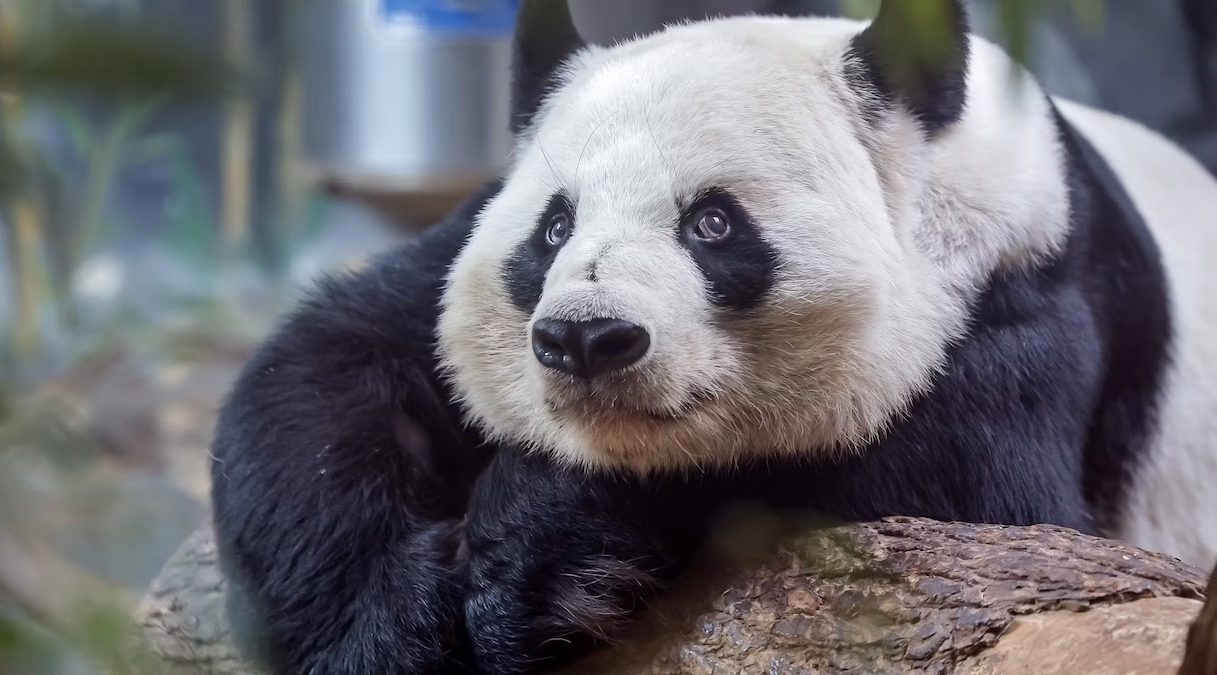
A week after the summit between U.S. President Donald Trump and Chinese President Xi Jinping in Washington, two giant pandas arrived at their new home in Atlanta Zoo. While the meeting yielded no immediate breakthroughs on divisive issues including trade disputes, the Taiwan question, and artificial intelligence governance, it delivered a popular, cuddly gesture for the American public: a 10-year loan of two young pandas, Ping Ping and Fu Shuang. Both bears were born in 2020 at China’s Chengdu Research Base of Giant Panda Breeding, a flagship facility that sits at the center of China’s decades-long giant panda conservation work.
China designates the giant panda as a national treasure and retains legal ownership of every panda it lends to international institutions. The dispatch of a pair of pandas to a foreign country is widely read as a signal of goodwill from Beijing: the charismatic animals draw massive crowds to zoos, and their arrival marks that China values the bilateral relationship. When diplomatic relations cool, panda loans frequently go unrenewed, and the animals are repatriated to China. This long-running practice is known globally as panda diplomacy.
The origins of panda diplomacy stretch back centuries. Some historians trace the practice to China’s Tang Dynasty, where records indicate Empress Wu Zetian sent a pair of bears widely believed to be pandas to Japan between 624 and 725 CE. More formally documented history begins in 1941, when the Nationalist government of Chiang Kai-shek sent a pair of pandas to New York’s Bronx Zoo as a gesture of gratitude for U.S. military aid during World War II.
It was Mao Zedong who transformed this occasional gesture into a formal diplomatic tool. In 1957, Mao’s government sent a panda, also named Ping Ping, to the Soviet Union, and by 1982, China had gifted a total of 23 pandas to nine countries around the world. The most famous pair, Ling-Ling and Hsing-Hsing, were sent to Washington D.C. to commemorate Richard Nixon’s historic 1972 visit to Beijing. On their first day at the Smithsonian’s National Zoo, they drew more than 20,000 visitors, and an estimated 1.1 million guests came to see them in their first year.
Following Deng Xiaoping’s economic reform and opening up, China shifted from outright gifts to a rental model in 1984, turning short-term panda visits into lucrative commercial arrangements. During the 1984 Los Angeles Olympics, the Los Angeles Zoo paid $100,000 per month to host a pair of pandas for the duration of the Games.
Not all of these early commercial arrangements received public support. Leading conservation groups including the New York Zoological Society criticized short-term panda visits as purely profit-driven ventures. In 1988, when Toledo Zoo hosted a pair of pandas for 100 days, the event sparked widespread public protests, and a court ruled the zoo could not charge visitors an additional admission fee to see the pandas. In 1993, the U.S. Fish and Wildlife Service paused the issuance of new import permits for pandas. When permits resumed in 1998, new regulations required that a significant portion of rental fees go toward in-situ conservation of wild pandas in China.
This framework created the modern panda loan system: long-term 10-year “research” loans that can cost up to $1 million per year, with any cub born to loaned pandas remaining the property of China. While the terms of the loans have evolved, the arrangement still aligns closely with Beijing’s diplomatic and economic priorities. Researchers at the University of Oxford found that new panda loans approved after 2008 frequently coincided with the signing of new bilateral trade agreements. For example, Malaysia received pandas Xing Xing and Liang Liang in 2014 to mark the 40th anniversary of diplomatic relations between the two countries. Conversely, when U.S.-China relations deteriorated in recent years, the last remaining pandas in the U.S. returned to China in November 2023.
China’s domestic panda conservation efforts began in earnest in the early 1960s, when the country established its first network of panda nature reserves and enacted a national ban on panda hunting. The Chengdu Research Base opened its doors in 1987, starting with just six rescued wild pandas. A national coordinated panda conservation program was launched in 1993, and in 2005, when a widespread die-off of bamboo left many wild pandas starving, rescue teams brought dozens of vulnerable animals into captivity. Today, China manages 67 panda reserves and the 2.7 million-hectare Giant Panda National Park. The wild panda population has grown from 1,114 in the mid-1980s to 1,864 by 2014, and in 2016 the International Union for Conservation of Nature reclassified giant pandas from “endangered” to “vulnerable”, a major milestone for conservation efforts.
The Chengdu Base, which draws millions of tourists annually, breeds pandas for both public display and diplomatic deployment. The work of rewilding and releasing captive-bred pandas back into the wild falls to a separate government agency, the China Conservation and Research Center for the Giant Panda (CCRC). CCRC scientists argue that their rewilding work is replenishing small, fragile wild panda populations, and that every panda housed in international zoos contributes to the long-term survival of the species. Still, some outside observers remain skeptical of these claims.
The CCRC launched its first rewilding program in 2003. Its first released panda, Xiang Xiang, died within a year of release. Of the first dozen captive-bred pandas released into the wild, only ten survived. Today, more than 700 pandas remain in captivity across China. To date, only one permanently released captive-bred panda, Luxin, is confirmed to have produced a cub born in the wild.
Since 2017, the CCRC has tested a new approach: captive-bred female pandas are temporarily released into forested areas to mate with wild males, then returned to captivity to give birth. Through this program, 14 cubs have been born, 12 of which have survived.
Chinese conservation officials note that the COVID-19 pandemic slowed progress on the rewilding initiative, but the program’s lack of major breakthroughs has drawn criticism from analysts who argue it deserves greater policy focus and financial investment. To date, efforts to rebuild wild panda populations have not delivered the results many conservationists had hoped for, and only small, scattered wild populations remain across China’s mountainous southwest.
Even so, China’s model of combining conservation goals with diplomatic and trade outreach has delivered consistent soft power successes around the globe. Every new announcement of pandas bound for a foreign zoo generates widespread international media coverage, and acts as a visible, positive symbol of warming bilateral relations and deepening economic ties between China and the host country. It is a strategy that Beijing will almost certainly continue to leverage in its future diplomatic outreach.