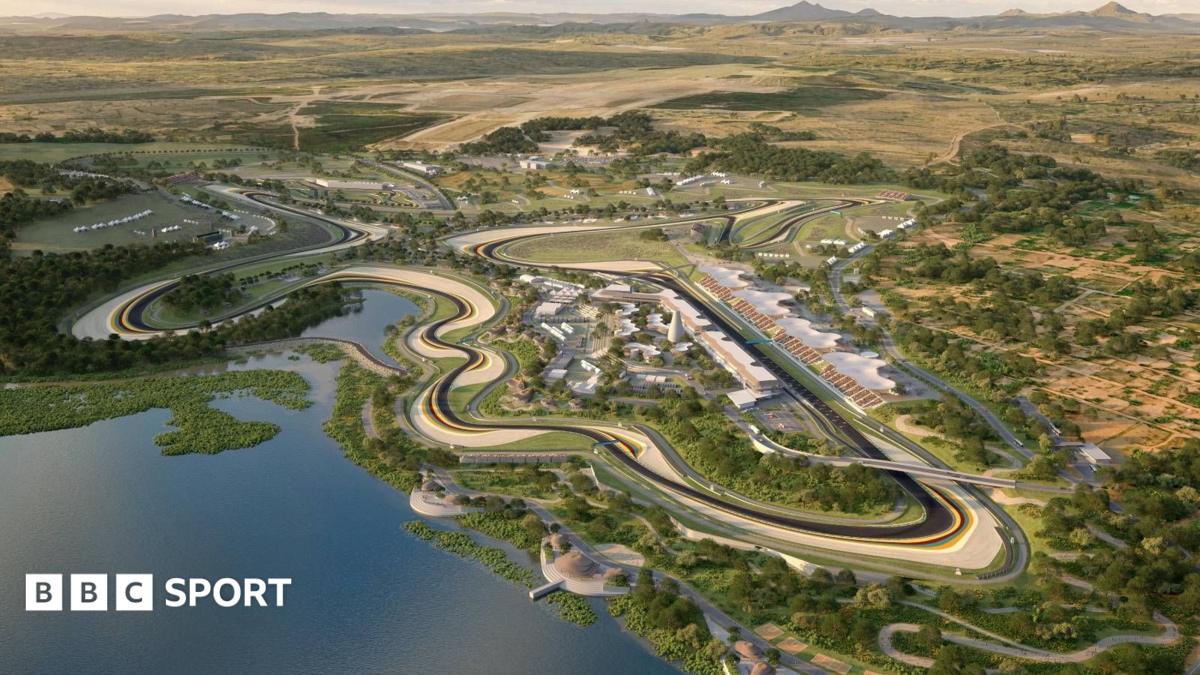
After a three-decade absence of Formula 1 racing on the African continent, motorsport’s premier series has announced a landmark 10-year agreement that will bring the newly created African Grand Prix to Rwanda, with the first race scheduled to take place by the early 2030s.
The purpose-built racing venue will be constructed in Bugesera, a district located roughly 25 miles south of Rwanda’s capital Kigali, adjacent to the city’s under-development new international airport. It will mark F1’s first return to African soil since the last South African Grand Prix was hosted at Kyalami in 1993. This milestone finally fulfills a years-long goal for the series: to host championship races on every inhabited continent on Earth.
The new circuit is the brainchild of former F1 driver Alex Wurz, in partnership with iconic F1 track architects Tilke and development firm DAR. Following the natural terrain of Rwanda’s hilly southern landscape, the track design leverages the region’s dramatic elevation shifts to create a one-of-a-kind, technically demanding driving experience, while also optimizing sightlines to deliver world-class viewing access for spectators. F1 officials emphasize that the layout was created to work in harmony with the local natural environment, rather than reshaping the landscape to fit a standard track design.
Discussions around bringing F1 back to Africa have circulated for decades, with South Africa holding multiple rounds of negotiations for a return to iconic venues like Kyalami and new proposed sites in Cape Town, but no binding long-term agreement ever materialized. F1 leadership framed the deal with Rwanda as the result of years of collaborative planning to lay the proper groundwork for a sustainable, successful event that will deliver long-term value to the region. F1 president Stefano Domenicali called the contract a watershed moment for the global series, noting that “Africa has always been part of Formula 1’s future, and from the beginning we were determined to return in the right way, with the right partner, a long-term commitment and a clear vision for creating meaningful impact.”
Rwandan President Paul Kagame highlighted the transformative potential of the deal for the entire continent. “For more than three decades, the world’s premier motorsport championship has raced without this continent, and that changes with this agreement,” Kagame said. “Rwanda is proud to host the Formula 1 African Grand Prix, and to share this moment with more than 100 million fans across Africa, many of them young people who deserve to see the sport at home and to see themselves in it: as engineers, technicians, entrepreneurs and, one day, drivers.”
Kagame added that the combined project of the new circuit and adjacent international airport will generate sustained economic benefits for Rwandans and the broader region, far beyond a single annual race weekend. The development is expected to create thousands of local jobs, build new technical skills in the local workforce, boost tourism across the country, and attract new long-term business investment. F1 also frames the deal as a critical expansion opportunity for the sport, which has historically had limited penetration in Africa compared to established markets in Europe, Asia and the Americas.
No final calendar slot has been confirmed for the African Grand Prix yet, but F1 officials have noted they will avoid the country’s heavy rainy season between March and May, with the October to November secondary rain season seen as a more viable window. F1 is currently bound by its own commitment to cap the annual championship calendar at a maximum of 24 races, meaning adjustments to the existing schedule will be required to add the new African round.
The agreement has already been marked for controversy, however, as human rights organizations are widely expected to raise accusations of sportswashing against both F1 and Rwanda. These accusations mirror similar criticism Rwanda has faced in recent years over its “Visit Rwanda” sponsorship deals with English Premier League football clubs Arsenal and Aston Villa. The controversy is further heightened by an ongoing case against Rwanda at the International Court of Justice, brought by neighboring Democratic Republic of the Congo, which accuses Rwanda of violating multiple international treaties covering genocide prevention, racial discrimination, women’s rights, and torture.
In response to these concerns, an F1 spokesperson reaffirmed the series’ position that motorsport can act as a force for positive change, saying “We have the opportunity to inspire and bring the passion of F1 to 100 million people across Africa and sport can be a positive force for good.”
The history of F1 in Africa stretches back to 1958, when Morocco hosted the final round of the inaugural F1 World Championship. South Africa hosted races from 1960 to 1966 under apartheid, before moving to the Kyalami circuit near Johannesburg from 1976 to 1985. Kyalami hosted two final races in 1992 and 1993, as apartheid ended, before F1 left the continent.