In the southern Myanmar city of Hpa-An, young able-bodied residents have adopted a life-or-death rule: never stay out after dark. For 26-year-old tuk-tuk driver Zaw Min, the need to put food on his family’s table overrides the daily terror he lives with. “I worry constantly, but I have no choice but to go out to work,” he told the BBC, requesting anonymity to protect his safety. “My family checks in on me all the time, warning me not to take passengers too far, to watch who I get in the car with. I have to stay on guard every single minute. Everyone here is terrified. People I know have just been taken.”
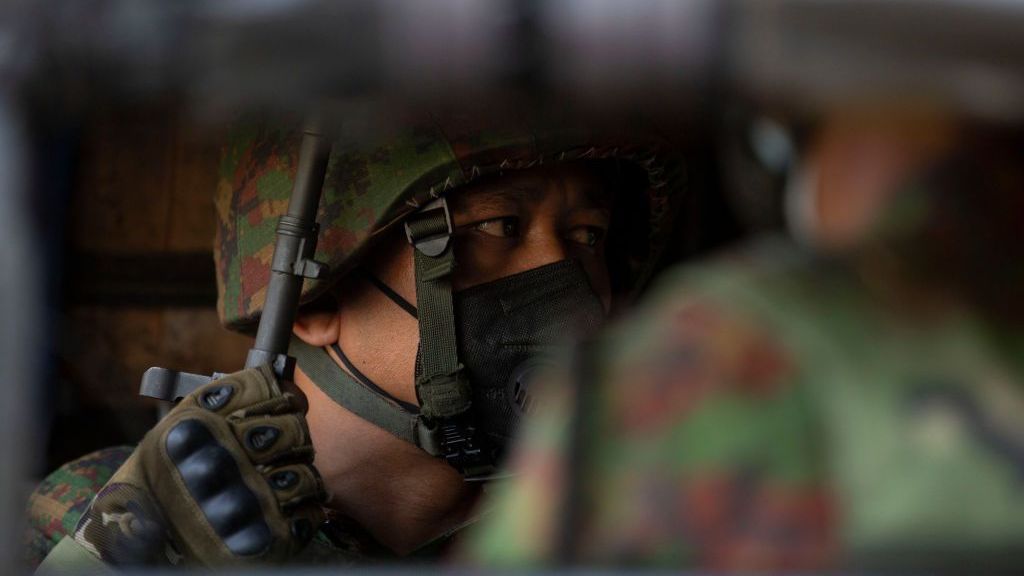
Local accounts confirm that plainclothes agents and supporters of Myanmar’s ruling military junta are patrolling residential and commercial areas, arbitrarily snatching people between their late teens and 30s to force them into military service. Confidential leaked documents obtained by BBC Burmese confirm that junta authorities have been ordered to aggressively meet strict recruitment quotas across every administrative jurisdiction, a desperate push to refill military ranks depleted by three years of brutal civil war against ethnic militias, pro-democracy activists and civilian-led resistance movements.
Myanmar has been mired in bloody conflict since February 2021, when the military staged a coup that ousted the democratically elected government led by Aung San Suu Kyi. Three years on, the junta has been battered by humiliating battlefield losses, plummeting troop morale, and soaring desertion rates. In response, it enacted a sweeping mandatory conscription law: all men aged 18 to 35 and women aged 18 to 27 are required to serve a minimum of two years in the military, with refusal carrying a penalty of up to five years in prison. For former junta officer Maj Naung Yoe, now a military affairs official with the anti-coup Myanmar Defense and Security Institute (MDSI), this law stands as one of the harshest actions the junta has taken against civilians since seizing power.
Since early 2024, an estimated 100,000 young people have been swept into the junta’s conscription dragnet, with many of them brought into service through coercion, extortion and outright abduction. “Security forces monitor young people’s movements to arrest them, force them into service under the cover of military eligibility rules, extort bribes by threatening detention, and snatch people during routine guest list checks at public venues,” Naung Yoe explained. When the BBC contacted the junta’s Central Body for Summoning People’s Military Servants to comment on allegations of forced conscription and abductions, the body declined to issue any response.
While the new conscription system has created a steady stream of new bodies for the junta’s armed forces – a reinforcement that observers say has helped the regime retake lost territory and push resistance groups onto the defensive – the practice has also grown increasingly extreme as more young people go to great lengths to avoid being drafted, either to join the opposition or simply refuse to fight their fellow citizens.
International human rights organizations including Amnesty International, Human Rights Watch and Fortify Rights have all documented the junta’s pattern of abducting civilian civilians and forcing them into military service. In July 2025, open-source research group Myanmar Witness published an analysis of hundreds of missing person notices posted to Facebook between 2021 and 2025, finding that missing person reports for January jumped from just four in 2021, before the coup, to 82 in 2025, after the conscription law came into force. The organization concluded that most junta recruitment happens through detention, coercion and forced disappearance rather than formal legal call-ups, and families are often given no notice of their loved ones’ fates. Men and teenage boys make up the vast majority of those reported missing.
The human cost of this system is laid bare in the story of Ma Moe San Pan, a Yangon resident whose 33-year-old husband Phyo Wai was abducted for conscription in May 2025. After a domestic argument, Phyo Wai left their home, and Ma Moe San Pan asked her cousin, who worked at the local ward administration office, to help bring him back. Two days later, she received a call from Phyo Wai, who was being held at a military recruitment center across the city. According to Ma Moe San Pan, her cousin had sold Phyo Wai to another ward for 4 million kyat (approximately $900 USD) to help that ward meet its recruitment quota. In a subsequent attempt to secure her husband’s release, she was scammed out of an additional 4.5 million kyat by fraudsters who falsely promised they could free him.
When contacted by the BBC, the administrator of the ward that took possession of Phyo Wai admitted that transfers of recruits between townships happen when local wards cannot meet their quotas, but he denied any money changed hands in Phyo Wai’s case. Ma Moe San Pan filed a police complaint over the illegal conscription and the subsequent scam, but police refused to add human trafficking charges to her report, claiming such charges could only be filed if the person was sold across an international border. She has had no information about her husband’s whereabouts since he was taken.
Ma Moe San Pan’s case exposes how pressure to meet recruitment quotas from junta leadership has spawned a corrupt illicit market for eligible recruits across Myanmar. Low-level officials, security personnel and criminal gangs have adopted increasingly ruthless tactics to find recruits: ambushing commuters at road checkpoints, luring young people with fake job postings, and breaking into homes to abduct eligible residents. Naung Yoe argues that the conscription system, operating under the cover of law, has effectively become a modern-day human trafficking network. In one high-profile case from August 2025, Yangon police arrested a senior Fire Services Department official and his son-in-law for abducting four young men, luring them with false job promises and holding them in custom-built cells in his home to sell them to military recruiters. The official faces up to seven years in prison on kidnapping charges.
Naung Yoe explains that the system disproportionately harms the poor, while wealthy people can simply pay to avoid conscription, paying brokers to find vulnerable substitute recruits to take their place. “These corrupt practices are growing more common because it is getting harder every month to meet recruitment quotas, and the profits from trading recruits are extremely lucrative for those on the ground,” he said.
The brutal push for conscription also reveals the junta’s underlying desperation for manpower after years of devastating losses on the battlefield. Dr. Sandeep Singh, a military studies researcher at Singapore’s Nanyang Technological University, notes that this latest conscription drive is another clear sign of how embattled the junta remains in Myanmar’s civil war. “This system has placed unbearable additional pressure on Myanmar’s young people and their families, who have already endured four years of unrelenting conflict,” he said.
Beyond the immediate human cost, the constant threat of abduction for conscription has triggered mass internal displacement, created severe labor shortages across Myanmar’s already struggling economy, and pushed tens of thousands of people to flee across the border into neighboring countries. Three and a half years after seizing power, the junta has turned conscription into a tool to subjugate the civilian population and force citizens to fight their fellow countrymen, observers say. As the MDSI stated in a June 2025 statement: “The generals have profited from using military law to turn Myanmar’s citizens against each other.”