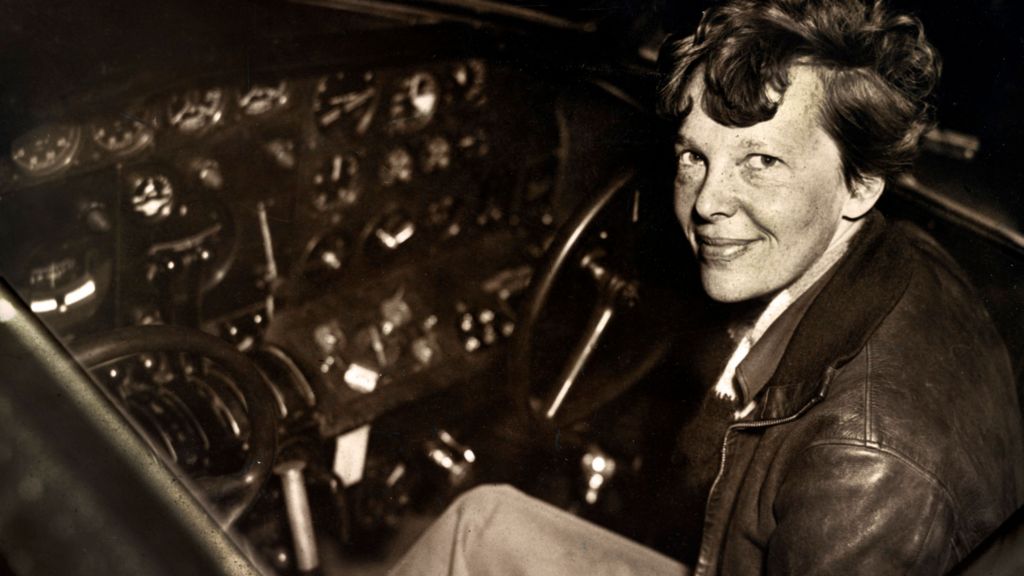
Nearly 90 years after American aviation pioneer Amelia Earhart vanished without a trace mid-flight during her attempt to circumnavigate the globe, a new archaeological expedition has arrived at a remote Pacific atoll to investigate a potential clue that could finally crack one of history’s most enduring unsolved mysteries.
The joint team, composed of researchers from the Archaeological Legacy Institute (ALI) and Purdue University, reached Nikumaroro Island — part of the island nation of Kiribati — on Monday, following a five-day, 830-nautical-mile journey across the South Pacific aboard the research vessel *Marin Mainiku*. This trip marks the first authorized expedition to Nikumaroro in seven years, and the first formal investigation of the site’s Taraia Peninsula in more than 15 years, according to Purdue University records.
At the center of the expedition’s work is the so-called Taraia Object, a feature first identified on the edge of Nikumaroro’s lagoon via satellite imagery back in 2020. The formation has sparked fierce debate among aviation historians and researchers: some experts argue it could be the long-lost wreckage of Earhart’s Electra twin-engine plane, while others remain deeply skeptical, suggesting it is nothing more than a naturally fallen, collapsed tree trunk.
Expedition leader Rick Pettigrew framed the investigation as a long-awaited milestone for the decades-long search for answers. “It is incredibly rewarding to be this close to completing our inspection of the Taraia Object and potentially solving, at long last, the outstanding mystery of the disappearance of Amelia Earhart and Fred Noonan more than 89 years ago,” Pettigrew wrote in a Monday blog post updating the public on the expedition’s progress.
The five-day investigation is not without its significant challenges, however. Two major threats have the potential to hamper the team’s work: a record-strength El Niño climate event, and the island’s population of giant coconut crabs — the largest land-dwelling invertebrates on Earth.
El Niño has already disrupted regional weather patterns, and researchers warn shifting conditions could limit daily access to the shore, with an ongoing east-to-west weather system threatening safe passage through the narrow reef channel the team plans to use to reach the peninsula. Marine archaeologist Michael Krivor noted that unsafe conditions in the channel could cut the expedition short or prevent researchers from reaching the object entirely.
For the team’s safety, crew members will not camp on the island overnight, instead returning to *Marin Mainiku* each evening — a rule driven in large part by the coconut crab population. Also called robber crabs, these nocturnal giants can grow to a leg span of up to one meter, weigh more than 4 kilograms, and lift loads as heavy as 28 kilograms. Best known for their ability to crack open whole coconuts, they also actively hunt live prey including small mammals and seabirds.
This is not the first time coconut crabs have been linked to the Earhart mystery. One long-running theory suggests the aviator and her navigator survived an emergency landing on Nikumaroro, only to be killed by the giant crabs, who dragged their remains into underground burrows. A 2018 experiment by the International Group of Historical Aircraft Recovery confirmed the crabs are fully capable of this: researchers used pig carcasses to demonstrate the species can strip flesh from bone and drag remains to their burrows in less than two weeks.
To reach the Taraia Object, the team will follow a carefully laid timeline. On Tuesday, crew members will navigate the narrow reef channel blasted into the atoll by the British in 1963, the final year the island hosted a permanent human settlement, to prepare for shore landing. Their first full day on the island will be dedicated to moving research equipment ashore, clearing dense overgrown vegetation, and establishing a base of operations, with one crew tasked with cutting a new access trail through the island’s jungle. On Wednesday, the team will shift focus to systematic evidence gathering on the Taraia Peninsula, using magnetic detection tools to locate buried metal debris consistent with plane wreckage. Finally, researchers will deploy specialized dredging equipment to shift sediment in the shallow lagoon, where the Taraia Object sits just 10 feet from shore in as little as five feet of water at low tide, to conduct a full visual inspection of the formation.
Earhart’s disappearance has captivated the public since 1937. By the time she and her navigator Fred Noonan departed Lae, Papua New Guinea, on July 2 that year, she had already completed the majority of her round-the-world journey, flying successfully from California across South America, Africa, and Southern Asia. The pair planned to stop at tiny, uninhabited Howland Island, just 300 nautical miles from Nikumaroro, to refuel before the final leg to Hawaii. But the plane never arrived, vanishing without a trace over the central Pacific. The official U.S. government conclusion holds that the plane experienced radio communication failures, the pair became lost while searching for Howland Island, and eventually ran out of fuel before crashing into the open ocean. For decades, however, alternative theories have persisted, many centering on the possibility that Earhart and Noonan crashed on Nikumaroro and died as castaways.