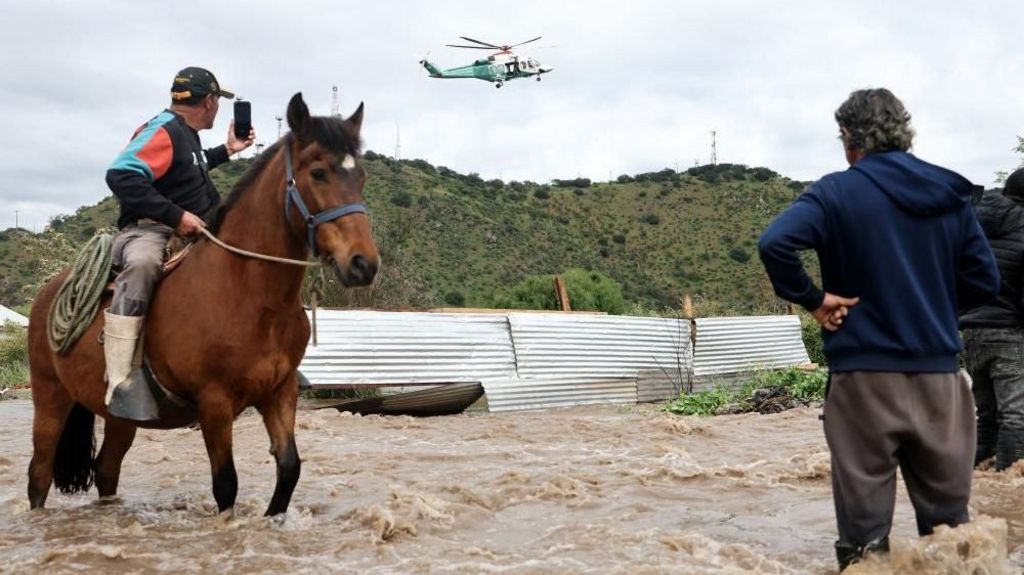
Central Chile is grappling with catastrophic flooding after a historic week of torrential downpours, driven by an unusually strong 2026–2027 El Niño event that has upended regional weather patterns and left at least one person dead and dozens trapped. As floodwaters submerged entire neighborhoods and turned rural dirt roads into rushing rivers, emergency teams launched urgent helicopter airlifts to pull stranded residents and their pets to safety from inundated homes.
The disaster unfolded after record-breaking rain soaked the region surrounding Chile’s capital, Santiago. Meteorologists confirm the capital recorded 74 millimeters of rainfall in just the first seven days of October, making this the wettest start to October the area has seen in 76 years. The extreme downpour caused the Mapocho River, which cuts through central Chile, to overflow its banks, sending muddy water surging into large swations of Talagante, a city located 35 kilometers southwest of Santiago.
Unlike severe storms that hit the region back in July, this sudden flooding caught riverside communities in Talagante off guard. No pre-emptive evacuation order was issued ahead of the heavy rains, leaving residents trapped in their homes as water levels rose rapidly overnight. Chilean national police deployed helicopter units to the affected area, conducting multiple rescue operations to extract people from submerged properties surrounded by fast-moving floodwaters.
Tragedy was confirmed in San Bernardo, a city located just south of Santiago, where officials recovered a body from a flooded underpass. Authorities have not yet formally confirmed the cause of death, but preliminary assessments link the fatality to the ongoing flood disaster.
Climate scientists have long warned that the 2026–2027 El Niño event, one of the strongest recorded in recent decades, will trigger dramatic global weather disruptions. The climate pattern, which brings above-average sea surface temperatures to the central and eastern Pacific, is known to amplify extreme weather around the world: it intensifies drought conditions in some regions while dumping far more rain than average on others, and central Chile is among the areas forecast to see well above normal precipitation through the southern hemisphere spring.
Meteorologists have issued ongoing warnings that the unusual El Niño activity will continue to bring severe hazards to the region, including more heavy downpours, powerful wind gusts, and intense storm systems through the spring season, leaving communities bracing for additional flood risk in the coming weeks.