Over the past ten years, every Israeli national election has been framed by candidates as a do-or-die moment for the nation’s future. Yet nearly every contest has ended the same way: hours of late-night ballot counting, followed by weeks of tense negotiation between political leaders who once vowed they would never share power in the same government. The upcoming vote scheduled for October 27 carries more historical weight than most recent elections. It marks the first national ballot held since the devastating October 7, 2023 attacks, and comes on the heels of Israel’s longest military conflict since its founding in 1948. Still, political analysts predicting a sweeping national reckoning would be wise to examine polling data before leaning into fiery campaign rhetoric.
Three weeks ahead of voting, Israeli public opinion remains sharply split, with no clear verdict on the leadership of incumbent Prime Minister Benjamin Netanyahu. The nation is divided almost exactly down the middle, mirroring the deadlock that has defined every election cycle since 2019. The 2023 attacks and the subsequent war transformed nearly every layer of Israeli society – but one thing that has not shifted is the country’s evenly split partisan math.
In Israel’s 120-seat Knesset, the magic number for forming a majority government is 61. As polling stands, neither the pro-Netanyahu right-wing bloc nor the center-left Zionist opposition has hit that threshold. The Middle East Forum’s poll of polls, which averages results from five leading pollsters with fieldwork completed through October 1, projects the pro-Netanyahu bloc would take 51 seats, while the opposition would claim 52. Arab-majority parties hold 13 seats, while a new right-wing faction, Amcha Yisrael, is polling at four seats with no public commitment to either bloc. Weekly television polls often shift by just one or two seats between publications, but are framed as seismic political shifts. For example, Channel 13 had the Netanyahu bloc leading 54-52 in mid-September, only to show it trailing 51-52 a week later.
These small fluctuations are mostly statistical noise. The consistent, clear signal from polling is that Likud, Netanyahu’s party which held power during the October 7 attacks, remains steady at roughly 20 seats, and its allied factions have seen almost no movement in support. The final outcome may depend far less on the large national parties than on small, unaligned factions that sit near the 3.25% electoral threshold needed to enter the Knesset. Yoaz Hendel’s Reservists list is polling exactly at that threshold and has refused to align with either bloc. Whether both the Reservists and Amcha Yisrael clear the threshold could shift between four and eight seats – a margin large enough to hand one side the right to form a government first. In this election, Israel’s national future hangs in the balance, and it may ultimately be decided by tiny statistical margins.
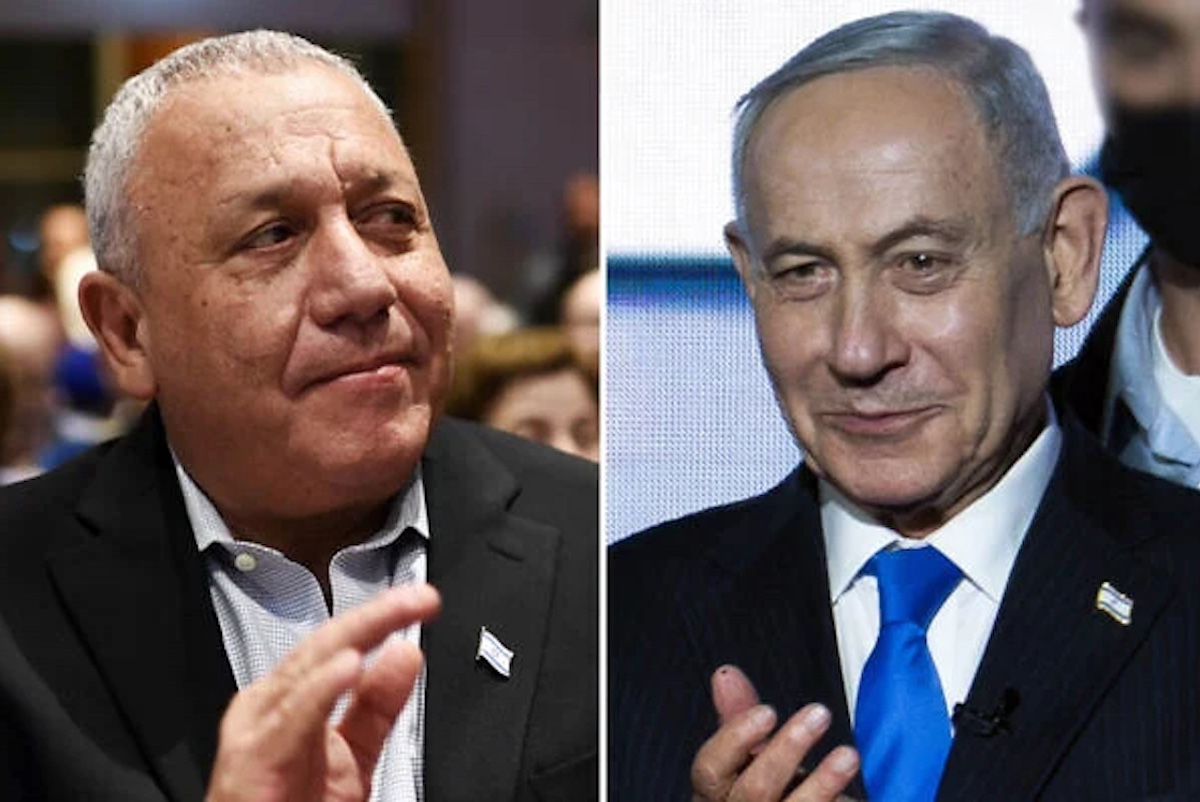
Leading the opposition charge is Gadi Eisenkot, a former Israel Defense Forces chief of staff whose Yashar Party leads most national polls with 22 to 23 seats. He has pulled ahead of the joint Beyachad list led by Naftali Bennett and Yair Lapid, which polls at roughly 13 seats. Eisenkot’s broad appeal is straightforward: he is a decorated combat veteran who lost his son fighting in Gaza, speaks in plain, unpolitical language, and is not Benjamin Netanyahu.
Israel has a long history of military leaders transitioning into politics. Yitzhak Rabin and Ariel Sharon both successfully parlayed uniformed service into the prime minister’s office, but many other prominent generals have risen quickly in polling only to fade from politics before taking power. Benny Gantz, who came within touching distance of the premiership three separate times, now leads a faction fighting to just clear the electoral threshold and retain its Knesset seats. Israel’s political center has repeatedly turned to prominent military figures to rescue it from partisan gridlock, only to find that governing coalitions require the negotiating skills of career politicians, not just battlefield commanders.
Eisenkot has set a goal of leading the opposition to a 63 to 64-seat majority, and has pledged to end what he frames as Israel’s growing international isolation. Just last week, he formally challenged Netanyahu to a public televised debate, pressing the prime minister on his refusal to convene an official state commission of inquiry into the failures of October 7. This is a politically strong move for the opposition, and it is notable that the current polling frontrunner is the one pushing for direct confrontation with the incumbent.
Netanyahu, who will turn 77 one week before election day, is running the same type of campaign that has served him well for decades. His core message is simple: the election is a choice between a right-wing government and the creation of an independent Palestinian state. In late September, he spoke at an Israeli air force base and warned that Israel’s enemies could launch an attack to disrupt the upcoming vote. The very next day, a Flydubai passenger jet carrying more than 100 Israeli citizens bound for Tel Aviv was forced to divert to Saudi Arabia after one of its pilots attacked the other member of the flight crew. Netanyahu’s allies immediately framed the incident as proof the prime minister’s warning was correct.
Opposition leader Yair Lapid hit back, saying the security briefing he received the night before Netanyahu’s speech made no mention of any imminent threat of this kind. Israeli officialdom remains publicly divided over whether the incident was an act of terrorism or a personal suicide attempt, and the opposition is now calling for the resignation of Israel’s transport minister over the handling of the crisis. This episode perfectly illustrates both Netanyahu’s go-to campaign strategy and its core limitations: fear has always been his most effective campaign tool, but a leader who claims credit for anticipating every threat cannot avoid questions about the catastrophic attack he failed to prevent in 2023. While security remains the defining issue of this election, it is no longer an issue that Netanyahu can claim as his exclusive political domain.
The opposition’s biggest structural challenge is not Netanyahu himself – it is the math of forming a majority. The factions united around ousting the incumbent cannot reach 61 seats without support from Arab-majority parties, and nearly all opposition leaders have publicly pledged not to work with them. One recent survey cited by the Arab Center in Washington, D.C., found that 70% of Jewish Israeli voters oppose having an Arab party participate in a national government. Right-wing parties have leveraged this sentiment: on September 23, the Central Elections Committee, a body made up of representatives from all parties, voted to bar both the mainstream Arab Joint List and Mansour Abbas’s Ra’am party from appearing on the ballot entirely. On October 2, the Israeli Supreme Court unanimously overturned the ban, as it has done with nearly every previous attempt to bar Arab parties from elections. For the right wing, losing this court battle was no loss politically: the entire effort was designed to remind Jewish voters that a vote for Eisenkot could ultimately be a vote that puts Abbas and his faction in power.
This leaves Arab Israeli citizens, who make up roughly one-fifth of Israel’s total population, holding the decisive balance of power in a political system that still treats their participation in government as politically toxic. In 2021, Ra’am did join a centrist coalition government, but that government collapsed after just one year in power. Opposition leaders have pledged not to attack one another before election day, but they have refused to outline any plan for the day after voting, when the only possible majority would require partnering with factions they have spent years disowning.
In Washington and other Western capitals, many policymakers are quietly hoping that an Eisenkot victory will produce a more moderate Israeli government – one more flexible on Palestinian statehood, easier to defend publicly, and a more reliable diplomatic partner. Most analysts agree these hopes are likely to be disappointed. Eisenkot has criticized Netanyahu’s framing of Israel as a “super-Sparta” and argues the incumbent has damaged relations with American civil society. That amounts to a difference in tone and governing competence, not a fundamental shift in Israeli strategic policy. No major candidate with a realistic chance of forming a government is running on a platform of Palestinian statehood. The coalition Eisenkot would need to form government includes Bennett and Avigdor Liberman, neither of whom are considered political doves on Palestinian issues. The Israeli national consensus on security shifted firmly to the right after October 7, and every candidate in this election is campaigning within that new consensus.
A sober reading of Israeli politics suggests that national policy is driven far less by who holds the prime minister’s office than by regional power dynamics and what policies the United States is willing to support and tolerate. Those pushing for a more moderate Israeli policy should focus on policy choices made in Washington, rather than waiting for Israeli voters to deliver the outcome Western powers want.
Looking ahead to October 28, the day after voting closes, three plausible outcomes stand out. First, Netanyahu’s bloc could scrape together a 61-seat majority with the help of one or more small parties that clear the electoral threshold. Second, Eisenkot could find a path to form a government with informal outside support from Arab parties that he will never frame as an official governing partnership. Third, and the most likely outcome based on current polling, no bloc will reach 61 seats. The Israeli president will issue mandates to form a government that will expire, leaving Netanyahu to stay on as caretaker prime minister while Israel drifts toward yet another election. Netanyahu has governed in this caretaker capacity before, for long stretches of his career.
After the results come in, both blocs will likely face pressure to form a broad unity government between Likud and Yashar, with or without Netanyahu at its head. Eisenkot has already ruled out serving in a government led by Netanyahu, but Israeli politicians have a long history of ruling out deals before an election that they accept after the votes are counted.
This election may indeed be a fateful turning point for Israel, though not in the way that campaign slogans promise. The core question this election will answer is whether a society that has endured the trauma of October 7 and two years of devastating war can actually form a functional governing majority for any policy agenda at all. If no majority emerges, the partisan stalemate that paralyzed Israeli politics before the war will outlast the conflict itself. That would be the least dramatic result on election night – but it would also be the most consequential for Israel’s future.