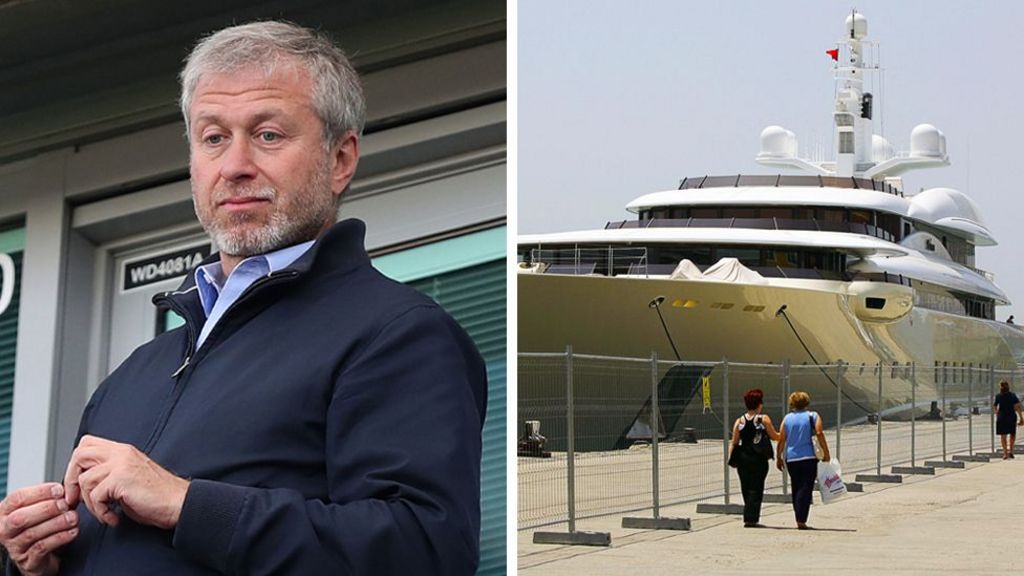
A years-long collaborative journalistic investigation has uncovered explosive new evidence detailing a scheme to falsify thousands of financial documents to help Russian oligarch Roman Abramovich hide more than $10 billion in wealth and evade millions in taxes, the BBC’s Panorama program has revealed. The probe, conducted as part of the International Consortium of Investigative Journalists’ Cyprus Confidential project, pulls from a massive leak of internal financial records spanning 1995 to 2022, linked to a network of Abramovich-connected offshore companies administered out of Cyprus.
The investigation uncovers that global accounting giant Deloitte’s Cyprus division played a central role in the scheme, working closely with Limassol-based corporate services firm MeritServus — which Deloitte owned until 2005, and maintained close ties to after the split — to manage Abramovich’s sprawling global fortune. Three separate instances of backdated and falsified paperwork are laid out in the leaked files, all designed to evade new transparency rules and hide assets from tax authorities.
The first scheme came in 2006, when Cyprus introduced a new law requiring public disclosure of company accounts. The regulation threatened to reveal $672 million in luxury assets held by Abramovich’s Cypriot firm Amiscan Investments, including a chateau in the south of France, a country estate in West Sussex, a London luxury flat, private jets, helicopters, and superyachts such as the $147.5 million Pelorus. To avoid disclosure, Abramovich’s associates and MeritServus planned to transfer the assets to a parent company in the British Virgin Islands (BVI), a jurisdiction with strict financial secrecy rules. Crucially, the team backdated the transfer paperwork by three years to make it appear the move had taken place in 2003, well before the transparency law went into effect. Deloitte Cyprus reviewed the falsified documents, approved them as “adequate,” and signed off on the 2003 Amiscan accounts that removed all trace of the $672 million in luxury assets, leaving the company listed with just $75,000 in holdings.
A second scheme targeted tax obligations for another of Abramovich’s Cypriot firms, Kravin Investments, which held nearly $2 billion in cash earning significant interest income in 2003. Under Cypriot law, the company owed tax on that interest to local authorities. Internal emails show that in August 2005, MeritServus outlined a plan developed in a meeting with Deloitte that would require changing 2003 and 2004 financial statements to backdate a false ownership structure. The falsified records claimed Kravin merely held the funds on behalf of its BVI parent company, meaning Kravin was not the legal owner of the cash and owed no tax on the interest. Deloitte explicitly noted in a September 2005 email that “certain changes will have to be made to the accounts (bank account balances, interest income, profit and loss account)” to accommodate the backdated changes, confirming the firm’s direct involvement in altering financial records to cut the company’s tax bill.
The third scheme involved a $10 billion fortune held by Abramovich’s Cypriot company Electus Investments. To hide this massive holding from public disclosure, MeritServus created an identically named company in the BVI, then backdated paperwork to falsely claim full beneficial ownership of the $10 billion had been transferred to the secret BVI firm in 2003. When the Cypriot Electus’ accounts were made public, it only listed $145,000 in assets, effectively making Abramovich’s billions disappear from public record.
Legal and accounting experts have called the scheme one of the most blatant examples of tax evasion they have seen. Andrew Mitchell KC, a leading financial services law barrister, told the investigation the arrangement was “straightforward” tax evasion, adding “it couldn’t be more blatant.” He noted that if the scheme had been carried out in the UK, tax authorities would almost certainly pursue criminal prosecution. Lord Sikka, an accounting professor at the University of Sheffield, described the falsification of transaction dates and filing of misleading accounts as a “violation of a statutory duty” and “pretty scandalous.”
For nearly 20 years, Abramovich was the most high-profile Russian oligarch in the United Kingdom, after purchasing Chelsea Football Club in 2003 and overseeing the club’s most successful trophy-winning run. But following Russia’s 2022 full-scale invasion of Ukraine, the UK sanctioned Abramovich over his close ties to Russian President Vladimir Putin, forcing him to sell the club. He is currently believed to be residing in Turkey, which has not imposed sanctions on him, while £5.4 billion of his assets remain frozen in Jersey, where a four-year criminal investigation into his finances is ongoing. He has denied all wrongdoing in the Jersey probe, calling it politically motivated.
In response to the new allegations, Abramovich’s legal team denies any claims of tax evasion or deliberate wealth concealment. They note he had no knowledge, authorization, or involvement in the falsification of any documents, and argue that relying on professional advice from licensed advisers was entirely legitimate, adding he was not involved in day-to-day operations of the offshore companies. Deloitte Cyprus stated it “acts in compliance with applicable laws” and declined to comment on the specific allegations, noting the documents in question are more than 20 years old and no longer in the firm’s possession. MeritServus has already ceased operations following the Cyprus Confidential leak.
The findings have sparked broader questions about the role of Western professional services firms in enabling corrupt wealth management and tax evasion for politically connected oligarchs. Vladimir Milov, a former Russian deputy energy minister who now opposes the Kremlin, noted that for every wealthy corrupt oligarch from a non-Western country, there is an entire industry of Western financial, legal, and PR providers willing to accept large fees to whitewash reputations and conceal illicit wealth. Cypriot MP Christos Christofides said that if the allegations of tax evasion are proven, authorities must recover the unpaid taxes and hold all responsible parties accountable under Cypriot law.