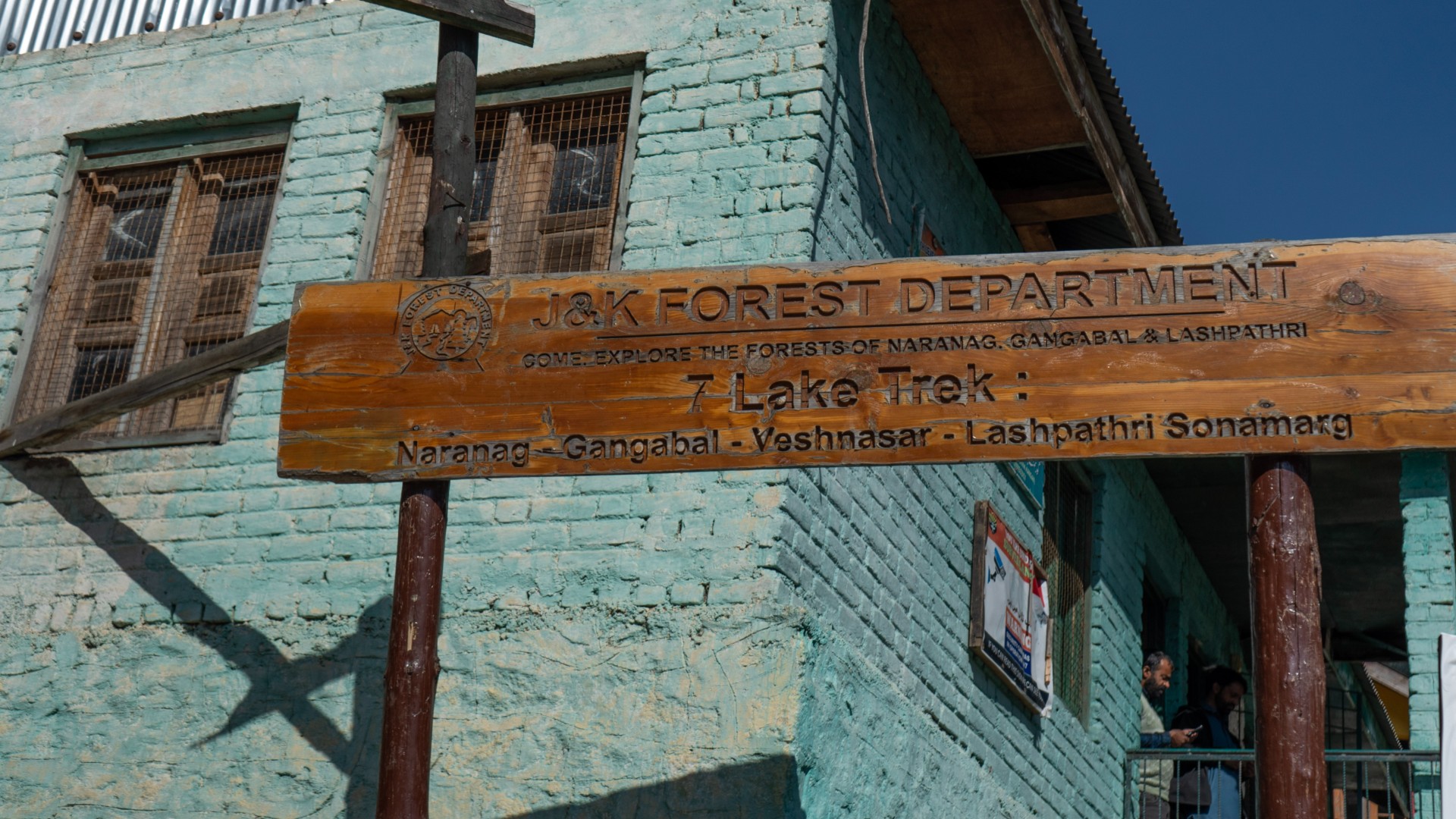
Nestled in the mountainous terrain of Indian-administered Kashmir, the scenic village of Naranag has long drawn global travelers to its ancient archaeological sites and world-famous high-altitude trekking routes. For local residents like 45-year-old Ghulam Qadir Jagil, the summer tourist season from May to August is not just a busy period—it is the foundation of his livelihood. A grocery store owner and veteran trekking guide, Jagil once catered to dozens of international adventure seekers tackling the 70- to 75-kilometer, seven-day trail cutting through seven pristine alpine lakes, offering everything from sleeping gear to porter services. Today, his shop sits beside empty village streets, with barely enough foot traffic from limited day trips to cover basic household costs.
The collapse of Kashmir’s adventure tourism industry traces back to the 22 April 2025 militant attack on Baisaran meadow in Pahalgam, which left 26 people dead: 25 tourists and one local pony handler. The attack dramatically escalated long-simmering tensions between India and Pakistan, the two nuclear-armed neighbors that have disputed control of Kashmir since both gained independence from British colonial rule in 1947, pushing the region to the brink of full-scale war just weeks later.
In the aftermath of the violence, regional authorities imposed sweeping restrictions on all adventure and trekking activities across Kashmir’s high-altitude regions. For Jagil, the losses have already climbed to roughly $6,300 (Rs 600,000)—a devastating blow for a household that relies entirely on tourism income. He is far from alone. Local estimates place the population of Naranag and its surrounding areas at between 2,000 and 4,000 people, many from the semi-nomadic Gujjar and Bakarwal communities, with the vast majority depending on tourism-related work ranging from pony rentals to catering for trekking groups. Currently, only limited day excursions ending by 5 p.m. are permitted, leaving small business owners like Jagil unable to recoup basic expenses.
“The meager earnings from selling tea and snacks to a handful of day-trippers are nowhere near enough to feed our families,” Jagil told Middle East Eye in an interview.
The damage extends far beyond Naranag, hitting one of the region’s most critical economic sectors. According to the 2025-26 Jammu and Kashmir Economic Survey, tourism contributes nearly 7 percent of the region’s gross domestic product, supporting more than 500,000 jobs directly and indirectly across hospitality, handicrafts, transportation, local retail, and tour operations. Official visitor data underscores the scale of the collapse: Pahalgam welcomed more than 460,000 tourists in the first four months of 2025, with over 137,000 arriving in April alone in the weeks before the attack. By comparison, the same four-month period in 2026 saw just 250,000 arrivals—less than 55 percent of the previous year’s numbers.
While mainstream tourist destinations in the region have shown tentative signs of a gradual recovery, communities dependent on the short summer trekking season have been left stranded. Khursheed Ahmad Magray, a Ganderbal resident who owns a small local motel, says local tourism stakeholders including shopkeepers, pony service providers, and trekking company representatives have held multiple meetings with police, government, and civil administration officials to push for the restrictions to be lifted. Though the talks made incremental progress, they have yet to deliver any tangible relief for what Magray calls “victims of the actions of others.”
Magray described his own experience: after waiting months for authorities to ease restrictions, he purchased new inventory to prepare for returning visitors, only to learn that overnight stays would remain banned and only limited day trips would be allowed. “Now I am stuck struggling to sell the stock I bought in good faith,” he said. “This place used to be packed with adventure lovers setting up tents and staying among the Naranag woods. Today everything is deserted, with only a handful of visitors passing through.”
When Middle East Eye reached out to regional officials for comment on the impact of the restrictions, none responded prior to publication. Jatin Kishore, district magistrate of Ganderbal, confirmed to the outlet that all high-altitude trekking areas have been “declared restricted and that no activities are allowed there” as part of post-attack security measures.
Industry estimates indicate Kashmir is home to roughly 200 adventure tour operators, almost all of which rely entirely on the short summer window for trekking, camping, and other outdoor activities to generate their annual income. For many, the prolonged ban has left them completely out of business. Mohammad Adil Langoo, co-owner of Srinagar-based trekking company Cliffhangers India, says his firm’s annual turnover, which once hit nearly $207,500 (Rs 20,000,000) before the restrictions, has now dropped to zero.
“Not a single trekking location is open across the entire region—we cannot take groups through Naranag, Sonmarg, or Pahalgam, all our core routes,” Langoo explained. “Our income from trekking is entirely gone, and we have suffered catastrophic financial losses.” Some adventure seekers have shifted to neighboring Ladakh, a northern Indian Union Territory that was part of Indian-administered Kashmir until 2019, to trek to high-altitude sites like Kala Pari. But Langoo notes that Ladakh cannot replace Kashmir’s unique trekking landscape. “Not even five percent of the trekkers who used to come to Kashmir will go there instead. We still get constant inquiries for Kashmir treks, but when we offer Ladakh as an alternative, almost everyone turns it down,” he said. “Both domestic and international travelers specifically want to experience Kashmir’s unexplored wilderness—they will not settle for another destination.”
For adventure tourism workers and enthusiasts alike, the restrictions have come at a personal as well as economic cost. Musadiq Rafiq Wani, a Srinagar-based trek leader and adventure tourism professional who left a conventional office job to work in the mountains, says the prolonged ban has stripped adventure lovers of their connection to the region’s natural spaces. Wani acknowledges that temporary restrictions were understandable after the attack, noting that over-tourism had already placed growing pressure on Kashmir’s fragile alpine ecosystems. But he argues the open-ended ban is unnecessary, pointing out that large-scale religious pilgrimage tourism has been allowed to continue while trekking routes remain closed.
“We completely condemn terrorism and violence, and we understand that security has to be a top priority,” Wani said. “But permanent restrictions should not mean people lose their access and connection to the mountains that define this region. If someone asks me to go trekking now, I always carry the fear that we will face penalties or be turned away. That fear alone takes away all the joy and freedom that trekking once gave us. It feels like a choking of that freedom.”