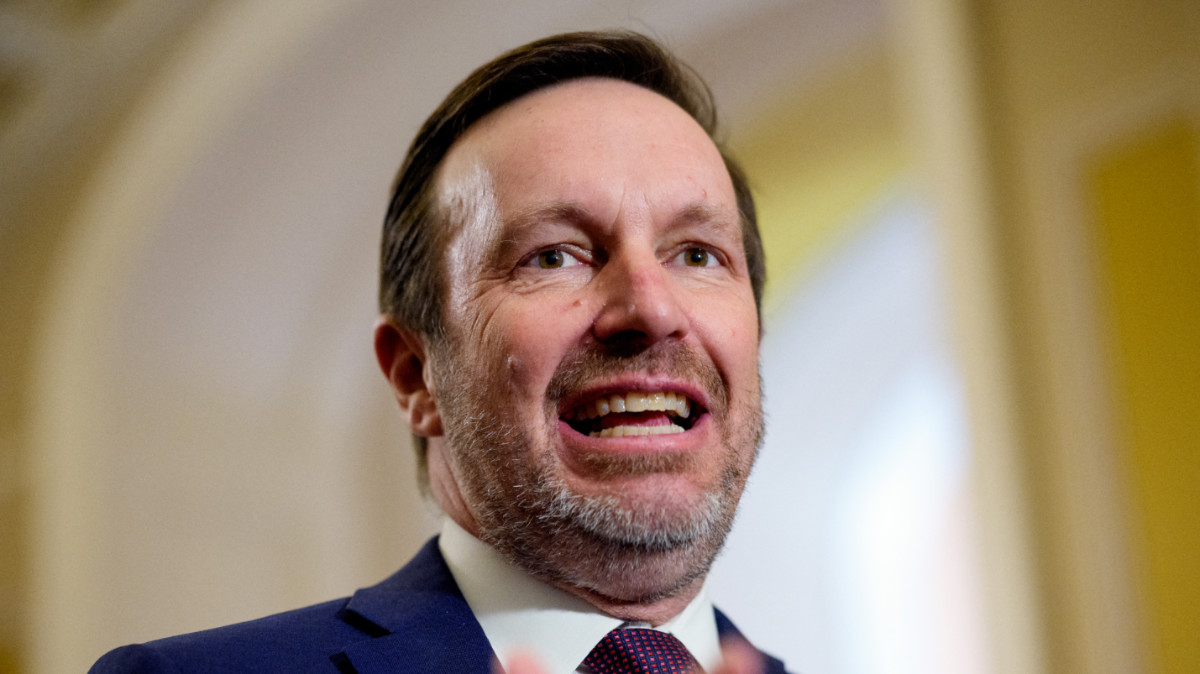
On Tuesday, Senate Foreign Relations Committee member and Democratic Senator Chris Murphy leveled serious allegations against the U.S. Department of War, claiming the department blocked his planned visit to a key U.S. military base in Qatar that had sustained damage in an Iranian strike. Murphy says the denial of access is part of a deliberate effort to keep Congress and the American public in the dark about the true human and strategic costs of ongoing tensions in the Middle East.
Murphy made the remarks to reporters in Riyadh, Saudi Arabia, during a multi-stop tour of Gulf nations that included a prior stop in Qatar. His intended destination was Al-Udeid Air Base, the forward headquarters of U.S. Central Command (Centcom) which oversees all American military operations across the Middle East. The base was targeted by Iran in a retaliatory strike launched after the outbreak of the U.S.-Israeli campaign against Iran that began on February 28.
Murphy emphasized that this obstruction was an unprecedented and unconstitutional overreach, a departure from any access he has been granted during his entire tenure in the Senate. He called on Republican colleagues in Congress to push back against what he frames as a deliberate campaign of government obfuscation that violates legislative oversight norms.
During his Gulf tour, Murphy confirmed that U.S. Secretary of State Marco Rubio had assisted in facilitating his visit, arranging meetings with diplomatic personnel and senior regional leaders. Murphy held discussions with Qatari Emir Tamim bin Hamad Al Thani, Saudi Crown Prince Mohammed bin Salman, and other top Gulf government officials. In a social media post published Monday, Murphy shared that he had been able to visit a section of the U.S. Embassy in Riyadh that was hit in two separate Iranian strikes, which he confirmed left “significant damage.” He noted the attacks occurred under cover of night, adding that a daytime strike would almost certainly have resulted in mass casualties.
While the State Department granted Murphy access to meet with U.S. diplomatic staff, he says Secretary of War Pete Hegseth’s Pentagon explicitly blocked him from accessing the damaged Qatari military base.
These allegations come as the security and future of U.S. military infrastructure across the Gulf has faced growing scrutiny from current and former national security leaders. In a September report, the Department of War’s own inspector general confirmed that hundreds of buildings and structures across U.S. military bases in seven Gulf nations—including Kuwait, Bahrain, Qatar, the United Arab Emirates, Saudi Arabia, Iraq, Oman, and Jordan—were damaged or destroyed in recent Iranian strikes.
Independent outlet Middle East Eye has previously reported that multiple current and former U.S. officials view full reconstruction of these vulnerable bases as an unworkable long-term solution, after Iranian drone and missile attacks demonstrated just how exposed traditional U.S. forward positions in the Gulf are. Former CIA director and Centcom commander David Petraeus acknowledged this shifting assessment in a May interview with Bloomberg, noting that the threat landscape is far more severe than it was during his tenure leading U.S. Middle East command. “The truth is that we are not as inclined to occupy these bases now that we have seen what the Iranians can throw at them,” Petraeus stated.
Another former Centcom chief, General Frank McKenzie, went further in July comments to the Jewish Institute for National Security of America, arguing that the U.S. should relocate its primary Gulf command headquarters to Israel and nearby allied countries to better protect American assets from Iranian attack. Referring to Al-Udeid’s current location just 100 miles from Iranian territory, McKenzie said, “No one in their right mind would ever put the Centcom forward headquarters … yet that’s where it is.”
Middle East Eye, which originally reported on Murphy’s allegations, provides independent, in-depth coverage of the Middle East, North Africa, and surrounding regions.