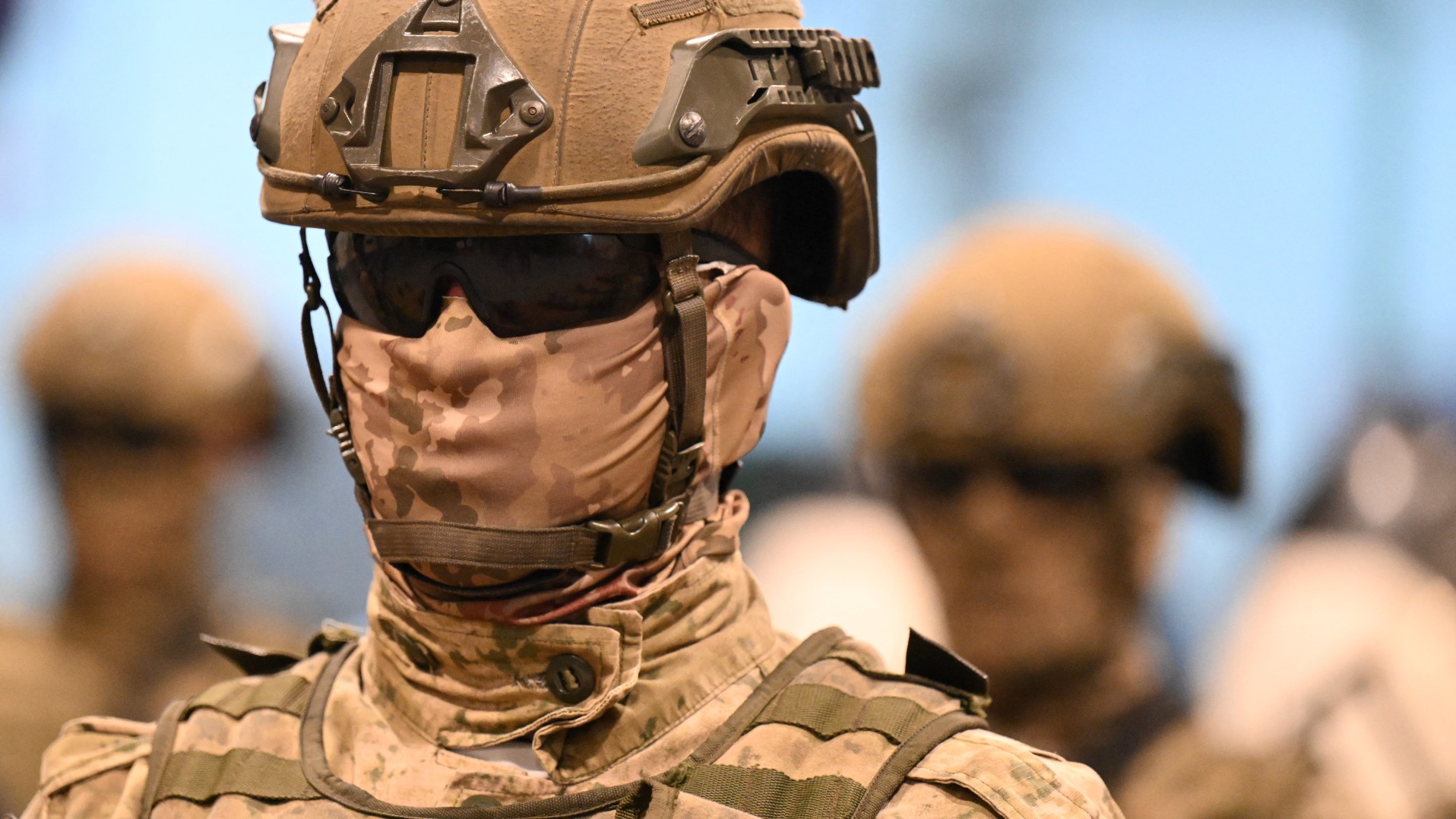
Exclusive reporting from multiple senior Turkish officials confirms that Ankara is set to ramp up its military support to Saudi Arabia in the coming weeks, dispatching additional personnel and advanced defense equipment to counter intensifying Houthi attacks targeting the kingdom, Middle East Eye reported Tuesday.
The move follows a joint announcement issued Monday by Turkey, Pakistan, and Saudi Arabia, where the three nations committed to immediate activation of collective defense obligations outlined in the Makkah Alliance for Defence. The agreement stipulates that pre-negotiated military units and capabilities will be rapidly deployed to Saudi territory to bolster the kingdom’s security.
Two Turkish officials with direct knowledge of Ankara’s deployment plan told MEE that Turkey has maintained a persistent presence of technical teams, air defense systems, and electronic warfare infrastructure in Saudi Arabia since 2023, tasked with shielding critical national assets including key energy facilities. Now, that presence is set to expand significantly: a senior anonymous Turkish official confirmed that Ankara will send additional defense hardware, specialized technicians, rapid emergency response units, and a contingent of accompanying combat support forces.
Under a 2010 bilateral military training agreement between Ankara and Riyadh, Turkey is permitted to deploy a limited number of personnel to the kingdom for technical support purposes. However, any larger-scale troop deployment requires formal approval from Turkey’s national parliament per the country’s constitution. The senior official noted that while ratification of the full Makkah Alliance treaty is still required, parliamentary leaders may prioritize advancing the military deployment authorization bill first.
A second Turkish official added that Ankara intends to establish a Turkish military command presence at a minimum of one dedicated base, which will operate exclusively to provide defensive backing to Saudi forces. Preparations for the command base have been underway for months: “Technical teams carried out on-site work across Saudi Arabia throughout September, and the project was nearly finalized by the time of the first Makkah Strategic Political and Defence Committee meeting,” the official explained.
Parliamentary approval for the expanded deployment is scheduled for a vote later this month, after which a limited contingent of Turkish special operations forces will be permitted to enter the kingdom. Separate planning sources confirmed to MEE that post-approval, the Turkish military will also deploy an undisclosed number of experienced combat pilots and aircraft to Saudi Arabia, specifically to counter Houthi unmanned aerial vehicles and ballistic missile launches originating from Yemen.
Ankara has repeatedly stressed it has no intention of entering the Yemen conflict directly. “We do not plan to send a large contingent of ground troops, and we have zero plans for direct intervention in Yemen,” the senior Turkish official clarified, adding that “Ankara still holds the position that diplomatic negotiations could yield positive results in the coming months.”
Once deployed, Turkish forces will take on specific defensive responsibilities: they will help secure the western segment of Saudi Arabia’s critical East-West oil pipeline, and contribute to air and ground defense operations for Riyadh and the kingdom’s holy Islamic sites of Mecca and Medina. Saudi security sources confirmed to MEE that Turkish units will operate in coordination with Saudi and Pakistani counterparts at a joint command coordination hub, while Turkey will maintain its own separate command base for national operational control. Turkish defense personnel and technical teams will carry out security missions across multiple strategic locations throughout the kingdom.
Murat Yesiltas, an international security scholar and member of the Turkish Presidency’s foreign policy advisory board, projected that Ankara will bring either the full Makkah Alliance ratification or the deployment authorization bill to the Turkish Grand National Assembly for consideration within 30 days. In a public social media analysis, Yesiltas noted that Turkey’s initial contribution will almost certainly center on air defense systems, counter-drone technology, and intelligence, surveillance, and reconnaissance (ISR) capabilities based in Saudi Arabia, rather than deploying combat troops into Yemen.
“This framework allows Turkey to fully integrate into Riyadh’s regional security architecture while also letting it keep the level of risk and direct engagement carefully controlled and limited,” Yesiltas wrote.
MEE was the first outlet to report in September 2024 that Turkey was preparing to deliver defensive security assistance to Saudi Arabia while committing to avoid direct involvement inside Yemeni territory. For their part, Houthi leadership has repeatedly denied targeting Mecca and Medina, with group leader Abdul-Malik al-Houthi dismissing such claims as a “major lie” in remarks last month.