On Monday, the International Criminal Court (ICC) took an unprecedented step by declassifying two previously sealed arrest warrants issued last year against two senior members of Afghanistan’s ruling Taliban movement, opening a new chapter in the court’s investigation into systematic human rights abuses in the country.
The two warrants were first approved confidentially by a three-judge panel in September 2025, coming exactly two months after the ICC issued public arrest warrants for two of the Taliban’s top leaders: supreme leader Hibatullah Akhundzada and chief justice Abdul Hakim Haqqani. With Monday’s publication, the court formally named the two additional suspects: Habibullah Agha, the Taliban’s minister of education, and Neda Mohammad Nadim, the group’s acting minister of higher education.
All four Taliban officials face identical charges of crimes against humanity through organized persecution on both gender and political grounds, with the alleged abuses spanning from the Taliban’s seizure of power in Kabul on August 15, 2021, through at least January 20, 2025, when the group held de facto governing authority across Afghanistan.
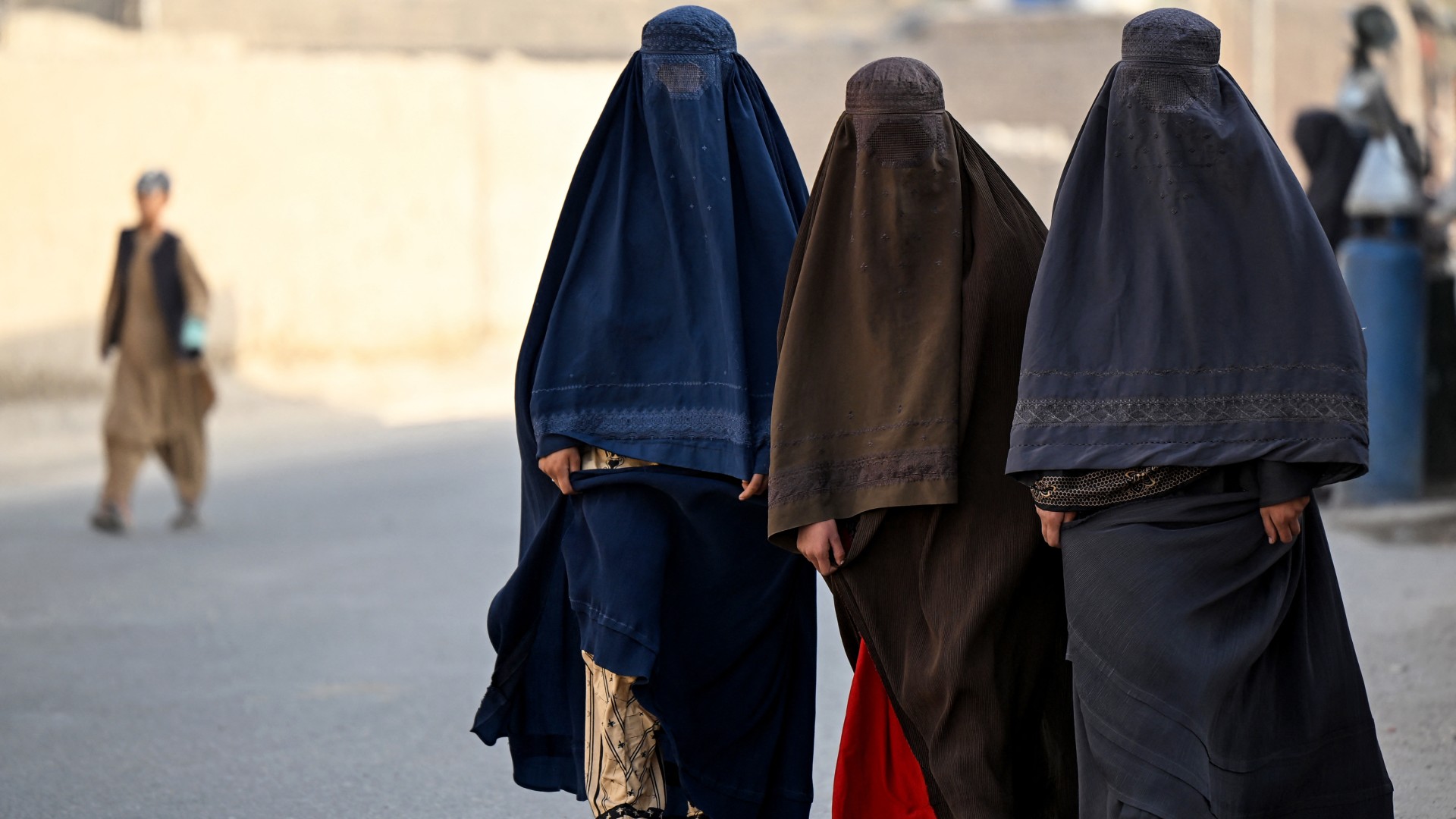
In an official statement released alongside the declassified warrants, the ICC outlined the scope of the alleged persecution. While the Taliban has imposed sweeping restrictions on all Afghans, the court confirmed that girls, women, and gender non-conforming people have been deliberately targeted solely on the basis of their gender, stripped of core fundamental rights and freedoms enshrined in international law. Through formal decrees and government edicts, the Taliban has systematically cut girls and women off from access to education, violated their rights to privacy and family life, and restricted their fundamental freedoms of movement, expression, thought, conscience, and religion, the court said. The statement also added that people whose gender expression or identity does not align with the Taliban’s strict gender ideology have also been specifically targeted for repression.
Beyond the immediate allegations, the four arrest warrants mark a historic turning point for international criminal law. This is the first time that the ICC, or any international tribunal in history, has formally recognized LGBTQ+ people as victims of systematic persecution in an arrest warrant proceeding. The gender persecution charge itself is also extremely rare in international criminal justice: prior to this case, the ICC has only brought this charge once, in the Al Hassan case, and has never secured a conviction on the offense.
The investigation and warrant applications were led by former ICC prosecutor Karim Khan and deputy prosecutor Nazhat Shameem Khan, who oversees the court’s Afghanistan portfolio, with strategic guidance from special adviser Lisa Davis, who drafted the ICC’s official policy on gender persecution.
The decision to unseal the September 2025 warrants follows a change in ICC rules implemented last year. In April 2025, judges ordered the prosecutor’s office to keep all arrest warrant requests confidential unless a specific judicial chamber granted approval for publication. Under revised regulations, judicial chambers now have the discretion to unseal warrants on a case-by-case basis, either to prevent further criminal acts from being committed or to increase the likelihood that the suspects will eventually be taken into custody.
Alongside the unsealing of the warrants, the ICC also made public a separate formal request from its judges to the prosecutor’s office: the judicial body has called for prosecutors to launch a standalone, independent investigation into Taliban gender persecution, splitting this probe from the court’s broader, long-running investigation into war crimes committed in Afghanistan that has previously included allegations against U.S. nationals.
If the prosecutor’s office moves forward with the split, the Taliban gender persecution investigation will be separated from the larger Afghanistan inquiry, which has covered alleged war crimes committed since 2003 by multiple parties: Afghan National Security Forces, U.S. military and CIA personnel, the Taliban, and the Islamic State-Khorasan Province (IS-K).
This procedural shift is already sparking geopolitical scrutiny, with analysts suggesting it could raise questions about whether the ICC is seeking to de-escalate tensions with Washington by signaling it will no longer actively pursue allegations against U.S. forces and their affiliated groups. The judicial announcement comes just days after U.S. Secretary of State Marco Rubio publicly threatened to “dismantle the ICC, brick by brick” in comments referencing the court’s 2020 decision to greenlight the full Afghanistan investigation.
Since February 2025, the U.S. has imposed sweeping retaliatory financial sanctions and visa restrictions on multiple ICC officials, tied directly to the court’s investigations in Afghanistan and Palestine. The U.S. has justified the measures by arguing the ICC oversteps its authority when it prosecutes U.S. nationals or allies of the United States. The first official targeted by U.S. sanctions was former ICC prosecutor Karim Khan, who was controversially removed from office by ICC member states in July 2025 following an 18-month misconduct investigation. Nine ICC judges have also been sanctioned, including three members of the 2020 Appeals Chamber that authorized the original Afghanistan investigation: Kimberly Prost, Solomy Bossa, and Luz Ibanez.
Notably, the U.S. sanctions were imposed despite a 2021 decision by Karim Khan to deprioritize the strand of the Afghanistan investigation focused on U.S. military and CIA personnel, as well as forces of the former Afghan government, in order to direct investigative resources to the Taliban and IS-K.
As Middle East Eye previously reported, during the ICC’s annual Assembly of States Parties meeting held in The Hague last December, diplomats confirmed that the Trump administration had pressured the court to abandon both the Afghanistan and Palestine investigations as a condition for lifting existing U.S. sanctions. The U.S. also demanded that ICC member states amend the Rome Statute, the court’s founding treaty, to block the prosecution of nationals from non-member states, including the U.S. and Israel. By the end of the conference, the assembly issued a public statement rejecting these demands and refusing any amendments to the Rome Statute, without explicitly naming the U.S. in its formal declaration.