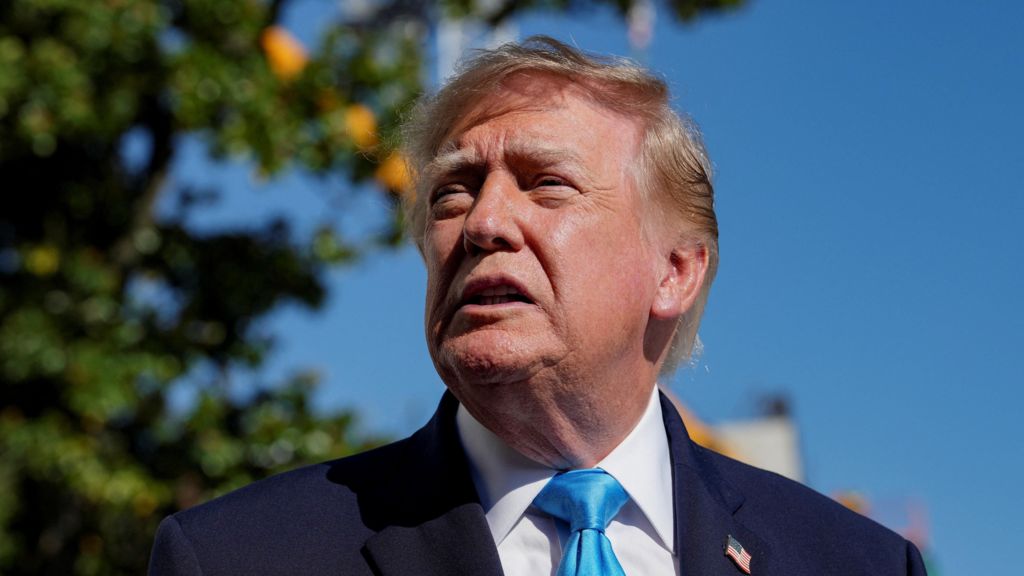
In a development that has tightened transatlantic security tensions, former U.S. President Donald Trump has confirmed that the relocation of American bombers from the UK’s RAF Fairford was a direct response to specific threats targeting the Gloucestershire-based airbase. The Pentagon confirmed Sunday that approximately 12 B-1 bombers, previously deployed at the forward operating site, had been flown back to their home stations in the continental United States.
During a press gaggle with reporters ahead of a trip to Nebraska on Monday, Trump explicitly acknowledged the security trigger for the sudden redeployment. When asked whether a specific threat prompted the withdrawal, Trump responded: “Yeah I think we can say that. They didn’t fly out by accident. There were some threats. And rather than tempting the enemy, we’ll capture the enemy and beat the enemy. But why should we leave them there? So we moved them around a little bit. Not very far.”
The president added that U.S. intelligence officials already have identified the parties behind the threat, though he declined to name specific actors or groups publicly. The redeployment follows a suspicious incident at the Cotswolds base on September 27, when counter-terrorism police responded to reports of three suspicious vehicles in the area surrounding the installation. Six men, including one UK-Iranian national, were arrested on suspicion of terror-related offenses in connection with the incident, and all six have since been released on bail.
UK Downing Street earlier Monday reaffirmed that RAF Fairford remains secure, pointing to Trump’s own comments from the previous week in which he praised British police, defense and security agencies for their work protecting the base. U.K. Prime Minister Andy Burnham acknowledged days after the incident that there are “strong indications” of Iranian involvement, though he offered no additional evidence to support the claim. U.S. Secretary of State Marco Rubio, for his part, has stopped short of directly linking the September incident to the bomber relocation, framing the movement as a routine adjustment. “It’s not unusual to see movement of assets to different parts of the world based on exercises, redeployments, people changing out and new people coming in, new planes coming in and old planes going out,” Rubio told reporters, adding that the U.S. retains full confidence in the security of all its overseas bases and that British security officials have been fully cooperative throughout the investigation.
U.S. Vice President JD Vance, however, framed the withdrawal as an “abundance of caution” that aligned with longstanding U.S. concerns about Iranian activity. “Washington feels Iran is doing what it has done for 49 years… which is engage in acts of terrorism against the US and against a lot of other people,” Vance said. Rubio also echoed the framing of foreign involvement in the incident during an interview on Fox News, saying it “clearly involve[d] the hands of a foreign actor” without elaborating.
Tehran has forcefully rejected all accusations of involvement. Back in July, Iranian officials issued a warning that “any base used for aggression against Iranian territory constitutes a legitimate target for our forces.” That warning came after the UK approved a U.S. request to use RAF Fairford as a staging point for defensive strikes against Iran, with American B-1 and B-52 bombers having flown missions to the Middle East from the British base in recent months. RAF Fairford has hosted U.S. Air Force operations as a key forward operating location for decades, and Whitehall sources have not denied that the U.S. decision to pull out the bombers was directly tied to the September incident at the base.