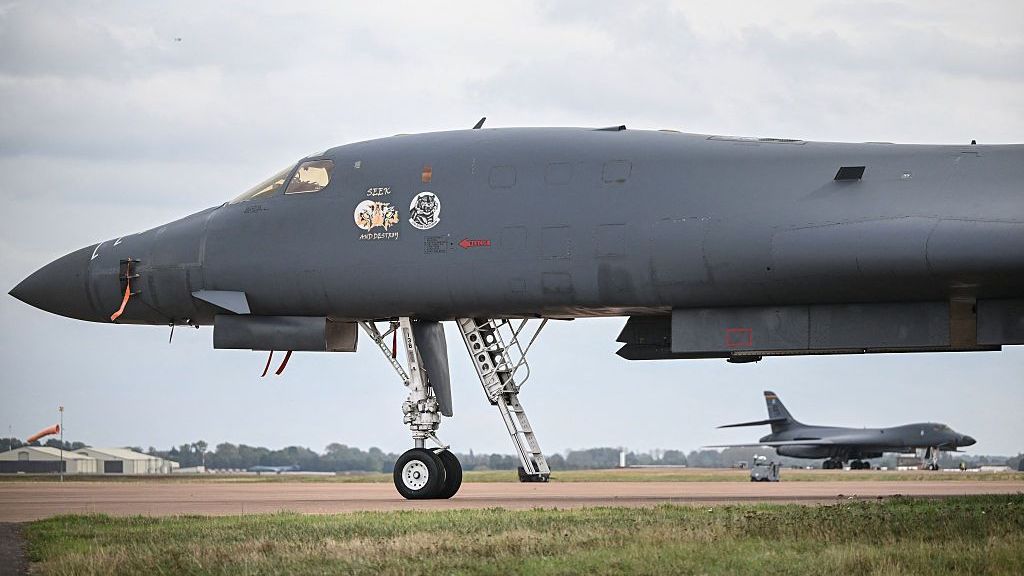
In a move that has sparked cross-Atlantic security debate, the United States has pulled all of its bomber aircraft out of RAF Fairford, a key forward operating base for the U.S. Air Force in the English Cotswolds, following a suspected terror plot linked to Iran. The Pentagon confirmed Sunday that the deployed force, estimated to include around 12 B-1 Lancer bombers, has been redeployed back to their home stations on U.S. soil, just over a week after counter-terror police launched an investigation into suspicious activity near the Gloucestershire base.
The September 27 incident first put the base on high alert after local authorities received reports of three suspicious vehicles in the area surrounding the facility. Counter-terrorism officers ultimately arrested six men, all of whom have since been released on bail while investigations continue. Five of those arrested were detained initially on suspicion of terror-related offenses, and a sixth UK-Iranian national was taken into custody days later.
Multiple U.S. and UK government sources have confirmed the withdrawal was directly prompted by the incident and new, specific threat intelligence. The New York Times reported Monday that U.S. military command received new intelligence indicating an Iran-backed plot targeting RAF Fairford, with the new details emerging within 24 hours of the withdrawal. This threat is tied to earlier warnings issued three weeks prior, but officials moved swiftly to redeploy the bombers after concrete details of the plot came to light. Whitehall sources have not challenged the connection between the September incident and Washington’s decision, and the BBC has learned the order was an operational military choice rather than a political one, communicated promptly from U.S. military leadership to their UK counterparts.
Downing Street has moved quickly to reassure the public that the base remains secure, despite the redeployment. A spokesperson for the Prime Minister’s office declined to comment on the military operations of a foreign ally, but emphasized that RAF Fairford is safe. The spokesperson also pointed to remarks made last week by former President Donald Trump, who praised UK police, defense and security forces for their handling of the incident. UK Defense Secretary Wes Streeting also previously noted that the UK has long-standing, tested protocols in place to defend military bases across the country and overseas.
Reactions to the withdrawal have been split across UK political and defense circles. Former Trump administration defense official Ezra Cohen described the decision as a prudent precaution, noting that the B-1 bomber is a limited, irreplaceable strategic asset for the U.S. “These are very, very unique platforms that aren’t being produced anymore, and we have a limited number of them,” Cohen told BBC Radio 4’s *Today* program. “The B-1 bomber is a strategic asset, and we’re going to take steps to protect it from all sorts of threats.”
However, Liberal Democrat defense spokesperson James MacCleary called the withdrawal “deeply concerning,” and called on the UK government to publish a full plan to verify that all British military installations meet modern security standards. In the days after the September incident, Prime Minister Andy Burnham stated there were “strong indications” of Iranian involvement, though he offered no additional evidence to support the claim. U.S. Secretary of State Marco Rubio similarly said the plot “clearly involve[d] the hands of a foreign actor,” but also declined to share further details. Tehran has repeatedly and strongly denied any connection to the plot, and in July of this year, Iran stated that any base used for aggression against Iranian territory would be considered a legitimate military target.
RAF Fairford has hosted U.S. bomber deployments for decades, and in recent months, the base has played an increasingly strategic role in U.S. operations in the Middle East. Earlier this year, the UK approved a U.S. request to use the base to launch defensive strikes against Iran, with both B-1 and B-52 bombers flying missions from the Cotswolds facility to the Middle East.
For local residents living near the base, the departure of the bombers has been met with relief rather than alarm. Many locals have long complained about the constant noise from low-flying military aircraft, and the recent security alerts left many feeling increasingly on edge. One local resident told the BBC she was “thrilled” by the withdrawal, citing both noise pollution and growing anxiety over the base’s targeted status. Another villager, who told the BBC he has watched bombs being loaded onto aircraft from his own back garden, said he knew an unusual movement was underway when he saw the planes depart one after another throughout Sunday.