A week after 19 young Nigerian graduates were abducted by unidentified gunmen in the country’s south-eastern Imo State, security forces have confirmed they have pinpointed the captives’ location — but are holding back from an immediate assault over fears the remote camp is laced with homemade explosives. The abducted group are all prospective participants in Nigeria’s mandatory National Youth Service Corps (NYSC), a year-long national program designed to build cross-regional unity among young graduates, who are posted across the country for community and public service work.
The kidnapping unfolded last Thursday, when the corps members were traveling by bus from the south-western city of Ibadan to orientation camps in Abia and Akwa Ibom states. Gunmen ambushed their convoy near the community of Umunoha in Imo State, seizing all 19 recruits. No armed or criminal group has yet claimed responsibility for the attack, and police have not publicly named any suspects as of the latest update.
Police Commissioner Audu Bosso told reporters that aerial surveillance from drones allowed security teams to locate the captives’ hiding camp. While the breakthrough offers hope for the hostages, the operation has hit a critical obstacle: intelligence indicates the entire site is booby-trapped with improvised explosive devices (IEDs) that put both hostages and rescue personnel at severe risk. To overcome this barrier, authorities are currently deploying heavy bulldozers and armored vehicles to prepare for a safe clearing operation ahead of any rescue attempt. The exact location of the camp is being kept confidential to protect the integrity of the ongoing operation.
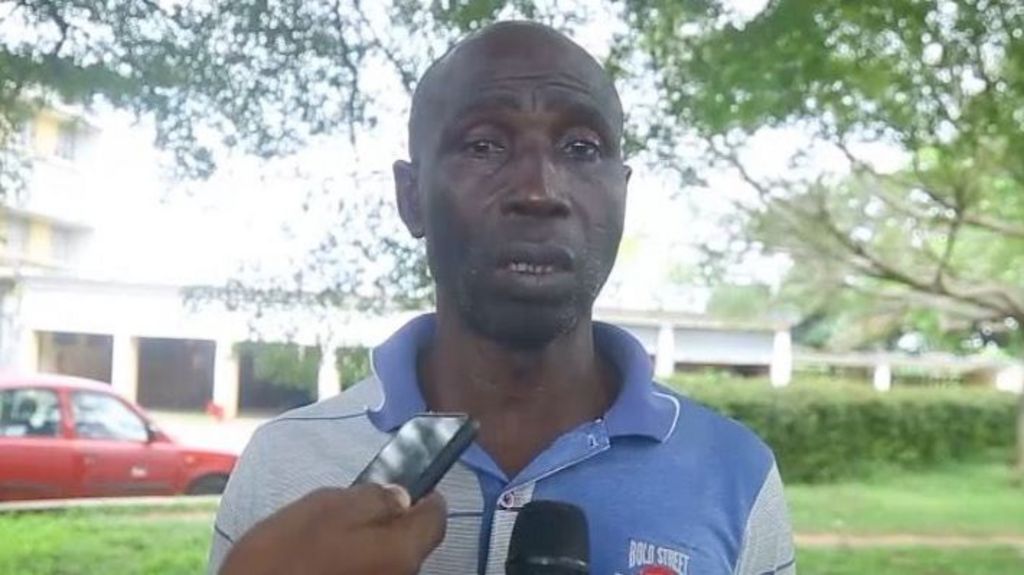
For families of the abducted young people, the week-long wait has been an agonizing ordeal. Omotosho Adewale, whose child is among the hostages, spoke to the BBC about the devastating toll of the kidnapping. He confirmed that captors have demanded a ransom of 50 million Nigerian naira, equal to roughly $37,680 — a sum he says he is completely unable to raise. “There’s no peace of mind. I’ve not eaten in three days,” Adewale said through tears, before issuing a public plea to the Nigerian federal and state governments to intervene and secure his child’s safe release.
Kidnapping for ransom remains one of Nigeria’s most persistent and widespread security challenges, with both criminal gangs and armed separatist groups carrying out such attacks across the country. While mass abductions have historically been more common in northern Nigeria, this latest incident has shaken public confidence in security in the country’s southern regions, where such large-scale kidnappings have been less frequent. The incident has also reignited longstanding debates over the safety of the NYSC program, which requires young graduates to travel and relocate to regions across the nation.
Under existing NYSC policy, the program does not deploy corps members to areas officially classified as high-risk for violence or kidnapping. Until this incident, most of south-eastern Nigeria was not designated a high-risk zone, though there have been smaller-scale abductions in the region linked to separatist movements including the Indigenous People of Biafra (IPOB). Nigerian authorities have not yet drawn any connection between this kidnapping and known separatist groups. Nigerian law bans the payment of ransoms to kidnappers, and officials have repeatedly warned families against complying with demands — but desperate relatives often face impossible pressure to pay to secure their loved ones’ release. This high-profile abduction has already spurred renewed calls for policy reforms to strengthen protections for NYSC members traveling across the country.