Following September’s tightly controlled Russian legislative elections, the Kremlin now holds an even stronger grip on the State Duma, with ruling party United Russia boasting more parliamentary seats than at any point in modern Russian history. Dubbed the “Special Election Operation” by one domestic outlet, the vote has allowed the Kremlin to publicly claim it holds an overwhelming popular mandate for its ongoing actions in Ukraine, leaving global observers parsing what this new super-majority means for the trajectory of the conflict.
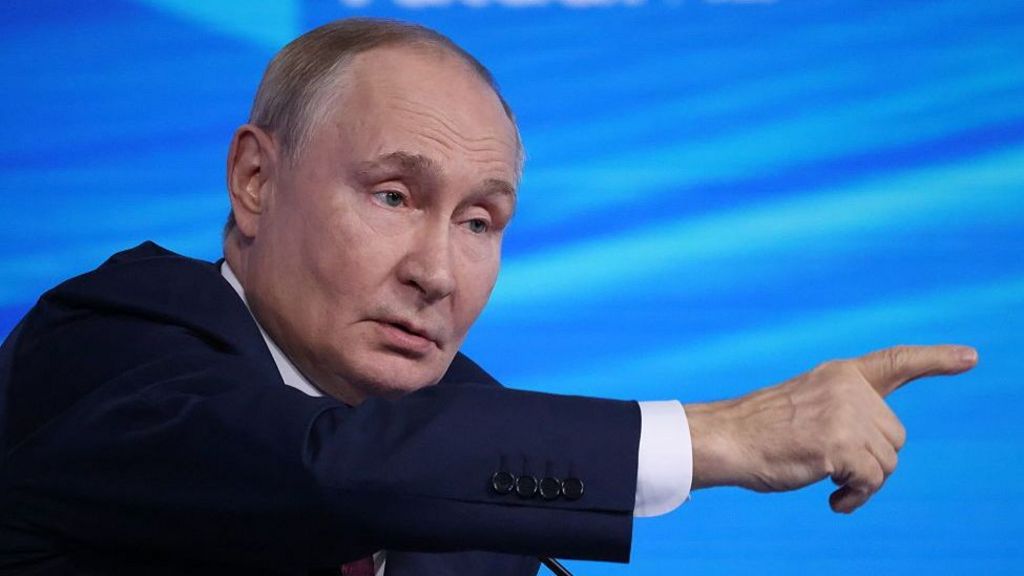
Just one day after Vladimir Putin received a celebratory welcome from the newly seated parliament, attention has shifted to his upcoming address at the annual Valdai Discussion Club, Moscow’s premier foreign policy forum that has long served as a window into the Russian president’s strategic thinking. Right now, all available indicators suggest Putin intends to continue Russia’s full-scale invasion of Ukraine, despite staggering battlefield casualties and mounting economic damage from Western sanctions. Multiple assessments from both Russian and Western observers point to growing confidence in the Kremlin that ongoing winter airstrikes, capitalizing on Ukraine’s reported critical shortage of air defense missiles and systems, will wear down Kyiv’s resistance. Ukrainian officials have repeatedly acknowledged their struggles to intercept Russia’s daily barrages of ballistic missiles and new jet-powered drones, a vulnerability Moscow is actively exploiting.
Beyond the frontlines in Ukraine, the Kremlin has openly targeted European support for Kyiv, arguing that Western military and financial aid is prolonging the conflict and blocking a Russian victory. Western security officials accuse Moscow of waging an escalating hybrid campaign across European soil, encompassing cyberattacks, infrastructure sabotage, and repeated Russian drone incursions into NATO airspace. The most high-profile recent incident saw an explosive-laden drone discovered near Ukrainian cargo aircraft at Leipzig Airport in Germany, a move that fits what Western officials describe as a “grey zone” campaign waged between formal peace and open war.
In an exclusive interview with the BBC, Russian Foreign Minister Sergei Lavrov rejected accusations that Moscow is waging a hybrid war against Europe, instead flipping the narrative to claim the conflict is already a European war against Russia. “If you admit your weapons are being used to strike us and we destroy them, call it whatever you want,” Lavrov stated. “But I have no doubt this is a war Europe is waging against us. We’ve been saying so for a long time.” This framing ignores the core fact that Russia launched its full-scale invasion of Ukraine in 2022 and remains the occupying power in multiple regions of the country.
Many global policymakers are now asking how far Moscow is willing to go to break European support for Kyiv, with fears of open conflict between Russia and a NATO member state rising in some capitals. Most strategic assessments judge direct military conflict with NATO as unlikely: after more than four and a half years of fighting, Russia has still failed to seize full control of Ukraine’s eastern Donbas region, which shares a direct border with Russia. While open war may not be on the table, strategic analysts broadly agree that sowing fear and uncertainty across Europe to erode public and political support for Ukraine is a core Russian goal.
Hardline voices within Russia’s foreign policy establishment have doubled down on aggressive rhetoric in recent days, including explicit nuclear threats against European states. Sergei Karaganov, honorary chairman of Russia’s influential Council for Foreign and Defence Policy, warned that continued Western support for Ukraine will force Russia to escalate. “If they continue this war, a European war with American help, against Russia, on Ukrainian territory, sooner or later we’ll feel the need to escalate,” Karaganov told the BBC. “According to my scenarios, the first series of blows will be conventional, but if Europe does not surrender, unfortunately, we will have to go nuclear. There will be little left of some European countries.” When pressed on the reality of mutually assured nuclear destruction, Karaganov dismissed the possibility of a Western retaliatory strike, claiming U.S. and European leaders would not risk their own destruction to defend Ukraine. When asked to acknowledge the severe human and economic costs of the conflict for Russia, Karaganov admitted heavy casualties but argued the Kremlin had not been aggressive enough, stating Moscow’s current goal is to eliminate Ukraine as a functional independent state. If that is indeed the Kremlin’s end goal, experts say, there is little prospect of the conflict ending in the near term.
Lavrov doubled down on Russia’s narrative during recent UN General Assembly appearances, accusing the West of widespread hypocrisy and brute force across the globe, pointing to U.S. actions in Venezuela and the killing of Iranian military leaders as evidence. When pressed by the BBC on Russia’s own daily use of brute force in Ukraine, Lavrov framed the destruction of Ukrainian infrastructure as a necessary response to a Western-backed “Nazi regime” that threatens Russian security. This familiar narrative, which relies on the false framing of Ukraine as a neo-Nazi state, paired with Lavrov’s open admission of Russia’s use of brute force, has reinforced Western assessments that Moscow has no intention of entering good-faith peace negotiations in the near future.