Global discussions around cutting reliance on the Strait of Hormuz, one of the world’s most critical energy chokepoints, almost exclusively center on bypass pipeline projects developed by Saudi Arabia and the United Arab Emirates. But for major Asian energy importers that depend heavily on Hormuz-bound oil and gas flows, these infrastructure projects are only a partial solution to regional energy security risks. The physical bottleneck sits in the Persian Gulf, but the bulk of global economic exposure to potential disruptions is concentrated thousands of kilometers east across Asian markets.
Data from the U.S. Energy Information Administration (EIA) shows that in the first half of 2025, 89% of all crude oil and condensate passing through the Strait of Hormuz was bound for Asian economies. Just four nations – China, India, Japan, and South Korea – accounted for 74% of these total flows. For these major economies, the strait is far more than a distant geopolitical flashpoint; its reliable operation is baked into the core structure of their national energy supply systems.
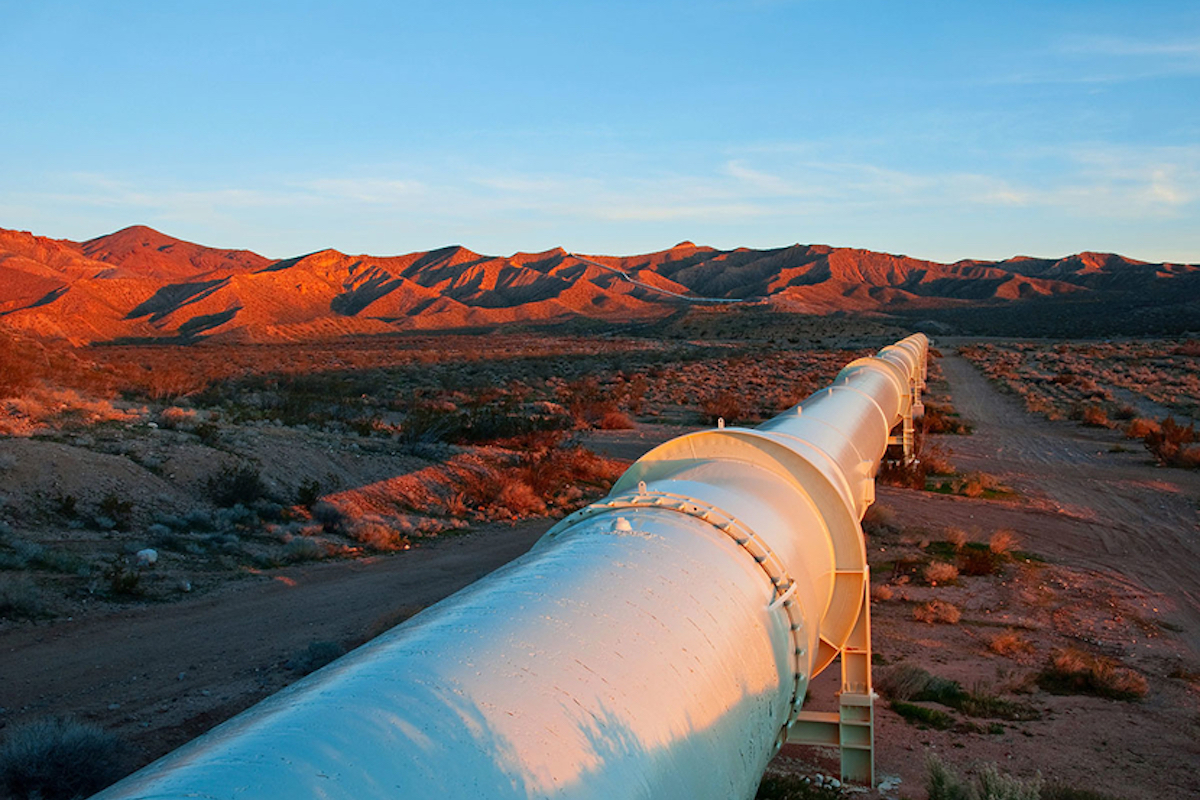
To date, regional producers have pursued logical infrastructure efforts to reduce exposure to Hormuz disruptions. Saudi Arabia’s 7 million barrels per day (bpd) East-West Pipeline moves crude oil west from Persian Gulf fields to the Red Sea export terminal at Yanbu, fully bypassing the strait. The UAE already routes crude through an existing pipeline to the Gulf of Oman port of Fujairah, and state oil firm ADNOC is currently constructing a second parallel pipeline that will double the port’s export capacity when it enters operation in 2027. These projects are designed to give producers far more operational flexibility if Hormuz is closed or disrupted.
However, a recent attack on Saudi Arabia’s key bypass pipeline offers a stark warning that extra pipeline capacity does not automatically equate to full energy security. On September 10, multiple attacks targeted sections of the East-West Pipeline in the Riyadh and Madinah regions. Saudi Arabia’s Ministry of Energy ordered a full precautionary shutdown while technical teams inspected the line for structural damage, and Reuters reported on September 22 that operations had only resumed at a reduced output rate. This incident comes just six months after the same pipeline proved the value of bypass infrastructure: during the first quarter of 2026, Saudi Aramco ramped flows through the East-West Pipeline to its full 7 million bpd maximum capacity when Hormuz shipping was constrained, calling the line a “critical supply artery” for global markets.
This recent shutdown does not mean investments in bypass infrastructure are misplaced. Instead, it highlights a critical practical reality: backup routes can deliver enormous value during a crisis, but they still remain vulnerable to the same broader regional conflicts that created the need for a backup in the first place.
Industry data also puts clear limits on how much substitution bypass pipelines can actually deliver. The International Energy Agency (IEA) reports that roughly 20 million bpd of oil flowed through Hormuz in 2025, equal to around one-quarter of all global seaborne oil trade. Combined available bypass capacity from Saudi and Emirati pipelines ranges between just 3.5 million and 5.5 million bpd, per IEA estimates, while the EIA puts total operational capacity of the two countries’ main bypass systems at roughly 4.7 million bpd. While several million bpd of alternative capacity is undeniably valuable during a crisis – enough to soften the blow of a major supply shock and give exporters options they would not otherwise have – it cannot replace the full volume of normal traffic through the strait.
Beyond raw capacity numbers, the full story of bypass infrastructure is more complex. Pipelines depend on an interconnected network of supporting assets: pumping stations, power grids, storage facilities, communications systems, export terminals, and safe maritime access at the end point of the route. If multiple parts of this network are exposed to the same regional conflict, a route that looks fully separate from Hormuz on a map may be far less independent in practice.
For Asian buyers, the challenge grows even more acute when it comes to liquefied natural gas (LNG). IEA estimates show that 93% of Qatar’s LNG exports and 96% of the UAE’s LNG exports normally pass through the Strait of Hormuz. Combined, these flows make up roughly 19% of total global LNG trade. In 2025, nearly 90% of all LNG exported through Hormuz was destined for Asian markets, covering approximately 27% of the region’s total LNG imports.
There is currently no pipeline-style workaround for these massive LNG volumes. Qatar transports small volumes of pipeline gas to the UAE and Oman via the Dolphin Gas Project, but spare capacity on the line is extremely limited, and Oman’s existing LNG terminals already operate near full utilization. Moving large volumes of Qatari LNG to an alternative export terminal would require far more than just new pipeline infrastructure: it would require rebuilding the entire network of liquefaction facilities, storage tanks, and export terminals that took years to construct and billions of dollars in financing to develop.
Market movements from earlier this year illustrate how Asian buyers actually adapt to Hormuz disruptions. The IEA’s Q3 2026 Gas Market Report found that between March and June 2026, LNG loadings from Qatar and the UAE fell by 35 billion cubic meters (bcm) compared to the same period in 2025. Producers outside the Persian Gulf raised output by roughly 27 bcm, replacing around three-quarters of the lost volumes. Asian importers did not resolve the disruption by opening a new route around Hormuz; they adjusted through increased supply from other regions, higher market prices, and targeted demand reduction.
These developments point to the need for Asian governments to adopt a far broader definition of national energy resilience. Additional bypass capacity from Saudi Arabia and the UAE is certainly useful, and the new ADNOC pipeline to Fujairah will add welcome operational flexibility. But Asia’s overall energy security cannot depend solely on Persian Gulf pipeline engineering. When Hormuz transport routes become unreliable, the full set of resilience tools matters: supplier diversification, strategic petroleum and gas reserves, flexible LNG contracting, adequate domestic storage and regasification capacity, and the ability to switch between different crude oil grades to offset supply gaps.
This principle also applies to producing nations. Adding a second export route improves overall energy system resilience, but the value of that redundancy depends on how many shared risks the two routes still face – from power supply and storage to terminals, communications, and physical security.
The Strait of Hormuz is unlikely to become irrelevant to global energy markets any time soon; the volumes of oil and gas passing through it are simply too large, and LNG shipments are particularly difficult to reroute. A more realistic policy goal for dependent economies is to reduce the damage that a potential Hormuz disruption would cause. For Asia, that means framing existing bypass pipelines as one critical layer of energy insurance – not a complete, standalone insurance policy on its own.
This analysis was contributed by Dr. Mahyar Ramezankhani, a postdoctoral researcher and economics professor specializing in applied economics and regional economic policy.