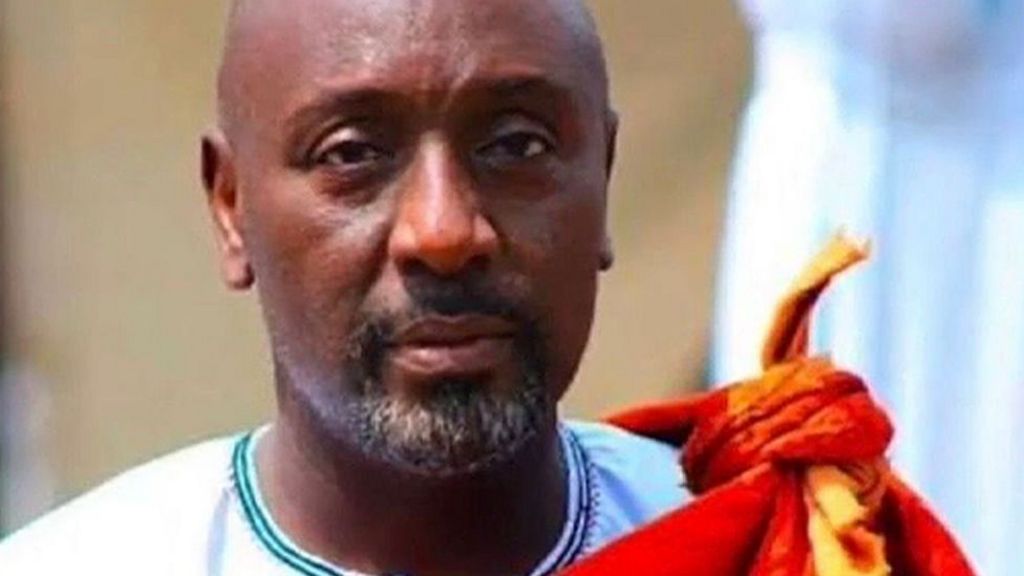
A decades-long career as a trusted public media journalist has turned to an unexpected new chapter for 56-year-old Prince Edward Rukidi Kijanangoma Nyabongo II, who is set to be crowned the next Omukama (King) of Uganda’s historically recognized Tooro Kingdom — but his ascent to the throne has sparked a bitter public succession dispute that has drawn national attention and split the royal family.
Tooro is one of four traditional kingdoms granted official status by the Ugandan government after their restoration in the 1990s. For 31 years, the kingdom was led by King Oyo Nyimba Kabamba Iguru Rukidi IV, who captured global attention as the world’s youngest monarch when he inherited the throne at just 3 years old in 1995 following his father’s death. Oyo’s reign ended last month when he died of cancer at age 34, triggering the traditional process to select a new ruler.
The upcoming coronation follows a strict centuries-old ritual that begins at midnight, with the new king completing a 4-kilometer walk to Karuziika Royal Palace before a symbolic mock battle — a tradition meant to convey that royal leadership is not granted easily. Following the procession, members of the ruling Babiito clan offer their blessings, and Kijanangoma will complete a series of ceremonial acts formalizing his assumption of power before the official crown is placed on his head, Tooro Kingdom Information Minister Charles Mwanguhya explained to the BBC Focus on Africa podcast.
However, the selection of Kijanangoma was far from a unanimous, smooth process. Per Tooro tradition, the throne is expected to pass to a publicly recognized son of the late monarch. Close royal family insiders claim King Oyo left behind a young son and a formal will naming the child as his rightful successor, but the boy has never been presented to the public, and the 21-member Babiito succession committee — the body constitutionally tasked with selecting the new king — did not recognize his claim. Oyo never publicly acknowledged a marriage or heir, leaving little verifiable information about the alleged son.
The late king’s mother, Queen Best Kemigisa, has emerged as the most vocal critic of the committee’s decision, arguing Oyo’s will should have been honored and her grandson’s claim respected. “As a mother, that was extraordinarily painful,” Kemigisa said, noting that coronation preparations were underway only meters from where her son’s body remained following his death. She added that her grandson, currently residing in Texas, United States, has been unable to return to Uganda to press his claim due to the growing polarization and hostility surrounding the dispute. “No child should be placed in circumstances where returning to his father’s homeland could mean being drawn into hostility and conflict,” she posted on social media platform X.
Mwanguhya pushed back on these claims, saying that “the son being talked about hasn’t been presented anywhere, which means there is a growing acceptance that sad as it may be, King Oyo didn’t leave a son behind.” He confirmed the crown has shifted to a different lineage within the ruling Babiito clan, which requires all kings to descend from King George David Matthew Kamurasi Rukidi III, who ruled Tooro from 1928 to 1965. Kijanangoma and the late King Oyo are cousins, both direct grandsons of Rukidi III, placing him firmly within the eligible line of succession.
Kijanangoma was not the only candidate considered for the throne: Prince George Desmond Kamurasi, captain and goalkeeper for UK amateur side South East Dons, was also offered the role but declined due to existing personal and professional commitments. Following his formal selection, Kijanangoma has positioned himself as a unifying leader, promising to open the royal palace to community members and prioritize inclusive development across the kingdom. “I ask you for one thing — they have given me this title as king but I cannot work alone, I have to work with you,” he said in his first public address after being named successor.
Unlike the monarchies of many European nations, Uganda’s traditional kings hold no formal constitutional or political power, but they wield substantial cultural influence and command deep loyalty from local communities. The kingdoms were abolished by the national government in 1967, but President Yoweri Museveni’s administration restored their official cultural status in the early 1990s as part of an effort to boost national cultural pride and unity, though analysts have also noted the move helped build political loyalty among traditional kingdom communities.
In the current dispute, the Ugandan national government has formally backed the Babiito clan’s selection of Kijanangoma. Attorney General Sam Mayanja cleared the kingdom to proceed with the coronation, noting no formal legal challenge to Kijanangoma’s appointment has been filed. Museveni is scheduled to attend the coronation ceremony, and his son, General Muhoozi Kainerugaba, head of Uganda’s military, has already publicly expressed his support, posting “Long may he reign” on X.
Kijanangoma’s connection to the throne is woven into his very identity: his father was born the same year Rukidi III took power, and the king personally named him Kijanangoma, a term that translates to “the one who comes with the royal drum” — a prophecy that the royal line would return to this branch of the family two generations later. Born in 1970 and raised in Kidukuru village, roughly 300 kilometers outside Kampala, Kijanangoma earned a degree in mass communication from Uganda’s prestigious Makerere University in 1999, and went on to build a 21-year career in journalism, working for state-owned Uganda Broadcasting Corporation as an anchor and editor, as well as for media outlets in neighboring Rwanda.
Kijanangoma says his decades of experience engaging with the public and building connections across Uganda’s political and social spheres will serve him well in his new role, and he plans to leverage those networks to deliver improvements for Tooro Kingdom residents. His mother, Assimwe Yusta Kijanangoma, says she is confident her son is prepared for the role, having been raised deeply rooted in Tooro tradition. “I really raised him with the teachings of the old kingdom of a cane and instructions and scolding. I laugh with him, and other times I scold him,” she told the BBC. “Eddy is well-mannered, he does not fight, or shout, even when wronged, he says a few words and does not go so much into it.” While she is proud of her son’s new role, she acknowledged feeling mixed emotions, succeeding the late King Oyo, who she described as a “great man.”