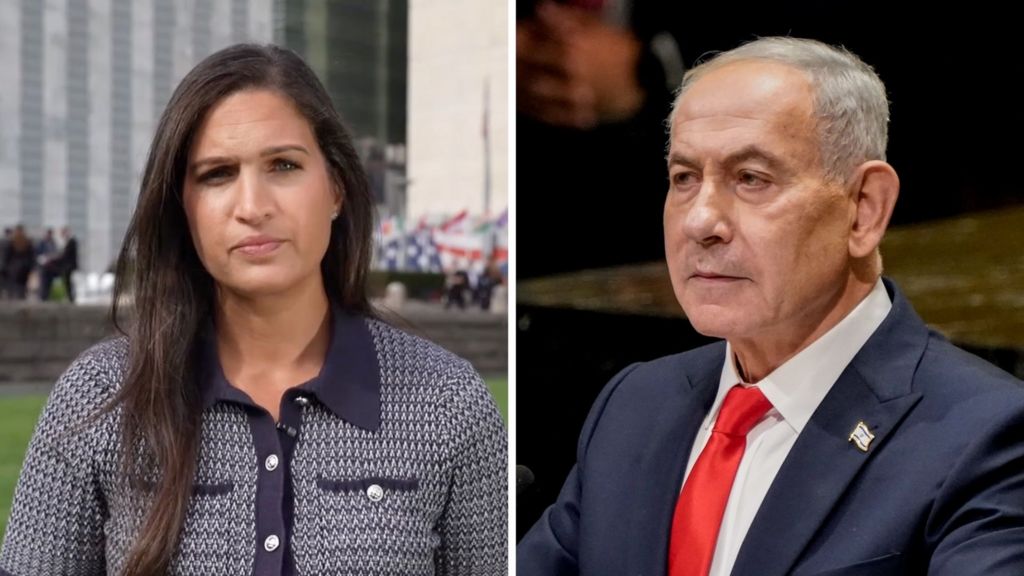
When the International Criminal Court issued an international arrest warrant for Israeli Prime Minister Benjamin Netanyahu earlier this year, many global observers assumed that any cross-border trip by the leader would end in his detention. But when Netanyahu traveled to the United States to address the United Nations General Assembly in New York, no arrest took place — leaving many people around the world asking why the warrant never led to enforcement during the high-profile visit.
To unpack this outcome, it is first necessary to break down the structural limitations of the International Criminal Court’s arrest warrant framework. Unlike domestic law enforcement agencies, the ICC does not have its own standing police force that can execute warrants across sovereign borders. Instead, it relies entirely on cooperation from member states to carry out arrests on their territory. Even for countries that have formally joined the ICC, political considerations and bilateral diplomatic relationships often override legal obligations to enforce a warrant.
The United States holds a unique position in this dynamic, as it has never been a member of the International Criminal Court, and has long-standing legal and political policies that reject the court’s jurisdiction over American personnel and allied foreign leaders. Washington has repeatedly made clear that it does not recognize the ICC’s arrest warrant for Netanyahu, and has no legal obligation to comply with it. As the host country for the United Nations headquarters in New York, U.S. law enforcement authorities are the only agencies with the power to carry out arrests on UN premises, outside of the UN’s limited internal security jurisdiction.
Another key factor is the long-standing security and diplomatic alliance between the U.S. and Israel. The Biden administration has repeatedly reaffirmed its unwavering support for Israel amid ongoing regional conflicts, and has publicly criticized the ICC’s warrant as unjust and counterproductive to regional peace efforts. For U.S. officials, arresting a visiting allied head of government would represent an unprecedented rupture in bilateral relations, a outcome that no sitting U.S. administration would be willing to entertain regardless of legal arguments from the ICC.
Even beyond U.S. policy, the precedent of sovereign immunity plays a major role in this outcome. As the sitting head of government of a sovereign state, Netanyahu retains full sovereign immunity under international law when traveling on official diplomatic business, including to attend a session of the UN General Assembly. Many legal scholars argue that this immunity supersedes the ICC arrest warrant under existing international conventions, even for states that recognize the court’s authority.
This case has laid bare the deep gap between the ICC’s formal authority to issue arrest warrants and the practical ability of the court to enforce those warrants against powerful leaders backed by major global powers. It has sparked renewed debate about the effectiveness of international justice mechanisms, and how political power dynamics often shape whether international law is enforced in high-profile cases.