Italy’s conservative-led government has greenlit two divisive new education policies: a ban on full-face Islamic veils in all school settings, and a legal cap on the share of students with limited Italian language proficiency in any single classroom. The new rules, which were formally approved during a cabinet meeting on Thursday, impose a 30% maximum limit for students with poor Italian language skills or non-Italian citizenship in the first year of primary, middle, and high school respectively.
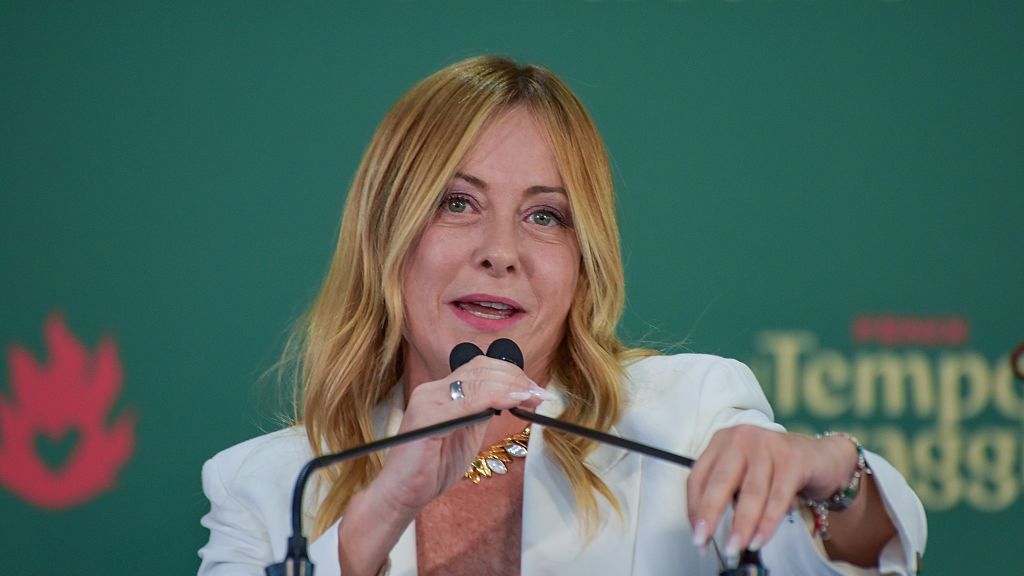
Prime Minister Giorgia Meloni framed these measures as common-sense policies designed to facilitate integration rather than divide communities. In an announcement Sunday, Meloni emphasized that students must attend school with their faces fully visible, arguing that no person should mandate that a young woman hide her identity in the name of cultural or religious tradition. The ban specifically targets burqas, which are full-body veils that cover the entire face with only a mesh screen for vision, and niqabs, which are face veils that leave only the area around the eyes exposed. The regulation does not extend to hijabs, which leave the face uncovered.
Education Minister Giuseppe Valditara has defended the 30% cap, clarifying that it is rooted in linguistic need rather than a ban on citizenship, while framing the full-face veil ban as a step forward for gender equality. According to Valditara, the cap is intended to prevent the formation of so-called “ghetto classes” where students with limited Italian are concentrated in a small number of classrooms, slowing their language acquisition and social integration. Local education authorities will be required to redistribute students with limited Italian evenly across neighboring schools; when redistribution is not feasible, exemptions will be granted alongside additional targeted Italian language instruction. The new decree also requires schools to report cases where persistent language barriers among parents hinder a child’s integration to social services, who will then offer free Italian language courses to parents.
Data from research institute Fondazione ISMU shows that non-Italian citizens currently make up around 11.6% of Italy’s total student population. The 30% cap applies differently across education levels: for primary school, it covers non-citizen students not born in Italy or those who have not completed at least two years of nursery school in Italy. For lower and upper secondary school, the cap applies to non-citizen students who have not successfully completed at least three years of the Italian education system.
This policy is not entirely new ground for Italy. A 2010 ministerial guidance introduced during the tenure of former Education Minister Mariastella Gelmini already set a 30% “rule of thumb” cap for non-Italian citizen students. What this new decree does is codify that existing guidance into binding law, and expand the scope to include the veil ban. As a decree law, the measures take effect immediately, but they must receive formal ratification from the Italian parliament within 60 days to remain in force.
Opposition parties have harshly criticized the new policies, arguing that the government is prioritizing political gain over student welfare, and accusing Meloni of pandering to hard-right factions ahead of next year’s general election. Critics specifically point to the hard-right party Futuro Nazionale, led by retired military general Roberto Vannacci, who has positioned himself as a more extreme alternative to the current ruling coalition from the right. Elly Schlein, leader of the centre-left Democratic Party, has dismissed the plan as nothing more than political propaganda that is impossible to implement. Anna Ascani, deputy leader of the Democratic Party and vice-president of the lower chamber of parliament, went further, accusing the government of spreading propaganda at the expense of Italian schoolchildren.
Valditara rejected these accusations during a video press conference from New York, telling reporters “We are not chasing Vannacci; if anything, he is chasing us.” Vannacci himself has stated that he supports the measures, but argues they should have been implemented years ago. Matteo Salvini, leader of the League party which is part of the ruling coalition, recently introduced a separate package of policies targeting what he calls “political Islam,” and has accused Vannacci of consistently voting against the current government. Salvini also stated that he hopes Futuro Nazionale will support his party’s new proposals, adding another layer of tension to intra-coalition politics on the Italian right.