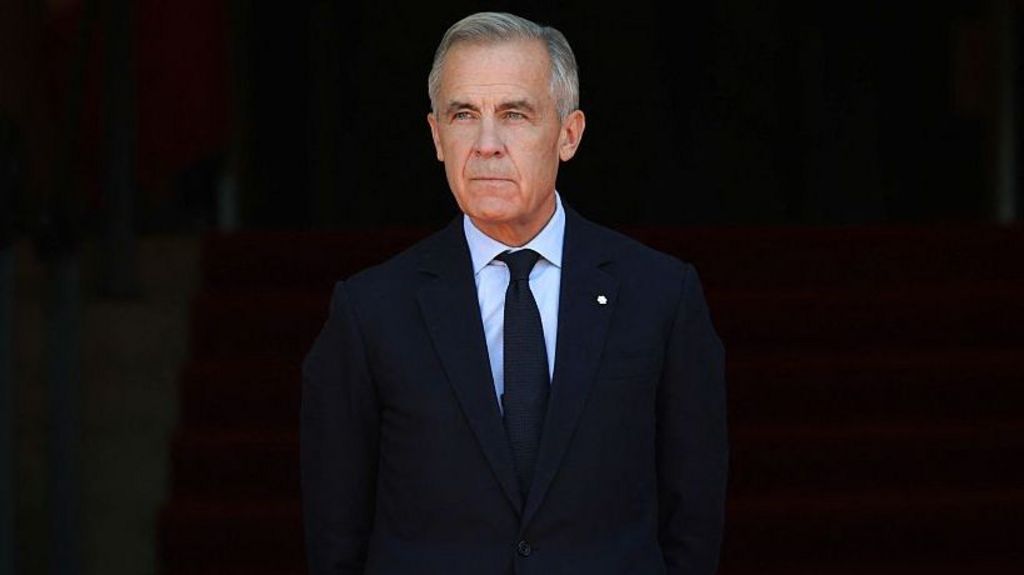
In a revealing interview with The New York Times, Canadian Prime Minister Mark Carney has publicly acknowledged that his government has evaluated the remote but plausible risk of United States military action against Canada and undertaken contingency preparations for that extreme scenario. Carney emphasized that such planning is a core part of responsible risk management, noting that while a military conflict between the two neighboring North American nations is far from the most likely outcome, it would be negligent for his administration to fail to prepare for any extreme tail risk.
This planning comes amid a sharp escalation of bilateral tensions between Canada and the US, driven largely by the aggressive trade and rhetorical policies of US President Donald Trump. Over the past month, tensions have spiked further as the two nations have exchanged tit-for-tat tariffs on a wide range of goods, deepening a trade war initiated by the Trump administration. Additionally, Trump has repeatedly drawn controversy by referring to Canada as the potential “51st state”, stoking nationalist and political unease across Canada.
A military confrontation between the two countries would be overwhelmingly lopsided by any measure. Official government data shows that the US maintains over 2 million active-duty and reserve military personnel, compared to less than 200,000 total personnel in Canada’s armed forces. As of 2024, the US Navy operates 65 military submarines, while Canada’s fleet numbers just four. Still, Canada holds strategic geographic advantages: it boasts the longest coastline in the world and shares a critical proximity to the Arctic region, two factors that have driven Carney to increase national defence spending since he assumed office.
Despite the rising tensions and extreme contingency planning, Carney struck a pragmatic note regarding his current relationship with President Trump. He told the Times that he and Trump speak frequently, and that their direct communication style has enabled efficient discussions of contentious issues. “From my perspective, we have a good relationship in the sense of we can pick up the phone and talk to each other about issues,” Carney said. “He’s direct. I’m direct in terms of where positions are. It’s much more efficient that way, and so you know that exists and that will continue to exist.”
Carney also expressed optimism that a path remains open to restart bilateral trade negotiations and restore the decades-long amicable trade relationship that has benefited both nations for generations. He argued that a return to normalized trade ties would create shared economic gains for citizens on both sides of the Canada-US border.