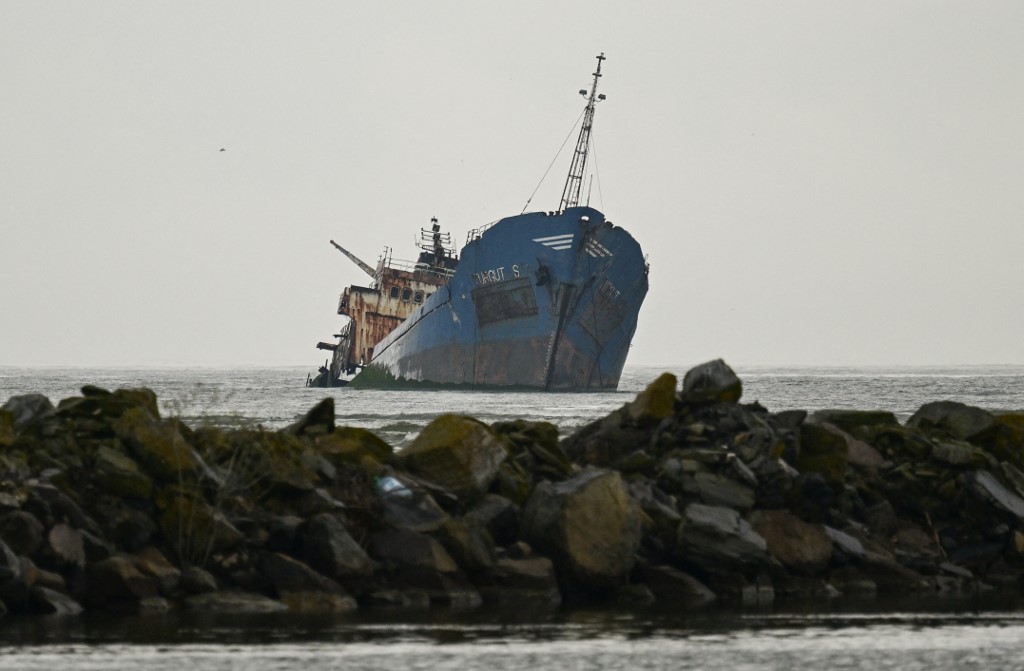
A months-long wave of targeted attacks on commercial shipping in the Black Sea has spurred Turkey to put forward a new proposal for a moratorium on hostile actions against vessels transiting the strategic waterway, with both Russia and Ukraine signaling initial positive reception, but Kyiv warns a breakthrough remains out of reach in the near term due to Moscow’s unrelated additional demands. Multiple regional diplomats with direct knowledge of the negotiations shared this assessment with Middle East Eye in recent briefings.
Turkish Foreign Minister Hakan Fidan first confirmed the proposal’s existence to local media over the weekend, acknowledging that the stark divergence between Moscow and Kyiv’s core positions on Black Sea security makes any immediate compromise a heavy lift. A senior Turkish official who spoke on background to MEE revealed that between the start of January and the first week of September alone, at least 72 commercial vessels have come under attack in the region, most of them hit by unmanned aerial drone strikes. Of those targeted vessels, nearly 70% have direct links to Turkey: they are either Turkish-owned, operated by Turkish management firms, or captained by Turkish nationals. Three Turkish citizens have been killed and another 18 wounded in these shipping attacks, which unfold in a waterway that shares borders with Russia, Turkey, Ukraine, Romania, Georgia and Bulgaria. Just weeks ago, Ankara summoned Ukraine’s top envoy to Turkey to formally protest what it called Ukrainian strikes on emergency response vessels that were conducting search-and-rescue operations for stranded sailors and rendering aid to damaged ships.
The core framework of Turkey’s new proposal builds on the temporary Ukrainian shipping corridor that already operates along the coastlines of Romania and Bulgaria, the Turkish official told Agence France-Presse. Under the plan, a separate dedicated route for Russian commercial vessels would be established along the coasts of Georgia and Turkey, contingent on formal approval from all relevant coastal states to participate in the arrangement. The Turkish official also warned MEE that ongoing disruptions to Black Sea shipping have already created critical food security ramifications, with 13 African nations that rely on grain and fertilizer exports from both Ukraine and Russia already facing supply disruptions and rising commodity prices. Notably, earlier this month Turkey signed a bilateral agreement with Moscow to secure steady supplies of mineral fertilizers, strengthening Ankara’s access to key agricultural raw materials amid ongoing market volatility.
For its part, Ukraine has indicated it is open to a deal structured along the lines of the 2022–2023 Black Sea Grain Initiative, the landmark agreement that allowed safe agricultural exports from both nations for nearly a year before Russia pulled out of the pact in 2023. Under a new modeled agreement, specific port areas in both Ukraine and Russia would be designated exclusively for grain and fertilizer exports, and a joint coordination center would monitor all transiting vessels and share real-time navigation data with both parties, a senior Ukrainian official told MEE. But the same official stressed that reaching a final agreement with Moscow remains extremely challenging, noting that it was Russia – not Ukraine – that walked away from the prior grain pact. “The problem with Russia is that they always ask for more,” the official said. “There are always additional demands in areas which aren’t connected to the grain whatsoever.” As a key example, the official explained that Moscow is currently conditioning any new shipping agreement on Ukraine halting all long-range strikes on Russian oil refineries – a demand that has nothing to do with commercial shipping or food security, making it an irrelevant and unacceptable precondition for Kyiv.
Ukrainian President Volodymyr Zelensky has struck a more optimistic tone, however, after holding bilateral talks with Turkish President Recep Tayyip Erdogan this Wednesday. Zelensky noted that if Moscow agrees to halt all strikes on Ukrainian civilian infrastructure, Kyiv would reciprocate by pausing its own long-range attacks on Russian targets, opening a path for negotiation. During a concurrent press conference held the same day, U.S. Secretary of State Marco Rubio told reporters that the current cycle of attacks sees Ukraine targeting Russian oil infrastructure, while Russia strikes Ukraine’s national electricity grid and disrupts basic daily life for Ukrainian civilians, echoing the view that reaching a lasting solution to the Black Sea shipping crisis will be an uphill battle.