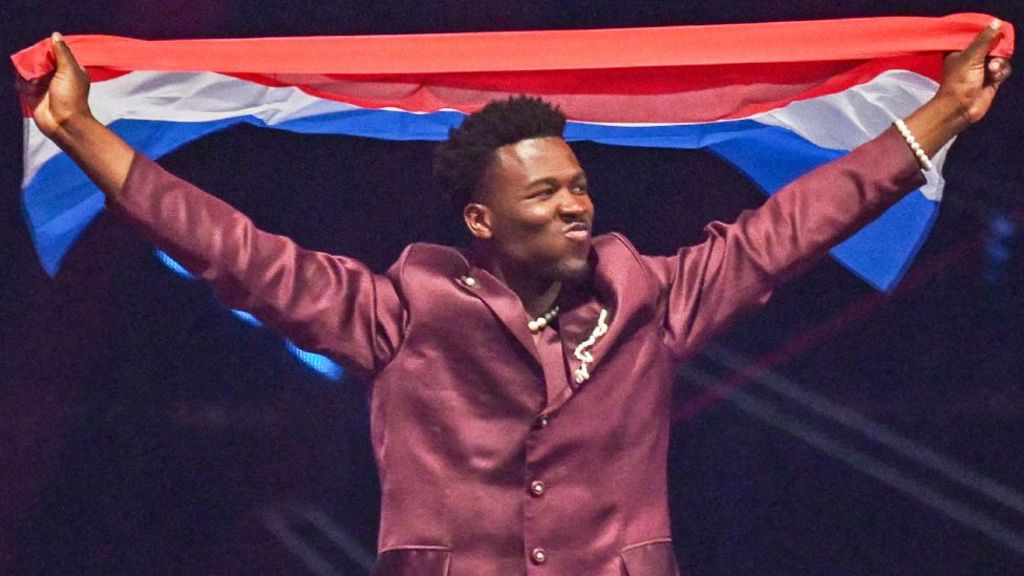
One of Europe’s most iconic annual cultural events is welcoming back a long-time participant after a year of controversy over geopolitical divisions. The Netherlands is set to make its return to the Eurovision Song Contest in 2027, marking an end to the country’s 2026 boycott after the national public broadcasting umbrella organization NPO stepped in to replace the previously participating network Avrotros, which had chosen to withdraw permanently over the contest’s stance on Israel’s participation amid the ongoing Gaza war.
Avrotros first pulled out of the 2026 competition and extended its non-participation to 2027, arguing that the contest could no longer uphold its long-held commitment to political neutrality amid deep international divisions over Israel’s military campaign in Gaza. That withdrawal aligned the Netherlands with four other European nations—Iceland, Spain, Ireland, and Slovenia—that also boycotted the 2026 Eurovision event over the same controversy.
In response to growing global pressure and widespread criticism over the inclusion of a participant involved in an active armed conflict, contest organizer the European Broadcasting Union (EBU) introduced a series of landmark rule changes to address concerns. The most significant of these changes bars any country engaged in armed conflict from hosting the competition, even if its representative wins the grand final. This rule allows Israel to continue competing, but would require the EBU to move the hosting rights to a second-place finisher should Israel secure a win. The EBU also announced planned overhauls to the contest’s voting system, noting that persistent politically motivated voting has become a deep, widely recognized problem that threatens the integrity of the competition.
These reforms were not enough to convince Avrotros to reverse its boycott, with the network stating that the changes did not go far enough to restore the contest’s historic independent and neutral character. However, NPO, the governing body for all Dutch public broadcasting, has stepped forward to take over the country’s participation, announcing this week that fellow public broadcaster NOS will handle all contest coverage, while a fully independent panel of experts will oversee the selection of the 2027 Dutch entrant.
NPO Media Director Jurre Bosman emphasized the importance of the Netherlands remaining part of the pan-European event, noting: “It is important that, as a public broadcaster, we remain part of this unifying European event at this moment in particular.” In its official statement, NPO acknowledged that Eurovision continues to provoke deeply mixed feelings across the Netherlands, but added that the EBU has taken significant, tangible steps to revise its contest rules to address concerns. The organization also confirmed it has formally asked the EBU to re-center the contest’s historic unifying mission as a core priority for future events.
EBU officials welcomed the Netherlands’ decision to return. “We are delighted to welcome the Netherlands back to the Eurovision Song Contest in 2027,” Eurovision Director Martin Green said in a statement. “We value the constructive conversations we have had with NPO and look forward to working together to reinforce the Contest as a place that truly reflects the spirit of ‘United By Music.’”
The 2027 Eurovision Song Contest is scheduled to take place on May 14 in the Bulgarian coastal city of Burgas, following Bulgarian singer Dara’s victory in the 2026 contest with her hit track *Bangaranga*. The 2027 event will also mark a historic milestone for the competition, as Canada is set to make its debut participation after the country’s invitation was announced last month. The Netherlands last competed in Eurovision in 2025, where the country was represented by artist Claude.