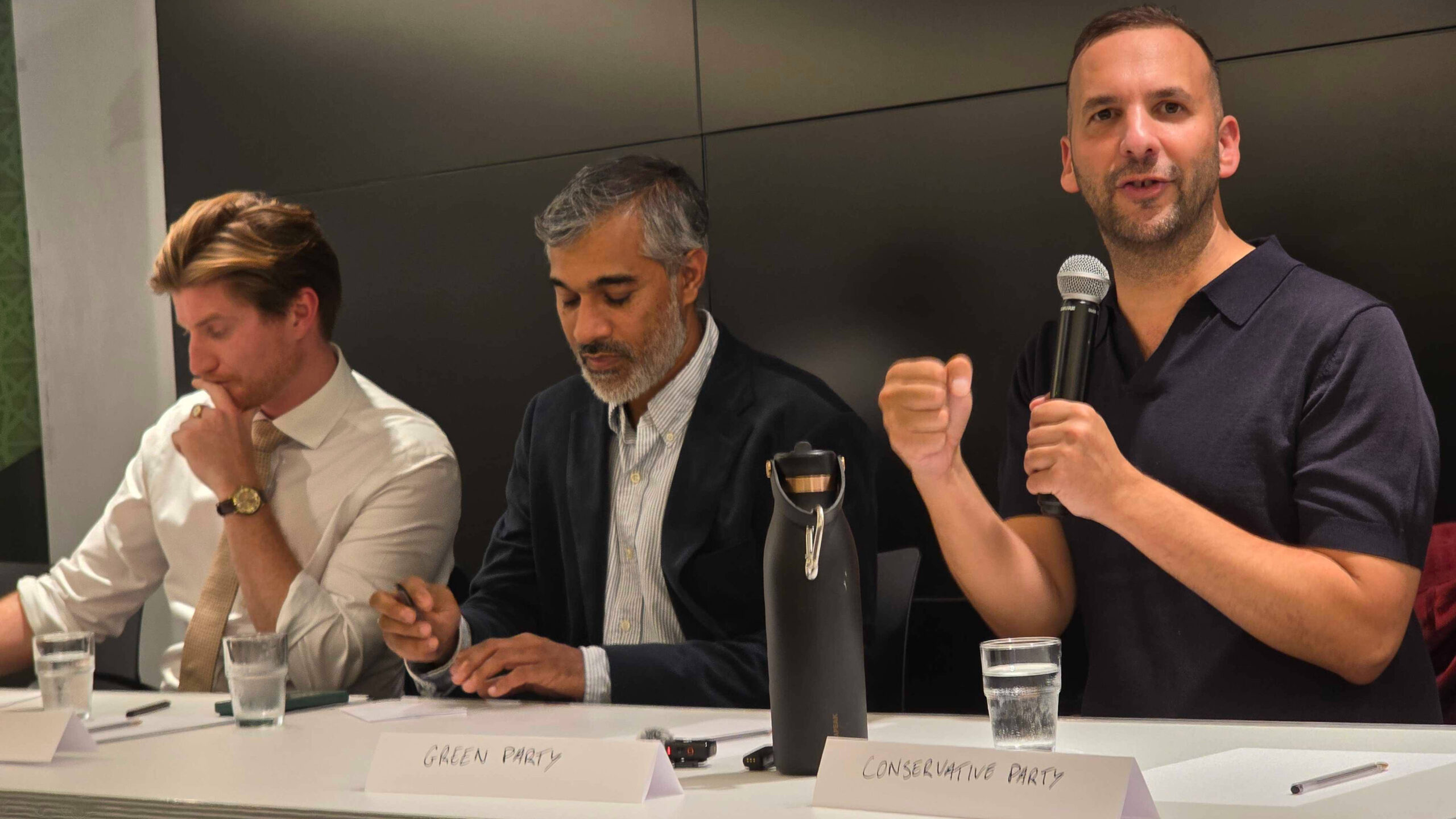
On a Tuesday evening, just a five-minute stroll from London’s King’s Cross train station, Green Party leader Zack Polanski stepped confidently into a local art gallery to address a candidate hustings organized by the Camden Muslim Network. What should have been a routine campaign event, however, quickly became a flashpoint: Polanski’s main competitor, Labour’s Sagal Abdi-Wali, was nowhere to be found.
The absence immediately triggered widespread speculation and frustration among attendees and local political observers. A former Labour councillor, who knows Abdi-Wali personally, told reporters he was not shocked by her no-show. Echoing his wife’s criticism that the candidate “just does whatever the bosses tell her. She can’t do policy”, the pair suggested Abdi-Wali had avoided the event out of fear of facing tough, unscripted questions from voters. Mahad, a local resident, Somali heritage pro-Palestine campaigner, echoed that sentiment, arguing the Labour candidate likely skipped the hustings to dodge scrutiny of her stance on the Israel-Palestine conflict, a top issue for many voters in the diverse constituency.
Event organizers, who founded the Camden Muslim Network in 2024, confirmed the Labour camp cited a conflicting prior commitment as the official reason for Abdi-Wali’s absence. But for many gathered at the gallery, this explanation fell flat. By definition, hustings are designed to let voters meet candidates, hear their policy platforms, and hold them accountable for their positions — a core function of democratic elections that was undermined by the high-profile absence.
A senior Green Party source framed the no-show as a disrespectful snub to local voters. “This was an open opportunity to discuss every issue that matters to residents here, from the ongoing conflict in Gaza and broader Middle East tensions to the pressing local problems that affect people every single day,” the source said. “You would think Labour would have at least had the courtesy and respect to explain its position on these critical issues to the people who will be voting.” Multiple requests for comment from Abdi-Wali from Middle East Eye went unanswered.
The contest itself was triggered by an unusual political turn of events: after Andy Burnham won a by-election for Makerfield and took his seat in Westminster, incoming Prime Minister Keir Starmer resigned his parliamentary seat for Holborn and St Pancras, opening up the decades-long Labour stronghold. The Camden Muslim Network, a group that openly identifies as pro-Palestine, previously supported independent pro-Palestine candidate Andrew Feinstein in the 2024 general election, where Feinstein took more than 7,000 votes and drastically cut Starmer’s majority before the former Labour leader retained the seat.
Today, the by-election carries outsized stakes for both major contenders. For the Labour Party, the race is a critical political temperature check: it will test whether the party under new Prime Minister Andy Burnham can win back the left-wing pro-Palestine voters who abandoned Labour during Starmer’s tenure. If Labour holds the seat, insiders suggest Burnham will be emboldened to call a snap general election to solidify his mandate. For the Green Party, the contest is make-or-break for its growing national momentum. The party has surged in polling since Polanski took leadership, scored a surprise win in the Gorton and Denton by-election earlier this year, and outperformed Reform UK in taking disaffected votes from Labour during May’s local elections. Polanski’s high-profile challenge here is widely credited as a contributing factor to Starmer’s political downfall that cleared the way for Burnham.
But a loss would deal a severe blow to the party’s momentum, while a victory would confirm the Greens’ ability to unseat Labour even in its traditional strongholds, and cement their position as a powerful left-wing bloc capable of shaping national political discourse. Senior Green sources say they are quietly optimistic, pointing to a robust ground campaign and positive feedback from voters on doorsteps. Recent policy moves from Burnham’s government, including new comprehensive sanctions on Israeli settlements, have won praise from pro-Palestine groups, but many local voters remain unconvinced.
Holborn and St Pancras is home to roughly 110,000 residents, a deeply diverse constituency mixing affluent neighborhoods and working-class communities, with a disproportionately young population including a large student body, and around one in five voters identifying as Muslim. This demographic makeup, once a reliable advantage for Labour, has increasingly shifted toward the Greens in recent years as voters abandon the party over policy failures on both local and international issues.
Mahad, the local pro-Palestine campaigner, summed up the sentiment of many disaffected lifelong Labour voters: the change in prime minister has brought “better rhetoric”, but has not fixed deep-rooted problems with the local Labour Party. “Labour locally have been pretty bad,” he said. “They’ve been terrible on housing, terrible on homelessness.” He described Polanski as charismatic and a consistent supporter of Palestinian rights.
Diana Foster, founding director of the People’s Museum in Somers Town that preserves the area’s working-class heritage, said she shared the view that Abdi-Wali skipped the event because she was “too scared to be put on the spot”. Foster and her friend Esther, another lifelong Labour voter now considering the Greens, both identified housing as the top local issue, and said the Greens are far more aligned with their concerns. While Foster acknowledged Abdi-Wali’s deep local roots — pointing out that Polanski, a London Assembly member, is not originally from the constituency — she said the lack of change under new party leadership has pushed her away from Labour.
Abdi-Wali, a Somali child refugee who rose to become leader of Camden Council, has a compelling personal story of success in local politics and community organizing. Earlier this month, she was the target of a racist social media attack from Reform UK politician Zia Yusuf, who questioned her suitability for office based on her place of birth, remarks that were widely condemned by Labour MPs. In recent comments to the New Statesman, Abdi-Wali pushed back against criticism, promising voters: “I will never be just another Labour backbencher… I will be someone who’s a local, committed, dedicated public servant, which I don’t think any of the other people on the ballot can be.” Despite this, Abdi-Wali, a known Starmer ally, remains deeply unpopular with local pro-Palestine activists, who point to Camden Council’s ongoing refusal to divest from companies accused of complicity in Israel’s military campaign in Gaza. Many ethnic minority voters who have backed Labour for decades say they are now prepared to switch to the Greens over the issue.
Polanski has drawn both mockery and praise for an unusual campaign tactic: he has released campaign videos in multiple foreign languages, including Urdu, French, and Bangla, to connect with the constituency’s diverse communities. While some online critics have mocked his pronunciation and noted few residents list Urdu as a first language, other political observers have praised the effort to reach underrepresented voters. A former Labour councillor called the move “excellent” and a refreshing break from standard campaign practices.
On the night of the hustings, only two national party candidates showed up: Polanski and Liberal Democrat Patrick Stillman, who represents the party’s local moderate base in the constituency’s northern affluent neighborhoods. Invitations were also extended to Conservative, Reform UK, and Workers Party candidate George Galloway, who is currently in South Africa, but all declined or were absent. Most voters at the event see the contest as a straight head-to-head between Labour and the Greens, though some worry a small share of votes for Galloway among older Muslim voters could split the left-wing vote and harm Polanski’s chances.
Much of the hustings discussion focused on bread-and-butter local issues, from parking access to the ongoing housing and homelessness crises. Polanski demonstrated detailed knowledge of local concerns, and consistently tied local problems to national inequality, calling on the Burnham government “to tax multi-millionaires and billionaires a small amount to make sure that we’re putting that money into our communities”.
When the conversation turned to foreign policy, Polanski took a hard line against the current Labour government’s approach to the Israel-Palestine conflict. Condemning the government’s decision to continue arms sales to Israel as “deeply cynical”, he called for full economic, trade, and cultural boycotts, divestment, and sanctions against Israel until the end of military operations in Gaza. “We need a full boycott divestment sanctions on goods and not just some services, but all services until Israel stops killing innocent people and stops the genocide,” he said. On the question of nuclear proliferation, Polanski said no country should possess nuclear weapons, pushing back against the idea that candidates should avoid discussing foreign policy at local events.
“It’s important that we elect MPs in Parliament who will not warmonger, but who speak for peace and democracy and diplomacy,” Polanski said. “And what we see over and over again is voices like mine or anti-war voices get ridiculed, or the media try and present us as if we’re some sort of threat or danger. I think the threat or the danger are MPs who take money off the arms trade companies and then in parliament whip up things into storms as opposed to talking about peace and diplomacy, which is ultimately what we need to be pushing for.”
Stillman, for his part, argued for a more targeted approach to sanctions that prioritized keeping diplomatic channels open, and he joined Polanski in criticizing Labour for Abdi-Wali’s absence. Both candidates received warm applause from the 60-person audience, which drew a mix of ages and ethnicities from across the constituency.
Political analysts speculate that Labour’s decision to avoid the event may be a deliberate strategy: with the seat safely in Labour hands for decades, the party may be prioritizing avoiding missteps or viral controversies over engaging with skeptical voters. It is, as many observers note, Labour’s seat to lose, and the Greens have mounted the most serious challenge the constituency has seen in generations. With polling day set for 8 October, and both party conferences scheduled to take place before voting, much remains uncertain, and the outcome could reshape British politics for years to come.