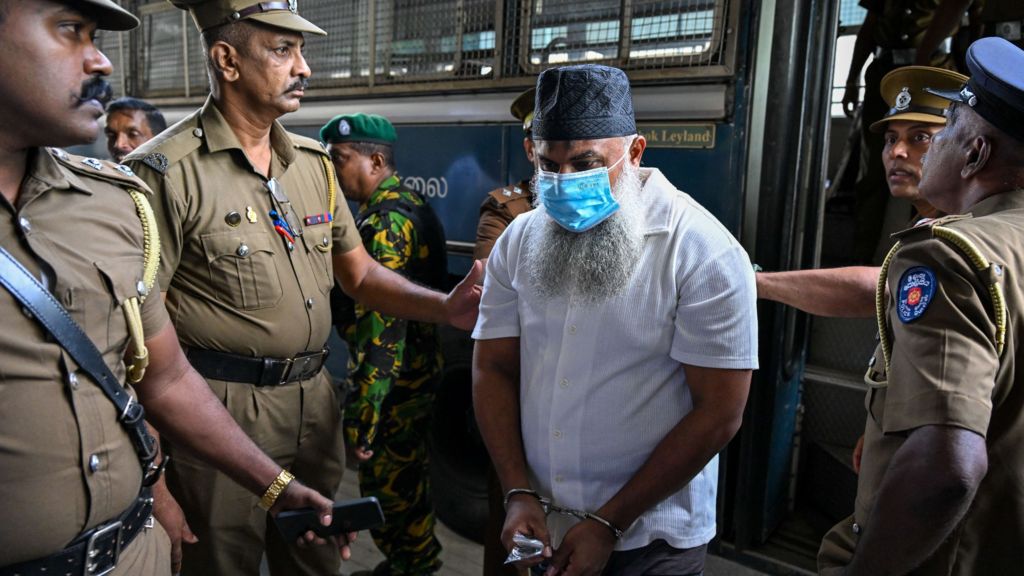
Nearly five years after the coordinated suicide bombings that shattered Sri Lanka’s Easter celebrations and left the nation reeling, the country’s High Court has delivered a long-awaited guilty verdict for 15 men charged with orchestrating the 2019 attacks that killed 270 people and wounded over 500 more. Among those convicted is Naufer Moulavi, identified by prosecutors as the primary mastermind behind the simultaneous bombings that targeted three Christian churches and three high-end luxury hotels across the island. Nine other defendants facing related charges were acquitted in the ruling. The 2019 attacks remain the deadliest act of violence Sri Lanka has faced since the conclusion of its 26-year civil war in 2009, and the death toll included 45 foreign nationals visiting the country for the holiday.
All nine suicide bombers who carried out the blasts died at the attack sites. Investigations have long pinned responsibility for the coordinated operation on domestic Islamist extremist networks, and all 25 individuals originally indicted in the case were members of Sri Lanka’s Muslim minority community. One of the indicted defendants died while in custody before the trial concluded. The 24 accused who stood trial faced a total of more than 23,000 criminal charges, ranging from murder and conspiracy to commit acts of terrorism to illegal possession of firearms and explosive materials.
The prosecution’s case rested on an unprecedented volume of evidence and testimony: more than 2,300 witnesses gave evidence for the state, and prosecutors presented 2,076 pieces of material evidence, including unused explosives, bladed weapons, and firearms recovered from extremist safe houses. In the immediate aftermath of the 2019 attacks, Sri Lankan officials acknowledged catastrophic institutional failures, admitting that a “major intelligence lapse” allowed the plot to proceed undetected. It was later revealed that a detailed tip-off about the planned attacks shared by Indian intelligence agencies was never properly disseminated to frontline security and law enforcement authorities.
Legal consequences for institutional failures tied to the attacks have unfolded in parallel to the conspiracy trial. In 2023, Sri Lanka’s Supreme Court ruled that former president Maithripala Sirisena bore personal responsibility for the national security failures that enabled the bombings, ordering him to pay millions of rupees in compensation to attack victims and their families. Just last month, two former senior security officials were sentenced to death on charges of criminal negligence linked to the attacks, though death sentences are almost always commuted to life imprisonment in Sri Lanka under a decades-long national moratorium on executions.
Monday’s conviction comes amid ongoing investigations into alleged high-level political and intelligence complicity in the attacks that have roiled Sri Lankan politics for years. A separate probe is currently active against former intelligence chief Suresh Sallay, who stands accused of coordinating the bomb plot alongside the Islamist extremist cell that carried out the attacks. Sallay, who was arrested in February this year, has repeatedly denied all accusations against him.
The claims of high-level involvement mirror allegations made in a 2023 documentary by British public broadcaster Channel 4, which featured whistleblower testimony claiming the attacks were deliberately allowed to proceed to boost the political popularity of the Rajapaksa family, a political dynasty that has dominated Sri Lankan politics for much of the last two decades. Gotabaya Rajapaksa, who was elected president just months after the 2019 attacks running on a hardline platform of cracking down on Islamist extremism, has also denied all allegations tying him or his family to the plot. Currently barred from leaving Sri Lanka, Rajapaksa has filed a court petition seeking to block any potential arrest connected to the ongoing investigations.
For years, survivors and family members of attack victims have held repeated, large-scale public demonstrations across Sri Lanka demanding full accountability and justice for the 2019 attacks, a movement that has pressured successive governments to deliver conclusions to the multiple probes tied to the bombings. Heavy security, including dozens of regular police officers and elite commando units, was deployed to the High Court in Colombo ahead of the verdict announcement to prevent any potential unrest tied to the ruling.