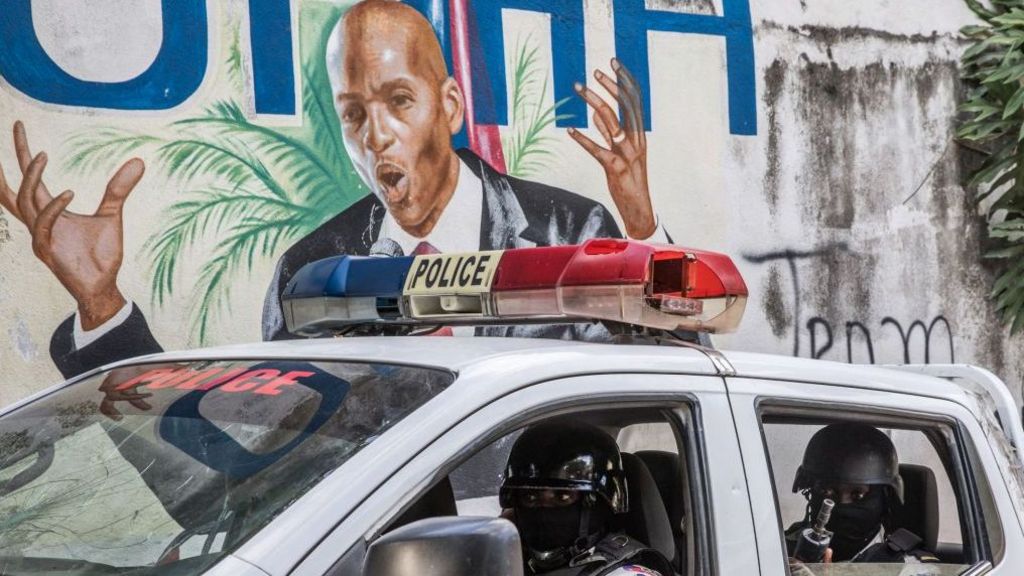
Half a decade after the shocking assassination of Haitian President Jovenel Moise sent the already unstable Caribbean nation into a tailspin of chaos, 18 alleged co-conspirators in the killing have been transferred by air from Haiti to South Florida to face trial in U.S. courts.
The attack that took Moise’s life unfolded in July 2021, when a team of gunmen, most of whom were identified as Colombian mercenaries, stormed the president’s private residence in Port-au-Prince and fatally shot him in his bedroom. The brazen, high-profile murder sent immediate shockwaves across Haiti and the international community, as observers and everyday Haitians alike grappled with how a sitting head of state could be killed with such startling impunity.
For years, formal investigations into the assassination in Haiti have ground to a complete halt. Widespread gang domination of large swathes of the country and a total breakdown of law and order have left the Haitian justice system unable to pursue viable cases against the remaining suspects. That institutional collapse has placed the full burden of pursuing accountability on U.S. law enforcement and prosecutors, who have chosen to try the suspects in Florida courts.
According to official statements from U.S. authorities, the planning and financial backing for the assassination plot were coordinated across three locations: Florida, the neighboring Dominican Republic, and Haiti itself. To date, 30 individuals have been formally indicted on charges connected to Moise’s killing, and Sunday’s extradition marks a major milestone in the long-running investigation.
In a public post on X, Jason Reding Quiñones, U.S. Attorney for the Southern District of Florida, framed the extradition as a key new step in the ongoing push for justice. “Five years later, we are still bringing defendants before American courts, and we are not finished,” he wrote. FBI Special Agent Brett Skiles echoed that commitment, noting that the multi-national, coordinated operation to take the suspects into custody demonstrates the bureau’s unwavering dedication to holding every person involved in the plot accountable.
The group extradited on Sunday includes 17 former Colombian soldiers and one high-ranking former Haitian government official: Joseph Badio, who served in the anti-corruption unit of Haiti’s Ministry of Justice at the time of the assassination. Prosecutors have alleged that a Miami-based private security firm played a central role in recruiting the Colombian ex-soldiers to carry out the plot.
Four co-conspirators already received convictions in a Miami court back in May for their roles in the conspiracy. Their charges include conspiracy to kidnap or kill Moise and conspiracy to provide material support for the assassination, and all four face the possibility of life sentences if the convictions hold. Several other suspects connected to the plot were shot and killed by Haitian police in the immediate aftermath of the 2021 attack.
Notably, the Colombian former soldiers charged in the case have long maintained they were misled about the plot’s end goal. They claim they believed they were hired to take part in a political coup to remove Moise from power, and had no advance knowledge that the operation intended to assassinate the president.
In the five years since Moise’s death, Haiti has been consumed by an unprecedented wave of gang-led violence that has devastated communities and paralyzed daily life. Data from the United Nations Integrated Office in Haiti shows that between April and June 2026 alone, at least 1,408 people were killed and another 656 injured in gang-related conflict across the country. The Haitian government is currently scheduled to hold the first presidential and legislative elections since 2016 on December 13, though the vote remains contingent on whether the country’s volatile security situation can stabilize enough to support a free and fair electoral process.