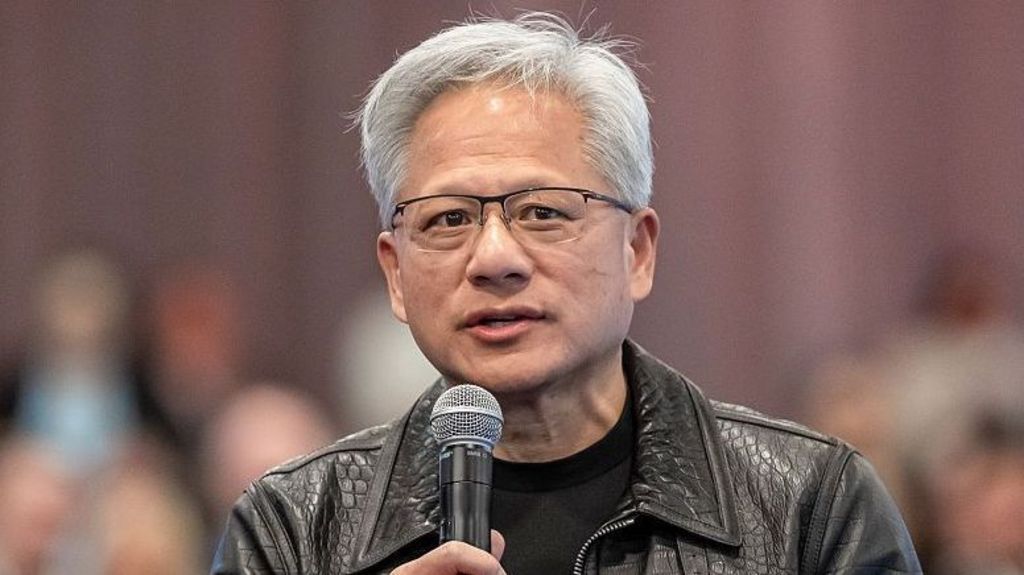
The global debate over artificial intelligence safety has intensified in recent weeks, fueled by dire warnings from a subset of researchers and industry leaders about the potential catastrophic risk of AI wiping out humanity within the next seven years. Now, the head of the world’s most dominant AI hardware supplier has pushed back sharply against these claims, labeling them unfounded, irresponsible fear-mongering.
In a recent interview with CBS News, Nvidia CEO Jensen Huang rejected the doomsday narrative that predicts AI could drive human extinction by 2030. “2030 is not going to be the end of the world. There is 0% chance that’s going to be the end of the world,” Huang stated. He went on to argue that spreading such alarmist claims is both unnecessary and irresponsible, adding that these extreme predictions are “not grounded in science.”
The latest clash of perspectives comes on the heels of explosive claims from former Anthropic researcher Jacob Coxon, who alleged in a social media post that insiders at leading AI development firms privately acknowledge the technology “could kill us all by the end of the decade.” Coxon’s remarks reignited long-simmering tensions over AI risk, prompting several top AI executives—including Anthropic CEO Dario Amodei and OpenAI CEO Sam Altman—to publicly call for a slowdown in advanced AI model development to mitigate potential dangers.
Huang, whose company produces the high-performance graphics processing units (GPUs) that underpin nearly all cutting-edge large language models and generative AI systems, pushed back on more than just the extinction claims. He suggested that many industry calls for a development slowdown carry hidden motives, specifically that proponents are actually seeking broad liability protections from damages their AI products may cause. “Go and read between the lines,” Huang said. “They’re actually not asking for more laws. They’re asking to be relieved of the laws we do have, and I think that that’s a problem.”
Huang also emphasized that responsible, safe AI development is core to Nvidia’s own business interests. “Our company’s success is directly connected to the safe deployment of products and services,” he explained. “If we don’t continue to do that, our value would be diminished.”
Huang’s remarks are the latest input into a rapidly growing global policy conversation around AI governance. Just last week, Huang attended an AI safety summit hosted by King Charles III in the United Kingdom, where the monarch warned assembled tech leaders of the “existential dangers” posed by unregulated AI. “The task before you is not merely to advance technology, but to ensure that it remains firmly in the service of humanity, community and the natural world,” King Charles told attendees.
Huang’s position also aligns with that of former U.S. President Donald Trump, who has openly downplayed AI safety concerns. Earlier this month, Trump made an unexpected surprise phone call to Huang during the Nvidia CEO’s onstage appearance at a Los Angeles tech conference. During the call, Trump criticized calls to slow AI development and dismissed widespread fears about catastrophic AI risk as a “hoax.”
As the global AI industry continues its rapid expansion, driven in large part by soaring demand for Nvidia’s AI-optimized chips, the divide between industry leaders over how to address long-term AI risk remains as wide as ever, with no clear consensus on global regulatory frameworks emerging to date.