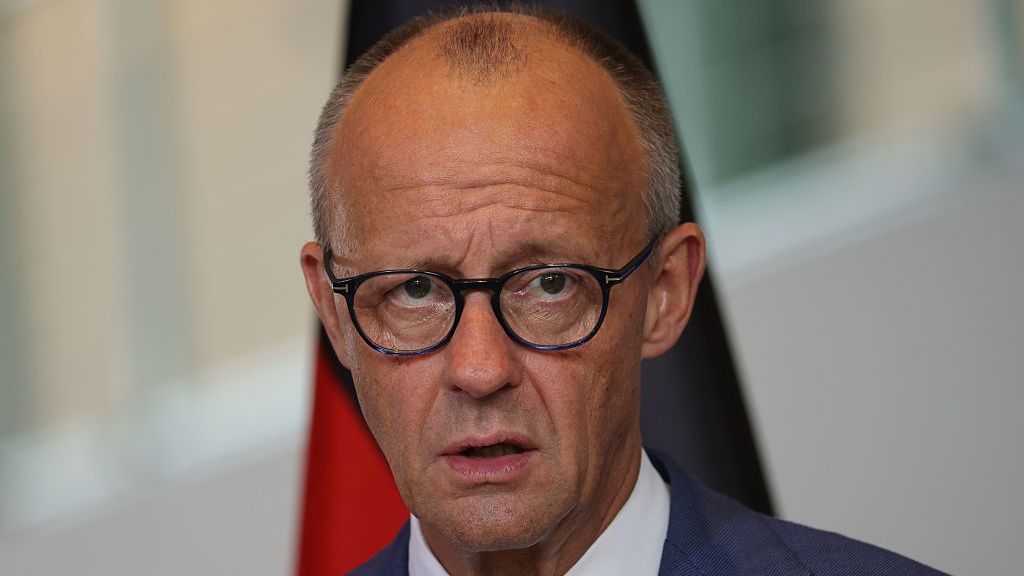
On Sunday, two critical state elections will kick off across Germany, with results widely expected to escalate political pressure on sitting Chancellor Friedrich Merz. Latest opinion polling from the battleground states of Berlin and Mecklenburg-Vorpommern paints a grim picture for Merz’s center-right Christian Democratic Union (CDU), which faces the prospect of damaging defeats that could reignite open questions about the chancellor’s hold on power just 16 months after his party took office.
The high-stakes vote comes on the heels of a devastating defeat for the CDU in Saxony-Anhalt just two weeks prior, where the far-right Alternative for Germany (AfD) secured a landslide victory and the CDU’s vote share was cut in half. German political analysts and insiders have widely speculated that Merz could face a mid-term leadership challenge if the CDU fails to reverse its declining electoral fortunes this weekend. While the chancellor has publicly pledged to remain in office, his approval ratings have plummeted, and internal party discussions of a potential “chancellor swap” have grown more common, even as would-be challengers have not yet made their moves public, according to leading German broadcaster Tagesschau.
In Berlin, polling indicates the CDU is locked in a tight race for first place with the left-wing Die Linke party, and could end up losing control of the state government. In the northeastern state of Mecklenburg-Vorpommern, the CDU is barely polling above the 5% threshold required to secure seats in the state parliament, on track for what would be its worst ever result in a regional German election.
This rapid decline in support for Merz, who has only led the country for 16 months, stems from two overlapping trends: the collapsing popularity of his own CDU, and the continued electoral rise of the AfD, the far-right movement Merz built his leadership campaign to counter. Several regional branches of the AfD are classified as right-wing extremist organizations by Germany’s domestic intelligence service, a designation the party has repeatedly rejected. Despite this, the AfD’s anti-immigration platform, pro-Russia foreign policy and nationalist “Germany-first” agenda has gained significant traction in the country’s former East German states, where discontent with mainstream parties runs high.
The AfD is aiming to capitalize on its recent Saxony-Anhalt win to secure a first-place finish in Mecklenburg-Vorpommern. But the center-left Social Democratic Party (SPD), the CDU’s junior coalition partner at the national level, has mounted a late comeback surge in the state, driven by the popularity of its incumbent state premier and lead candidate Manuela Schwesig. Schwesig has positioned herself as “Die Frau gegen Blau” — “The Woman against Blue”, referencing the AfD’s official party color — and is rallying all anti-AfD voters to her camp. While Schwesig enjoys strong personal support locally, her national party remains deeply unpopular, stuck in an uneasy governing alliance with Merz’s CDU.
For many voters, frustration with Merz runs deep. Reinhart, an AfD supporter waiting in line for a campaign event in Neubrandenburg, argued that mainstream traditional parties are collapsing across Europe, not just in Germany. When asked about Merz, he said, “He is arrogant, out of touch, not on the same level as the general public.”
Merz’s allies have pushed back against this criticism, arguing that the chancellor inherited a host of intractable problems from previous governments, and has been forced to navigate a series of damaging global economic shocks that are outside of his control. Even so, public faith in Merz’s ability to address Germany’s challenges has eroded sharply, and few voters express strong positive approval of his leadership.
A former corporate lawyer, Merz’s decision to shift the CDU further to the right on issues including immigration was intended to siphon support away from the AfD. Instead, the strategy has failed to cut into AfD voter numbers, while simultaneously alienating left-leaning moderate voters. His blunt, unapologetic communication style has also rubbed many voters the wrong way: his comments dismissing the value of work-life balance, and urging Germans to work more and take less sick leave, drew widespread public backlash.
Merz’s supporters frame his approach as a necessary tough love — he is willing to deliver the unpopular reforms the country needs, even if voters do not like the short-term pain. But Germany’s ongoing sluggish economic growth, persistently high energy costs, and divisive national debates over immigration have combined to create a widespread sense of national malaise that has dragged down support for the ruling coalition.
Earlier this week, the leaders of eight German state CDU branches issued a public statement backing Merz, arguing that rebuilding public trust in the party requires “listening and taking political action, not in debates over personnel.” Even so, while no sitting party figure has launched an open challenge to Merz’s leadership, internal grumbling over his performance has grown louder.
Martin Rohloff, the CDU’s own candidate for the Neubrandenburg district, argued that Merz lacks the “Fingerspitzengefühl — the feeling for the small persons.” When asked if Merz should step down, Rohloff acknowledged it was a difficult question, but said, “If I have to answer yes or no, I would say yes. There are other people who maybe have better feelings for the public.” While Rohloff noted that Merz may be pushing for the right policy goals, he criticized the chancellor for poor communication with voters.
Merz has reaffirmed his commitment to staying in office, and his ruling coalition is preparing to push a sweeping package of economic, tax and welfare reforms through parliament this autumn. But Sunday’s election results could cut his tenure short before the reform package is finalized. In a move that signals the chancellor is already preparing for potential crisis, Merz has canceled a planned trip to New York scheduled for next week, and will meet with senior CDU leaders in Berlin Sunday evening to assess the results.
For European security, a change in German leadership carries significant risks. Merz has been a staunch supporter of Ukraine in its war against Russia, and his departure would add further instability to a continent already grappling with heightened fears of Russian aggression.