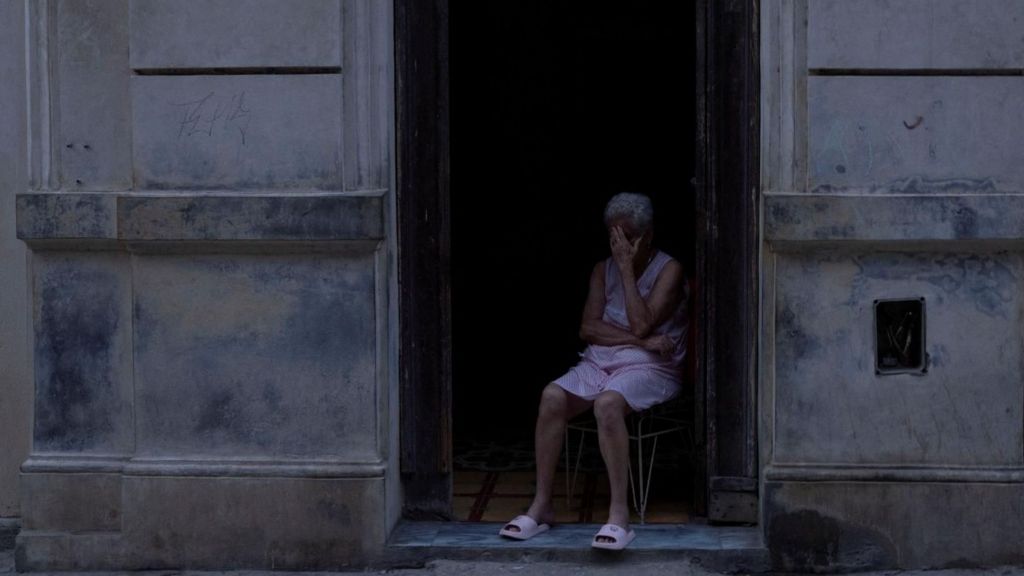
Millions of Cuban residents woke up to a powerless Friday when the island nation suffered its sixth major total or partial grid collapse of the year, cutting electricity across the entire country amid long-running structural energy challenges and international pressure.
Cuba’s Ministry of Energy confirmed the entire national electricity system experienced a “total disconnection”, triggering a widespread outage that disrupted daily life from end to end of the Caribbean island. According to UNE, the state-run national grid operator, restoration work had brought power back to critical priority sites by late Friday, including core infrastructure around Havana’s hospitals and municipal water pumping stations.
The outage originated just before 2 p.m. local time (18:00 GMT) in central Cuba, where a combination of a high-voltage transmission fault and severe adverse weather triggered the cascading system failure, UNE officials explained. Felix Estrada, director of UNE’s national load dispatch division, confirmed that emergency protocols for gradual power restoration were activated immediately, and the recovery process remained ongoing across the country through Saturday.
The repeated blackouts hitting Cuba this year stem from a combination of long-running issues: decades-old, deteriorating electricity infrastructure and chronic domestic fuel shortages, both worsened dramatically by the long-standing U.S. blockade on oil shipments to the communist-governed nation. Cuba relies almost entirely on imported fuel to power its electricity grid, and tightened U.S. sanctions implemented earlier this year have stretched already thin fuel supplies to breaking point. The cascading shortages have not been limited to energy: food and pharmaceutical imports have also grown far scarcer, leaving hospitals unable to operate at full capacity and forcing repeated closures of schools and government administrative offices.
For ordinary Cubans, the rolling outages have become a regular, debilitating part of daily life. “Lately, it’s becoming a habit,” Havana resident Frank Lorenzo told Reuters in an interview Friday. “Before it happened less frequently – once a month… just yesterday we were 24 hours without electricity, they turned it on for just an hour and it went down again.”
Thirty-six-year-old schoolteacher Lidia Fernandez described the compounding stress of overlapping shortages to AFP. “It’s one thing after another: no water, no gas for cooking, no electricity. Honestly, I don’t know how we haven’t gone crazy,” she said. Seventy-eight-year-old Francisco Rodriguez told reporters his home had already spent 28 hours without power by Friday evening, and he feared the outage would stretch on for “several days.”
The frequency of crippling blackouts has already sparked rare unauthorized public protests across the island. Under Cuban law, unapproved demonstrations are illegal, and participants face potential jail time for defying the restriction.
Cuban leadership has pinned responsibility for the ongoing fuel and energy crisis squarely on the United States, particularly the Trump administration’s harsh sanctions regime. Havana has repeatedly denounced a new round of sanctions imposed in August as part of Washington’s broader pressure campaign against the island’s government. For years, regional ally Venezuela supplied Cuba with roughly 35,000 barrels of crude oil per day – covering around half of the island’s total energy needs – but that supply collapsed in January after U.S. actions disrupted Venezuela’s own export capacity. The Trump administration has also threatened steep tariffs on any third country that ships oil to Cuba, and U.S. authorities have already seized multiple fuel shipments bound for Havana.
For its part, the U.S. government has pushed back against Cuban claims, blaming Havana’s poor domestic economic and infrastructure management for the ongoing crisis. Washington also designates Cuba as a “national security threat,” and President Trump has openly discussed efforts to remove the current Cuban leadership, even threatening a “friendly takeover” of the island back in March of this year.