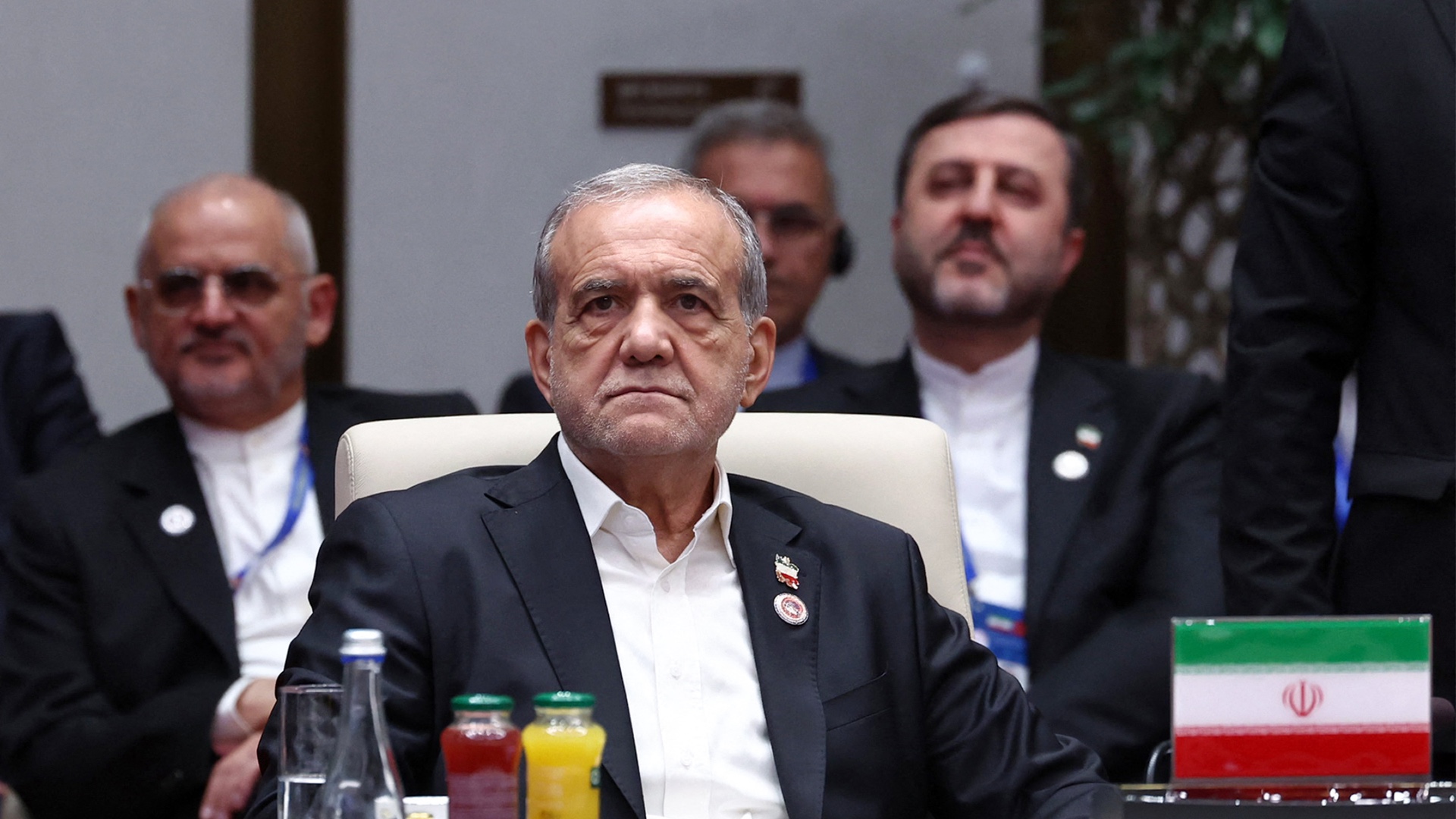
As the United Nations General Assembly (UNGA) prepares to kick off its annual session next week in New York, the U.S. State Department confirmed Thursday it has cleared visa applications for a small contingent of Iranian officials to attend the global diplomatic gathering, in a move that comes alongside escalating economic pressure on Tehran and a repeat of controversial travel restrictions on Palestinian leaders.
The New York Times was the first outlet to break news of the visa approvals, citing an official emailed statement. Prior to the confirmation, State Department spokesperson Tommy Pigott had only posted a cryptic message on social media platform X hinting at the limited entry for Iranian diplomats.
In his public remarks, Pigott struck a sharply critical tone toward Iran’s ruling establishment, arguing that regime elites sought to use the UNGA trip for luxury shopping at the expense of ordinary Iranian citizens grappling with severe domestic crises. “While ordinary Iranians endure brutal repression, water and electricity shortages, and soaring inflation, the regime’s officials want to go on shopping sprees in New York. Not on our watch,” Pigott said.
He emphasized that Washington would not allow Iranian leadership to splurge on high-end goods funded by public resources, at the same time Tehran diverts national wealth to arm what the U.S. labels terrorist proxy groups across the Middle East. “We will continue to ban Iranian UN Mission officials, visiting officials, and their dependents from buying wholesale club memberships or luxury goods here,” Pigott added, issuing a warning to New York-area retailers to avoid becoming complicit in what he framed as violations of U.S. restrictions.
Per the New York Times’ reporting, the approved visas come with strict geographic limitations, confining the Iranian delegation’s movement to specific areas of Manhattan, and the total number of visiting officials will be smaller than the group that attended the 2024 UNGA. The delegation is set to include newly elected Iranian President Masoud Pezeshkian and Foreign Minister Abbas Aragchi, who has served as Tehran’s chief negotiator in indirect talks with Washington.
The limited visa approval comes amid an ongoing military escalation between the U.S. and Iran, now in its seventh month. While the second Trump administration has sought to downplay the conflict, framing intermittent skirmishes as no longer qualifying as an active war, dozens of Iranian civilians were killed in U.S. strikes just last month alone. Iran has responded with increasingly frequent and targeted attacks on U.S. military and energy infrastructure across the region, while maintaining tight control over the strategic Strait of Hormuz, through which a large share of global oil supplies pass.
To ramp up pressure on Tehran, the U.S. Treasury Department launched what it dubbed “Operation Economic Outcast” last month, with the stated goal of asphyxiating Iran’s economy. New sanctions are now being implemented multiple times per week, and on Thursday, the Treasury’s Office of Foreign Assets Control announced the designation of BitBank, a digital assets venture controlled by Iranian financier Babak Zanjani. In a statement accompanying the designation, Pigott claimed BitBank has helped the Central Bank of Iran circumvent restrictions to access the U.S.-dominated international financial system.
Beyond the restrictions on Iran, the Trump administration has extended its controversial visa ban on Palestinian leadership for the second consecutive year. Washington has once again denied a travel visa to Palestinian Authority (PA) President Mahmoud Abbas, and barred all PA and Palestine Liberation Organization (PLO) officials from entering the U.S. to attend UNGA.
The Palestinian Ministry of Foreign Affairs condemned the decision in strong terms, calling it an unjustified measure that directly undermines efforts to rebuild trust, advance Palestinian-American relations, and create a political environment conducive to implementing a two-state solution and securing long-term regional peace and stability.
The State Department justified the ban by claiming the PA has failed to implement required reforms, despite its commitments to the U.S., and has continued activities that erode prospects for peace. This justification comes at a time when no formal peace negotiations are active, no U.S.-mediated talks are ongoing, and the Trump administration has effectively abandoned any formal commitment to a two-state solution. Both Israeli Prime Minister Benjamin Netanyahu and his main challenger in next month’s Israeli national election, Gadi Eisenkot, have publicly rejected the establishment of an independent Palestinian state.
As host of UN headquarters in New York, the U.S. has historically avoided imposing broad visa restrictions on delegations attending UNGA, in keeping with its diplomatic agreements with the international body. That longstanding practice shifted after the Trump administration took office in January 2025, marking a break with decades of precedent.
The 2024 visa ban on Abbas drew widespread international criticism of Washington’s role as UN host, and sparked calls to relocate the annual UN meeting on Palestinian issues to Geneva, Switzerland. Ultimately, the UN General Assembly voted 145-5 to allow Abbas to deliver his address to the assembly remotely last year.