Over less than three years, more than 1,000 Palestinians have been killed in the Israeli-occupied West Bank, 66 Palestinian communities have been erased under a state-backed ethnic cleansing agenda encouraged by top Israeli ministers, and long-held hopes for a sovereign, viable Palestinian state have been all but destroyed by Israel’s expansion of the E1 settlement bloc. For decades, successive British governments have responded to escalating Israeli aggression against Palestinians with little more than rhetorical condemnation and weak, widely criticized half-measures that fell far short of international legal obligations.
That long-standing status quo shifted dramatically earlier this month, just seven weeks after Ed Miliband took office as British Foreign Secretary. In a break from decades of cautious British policy, Miliband announced a full trade ban on goods produced in Israeli settlements built on illegally occupied Palestinian land. Even as some progressive and pro-Palestinian observers argue the move does not go far enough—given Miliband ruled out broader, economy-wide sanctions against Israel, despite widespread evidence that the Israeli military enables and protects violent settler attacks against Palestinian communities—the new ban marks a historic step toward aligning British policy with international law.
The move follows the landmark July 2024 ruling from the International Court of Justice (ICJ), which formally declared Israel’s decades-long occupation of Palestinian territory illegal and required all UN member states to refrain from providing any assistance that perpetuates Israel’s unlawful presence. For two years, former Prime Minister Keir Starmer had ignored this binding international obligation, making Miliband’s announcement all the more consequential.
Beyond its legal significance, the announcement was a major diplomatic breakthrough for the new Labour government: Miliband successfully convinced 11 other middle-ranking global powers, including France and Canada, to adopt similar restrictive measures. Many foreign policy analysts argue this marks the first clear, meaningful foreign policy win for Britain since the country completed its exit from the European Union in 2020. Public opinion polling conducted after the announcement also confirms the policy enjoys broad support across the British public, including a narrow majority of self-identified Conservative voters.
Despite this broad public backing, the policy has faced an unprecedented wave of vitriolic opposition from right-wing political and media forces in Britain, and their allies abroad. Rather than engaging in a substantive debate over the legality of Israeli settlements or the merits of holding violators of international law accountable, opponents have pivoted to bad-faith smears, baseless conspiracy theories, and anti-Muslim rhetoric to attack the Labour government.
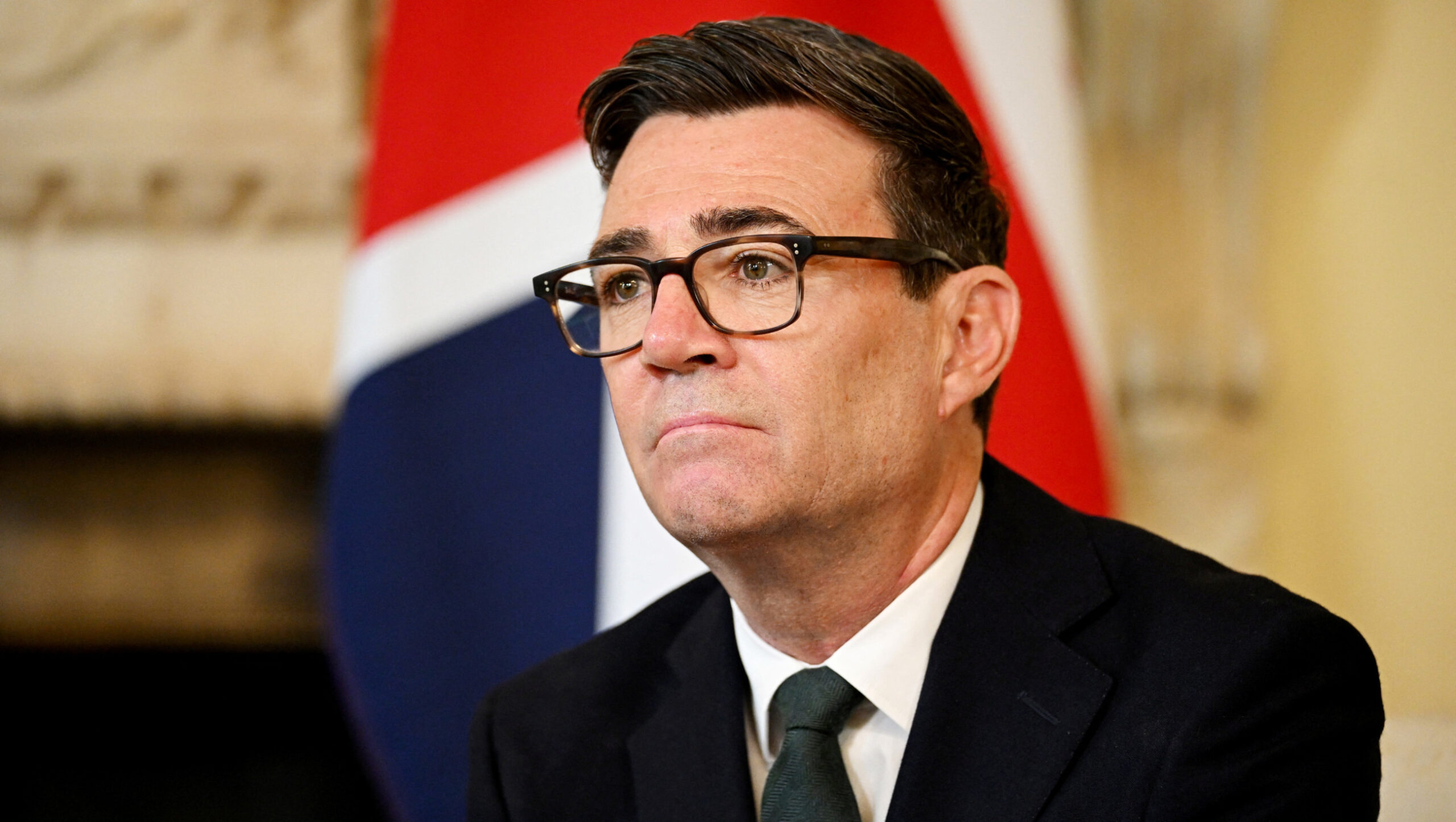
A sharp new political dividing line has now emerged in British politics. On one side sits the Labour government led by Prime Minister Andy Burnham, which has aligned itself with international law, opposed Israeli settlement expansion, and adopted a policy that reflects majority public opinion. On the other side are Kemi Badenoch’s Conservative Party, Nigel Farage’s Reform UK, and a growing slate of further-right factions, which have stridently opposed any measures that would constrain settlement expansion and associated settler violence, despite stopping short of explicitly endorsing violence against Palestinians.
Opponents have almost universally avoided criticizing the substance of Miliband’s trade ban, instead leaning on a manufactured narrative that claims the policy was adopted solely to pander to British Muslim voters, whom they falsely accuse of advancing a sectarian “Islamist” agenda to take over British politics. This unfounded claim has rapidly spread from British right-wing circles to become a global talking point, embraced by the Israeli government and the second Trump administration in the United States.
The narrative builds on a years-long discourse that gained traction after Britain’s 2024 general election, which claims independent Muslim politicians and left-wing Green Party candidates are sectarian entryists who inject religiously motivated anti-Israel views into secular British politics, and are now pulling the strings of a Labour government desperate to win their support.
The most extreme iteration of this false narrative came from Israeli Prime Minister Benjamin Netanyahu, who is currently wanted on war crimes charges by the International Criminal Court. Last month, in an apparent retribution for the planned sanctions, Netanyahu famously labeled Britain the “Islamic Republic of Britain” and absurdly claimed it could become the first Islamic nuclear power—ignoring the obvious facts that Britain is a constitutional monarchy, not a republic, and Pakistan has held that title for decades. Even before Miliband’s announcement, Israeli Finance Minister Bezalel Smotrich, a key architect of West Bank settlement expansion, claimed Britain had become a “doormat” for an “antisemitic government conquered by radical Islam.” After the ban was announced, Israeli Diaspora Minister Amichai Chikli doubled down, dismissing Miliband by claiming he could not even remember the foreign secretary’s name, and declaring that Israel and Britain stand united against “globalists and Islamists” who seek to impose Sharia law on the UK.
This rhetoric has been fully echoed by top U.S. Republicans. Weeks before the announcement, former President and current U.S. President Donald Trump falsely claimed London had once been a safe city but now suffers from crime because of a “different culture” that has entered the country, repeating the false claim that Sharia courts operate with legal standing in Britain, and attacking London’s Muslim mayor Sadiq Khan as “absolutely terrible.” Florida Republican Congressman Randy Fine, who was among the most vocal U.S. opponents of the British sanctions, labeled the country the “United Islamic Kingdom” and claimed Muslim immigrants—who he falsely described as illegal arrivals who do not share British values—are “coming to take over” the country, and that the sanctions are merely an appeal to voters “obsessed with Israel.”
Back in Britain, top right-wing leaders have repeated these exact claims. Conservative leader Kemi Badenoch accused Burnham of “throwing British interests under the bus to win back Islamist and far left activist votes.” Reform UK Deputy Leader Richard Tice claimed the “wrong-headed sanctions” put British Jews at risk as part of Labour’s “desperate bid to win back hard-left and Islamist voters.” Rupert Lowe, the leader of the far-right anti-immigration group Restore Britain, claimed “The Labour government’s foreign policy is now decided on what will best maintain/retrieve Muslim votes in Britain.” Even multiple former Conservative prime ministers have joined the attacks: Liz Truss, whose 2022 premiership lasted only 44 days, called the government an “Islamist appeasing disgrace,” while Boris Johnson wrote in the right-wing tabloid Daily Mail that Burnham pursues “radical and sectarian policies” because he fears backlash from Muslim communities in 57 Labour constituencies with Muslim populations exceeding 15 percent.
This anti-Muslim framing dominates right-wing media coverage, which reaches roughly 80 percent of British newspaper readers. The Daily Mail’s editorial board the day after the announcement claimed the sanctions were “entirely self-serving for the Labour Party as it attempts to claw back the Muslim bloc vote, which they largely lost over the conflicts in Gaza and Iran.” Even mainstream broadsheet outlets have amplified extreme rhetoric: The Sunday Times commentator Matthew Syed claimed a “pincer movement between left-wing progressives and Islamists” poses a growing threat to both Israel and the wider West, going so far as to claim left-wing parties across Europe and the U.S. have become “the principal engine of Islamofascism.” Telegraph columnist Allison Pearson dismissed the policy’s broad public support, claiming it only appealed to “far-Left Gaza obsessives on the Labour benches” desperate to hold off Green challenges for Muslim votes.
Many right-wing commentators have gone even further, claiming the entire policy was a cynical ploy to win an upcoming by-election in the London seat of Holborn and St Pancras, where the Greens are expected to run a strong pro-Palestinian campaign. Former MI6 head Richard Dearlove, who infamously oversaw the false intelligence claims that Saddam Hussein held weapons of mass destruction ahead of the 2003 Iraq War, lent credibility to this claim, arguing Miliband shifted Britain’s Middle East policy solely to outflank the Greens on the issue. Absurdly, this narrative has even been adopted by Netanyahu’s office, which last week claimed the sanctions were only implemented to influence the outcome of a single local by-election—a claim that requires believing Burnham and Miliband convinced the leaders of France and Canada to upend their own foreign policies, in defiance of U.S. pressure, solely to win a single parliamentary seat in London.
For the British right, this culture war framing serves a clear purpose: it allows them to avoid any substantive engagement with the core issue at hand—the illegality of Israeli settlements under international law, and the ongoing displacement and violence faced by Palestinians in the West Bank. Instead of debating policy, they have chosen to stoke anti-Muslim fear to mobilize their base. In the process, the mainstream British right has aligned itself not with the Israeli people, but with the far-right Netanyahu government, its agenda of unilateral settlement expansion, and its radical religious Zionist ideology.
This position is already facing pushback, even within pro-Israel circles in Britain. Last week, the progressive British Jewish organization Yachad released a statement backing Miliband’s sanctions, noting that restrictions on actors tied to settler violence are an inevitable consequence of years of unpunished terror against Palestinians enabled by the Israeli government. The statement was signed by prominent Israeli figures including former Israeli Prime Minister Ehud Olmert and former Israel Defense Forces Chief of Staff Dan Halutz, putting senior former Israeli leaders directly at odds with the British right’s position.
For the British right, this alignment with Netanyahu’s far-right agenda is a politically risky position. British politics has long followed trends set by U.S. politics, where Donald Trump’s MAGA movement has already split dramatically over unwavering support for Netanyahu’s government. If that divide crosses the Atlantic, Badenoch, Farage, and their far-right allies will find themselves dangerously exposed. Early signs of internal disaffection have already emerged: when Shadow Foreign Secretary Tom Tugendhat rose to speak against Miliband’s announcement in Parliament last week, only half a dozen Conservative MPs showed up to support him.