### Pakistan’s Order to Deport Afghan Medical Students Sparks Outcry Over Future of Young Aspirations
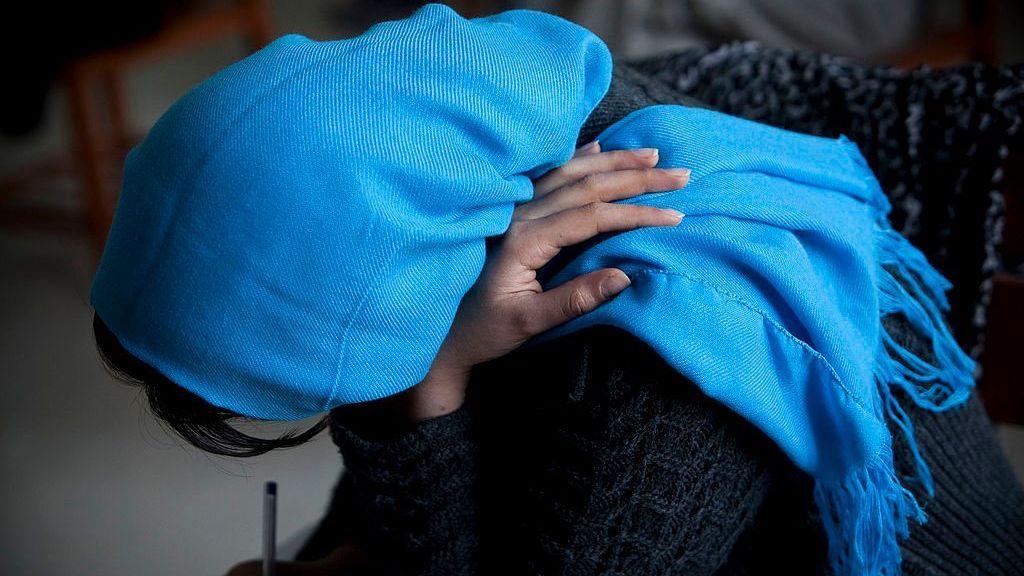
For a young Afghan woman who uses the pseudonym Nooria, the dream of becoming a doctor was forged in tragedy. Growing up in an Afghan village, she watched a 13-year-old boy die from appendicitis because blocked roads prevented him from reaching care in time. That moment, paired with her own academic potential, convinced her that she could be the help that so many rural Afghans desperately need. Today, that dream hangs by a thread, caught in the middle of deteriorating cross-border relations between Pakistan and Afghanistan’s Taliban government.
Nooria is one of hundreds of Afghan medical and dental students studying in Pakistan who now face deportation back to Afghanistan, where the Taliban has barred women from all education beyond primary school and banned them from medical training. Under an order issued earlier this month by Pakistan’s Medical and Dental Council (PMDC), all Afghan students enrolled in Pakistani medical and dental institutions must return to their home country, with regulatory action threatened against colleges that fail to comply. A temporary stay order from the Lahore High Court has paused immediate deportation for students like Nooria in Punjab province, but the next court hearing is scheduled for Friday, and there is no guarantee the protection will be extended.
The crisis comes amid a broader wave of deportations that has swept Pakistan over the last two years. According to United Nations data, more than two million Afghans have left Pakistan since 2023, with hundreds of thousands forcibly deported. The surge in expulsions comes as bilateral relations between Pakistan and the Taliban-led Afghan government have collapsed dramatically. Islamabad accuses the Taliban of harbouring anti-Pakistan militant groups on Afghan soil, a charge the Taliban government denies.
The PMDC’s order has sparked widespread condemnation from human rights groups and former diplomatic officials. Amnesty International has decried the decision as “patently discriminatory and arbitrary”, noting that Pakistan is bound by international human rights law to protect the right to education without discrimination based on national origin. Multiple former Pakistani ambassadors to Afghanistan have also called on the PMDC to reverse course, with one describing the order as “shocking” and framing it as a test of Pakistan’s “humanity, compassion and moral responsibility”.
The PMDC has declined to comment further on the order while the court case is ongoing, but the regulator’s legal representative has told the BBC that none of the affected Afghan students are officially registered with the PMDC. The students, however, say that registration is the responsibility of their host colleges, not individual students, pointing to a PMDC notification issued earlier this year that directs colleges to handle student registration. Afghan student representatives estimate that roughly 1,000 medical and dental students across Pakistan are affected by the order, 65% of whom hold valid student visas. About 15% have either had their visas canceled or have not yet applied, while the remaining 20% are still awaiting visa approval.
While Pakistan’s foreign ministry has stated that Afghan students with valid visas and registered for legitimate courses will be allowed to complete their studies, students say they have yet to see any practical change to their situation. For Nooria, who is in her final year of medical school in Lahore, the stakes could not be higher. She escaped Kabul as the Taliban advanced, won a scholarship to study medicine in Pakistan, and has spent the last five years sacrificing everything – time with family, social connections, even personal rest – to reach her final year of training. Her final exams are just months away, but deportation would mean all that work counts for nothing.
“These five years I have sacrificed everything that would be zero, multiplied by zero,” Nooria said. “And then I would become a poor and helpless Afghan female, facing this destiny. I cannot imagine this.”
Another final year student, Mubin, shared similar despair. He says the order gave students just days to evacuate college accommodation, leaving him completely shocked and disoriented. Many students who have finished their coursework but not completed their required practical House Job training fear they will lose all their academic credits if deported, forcing them to restart their entire medical education from scratch – if they are even allowed to study at all in another country.
For women like Nooria, deportation back to Afghanistan is not just the loss of an education – it is the end of any chance to build a career, help her community, or escape the systemic gender discrimination imposed by the Taliban. As the court prepares to rule on the temporary stay, the future of hundreds of young Afghans who dared to pursue a better future remains deeply uncertain.