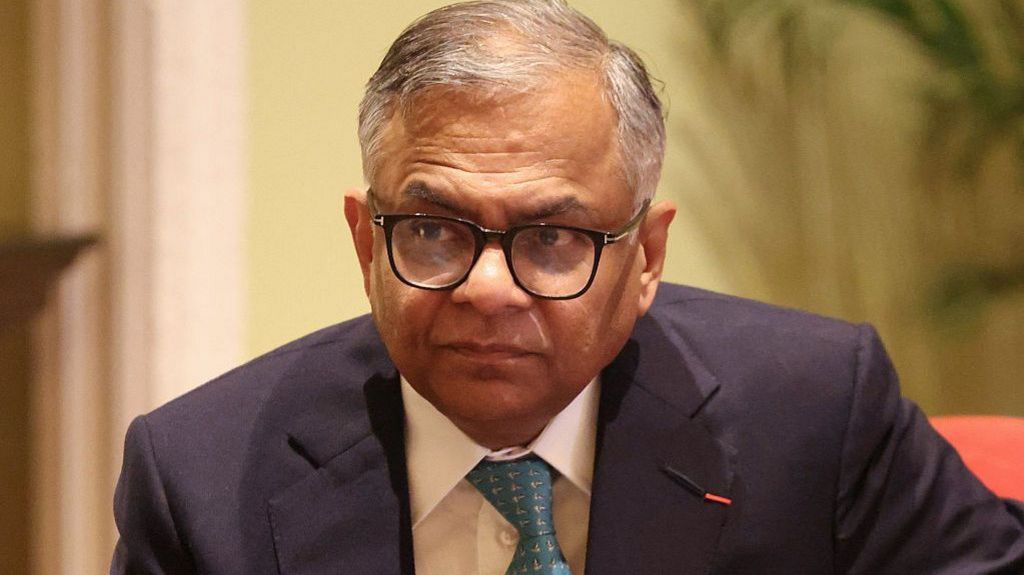
India’s iconic Tata Group, one of the world’s largest and most diversified conglomerates with a $300 billion global footprint that includes brands like Air India, Jaguar Land Rover, and Tata Steel, while also handling iPhone manufacturing for Apple, is now facing unprecedented internal governance turmoil following a controversial board decision to reappoint N. Chandrasekaran as chairman for an additional five-year term.
Chandrasekaran, who originally took on the chairman role in 2017, had previously announced last month that he would step down when his current tenure concludes in February. This announcement came after months of gridlock within the Tata Sons board, where members had failed to reach a unanimous resolution on extending his leadership. In a statement released Thursday, the Tata Sons board revealed that Chandrasekaran had reversed his earlier decision after being asked to reconsider his retirement plans, clearing the way for his reappointment once his current term expires.
However, the move has sparked immediate pushback from Noel Tata, chairman of Tata Trusts—the charitable entity that holds a 66% majority stake in parent company Tata Sons. Noel Tata has labeled the reappointment as “illegal”, throwing the future leadership and strategic direction of the sprawling conglomerate into question. Despite this high-profile dispute, news of Chandrasekaran’s reappointment drove a sharp rally in share prices across publicly traded Tata Group companies on Thursday.
The unique structure of the Tata Group has long been cited as a root cause of its current governance challenges. While Tata Trusts’ majority ownership has delivered tax and regulatory benefits, and enabled the group to advance extensive charitable initiatives, industry analysts have long noted that the overlapping of non-profit and commercial governance structures creates inherent tensions that can spill over into corporate decision-making. Tata Trusts holds three nominations on the Tata Sons board, and disagreements over key issues including board appointments, funding authorization, and the potential public listing of Tata Sons have been simmering for months.
Beyond the leadership dispute, Thursday’s board meeting also marked a pivotal shift for the conglomerate: Tata Sons has agreed to comply with a recent directive from the Reserve Bank of India (RBI) that mandates the mandatory listing of the company. This requirement is a reversal of the group’s long-held opposition to listing, and comes shortly after the RBI rejected Tata Sons’ application to deregister its status as a non-banking financial company (NBFC) earlier this week.
Industry experts widely view Chandrasekaran’s continued leadership as a critical factor in moving the listing process forward, a position that puts him directly at odds with Noel Tata, who has opposed both the listing mandate and Chandrasekaran’s retention as chairman. The internal rift became public knowledge last month when Chandrasekaran openly addressed the divisions, revealing that when his tenure extension was first proposed in February, at least one board member withheld support. He opted to defer a decision in the absence of unanimous backing, and after six months of failed negotiations to resolve the impasse, he made the decision to step down.
In his statement Thursday, Noel Tata outlined the legal basis for his opposition, noting that while four directors voted in favor of reappointment, he as a Tata Trusts-nominated director voted against it. Under Tata Sons’ articles of association, a majority of Tata Trusts-nominated directors must support the measure for it to be valid. Noel Tata emphasized that the board cannot legally convene a meeting or pass a resolution on the chairman’s appointment or reappointment unless both of the required Tata Trusts-nominated directors are present, and cannot validly approve such a resolution without the support of both. “Given that Mr Noel Tata, being one of the Trust nominee directors, voted against the proposal, it was rendered legally void and without any basis,” his statement read.
The ongoing dispute leaves India’s largest conglomerate at a crossroads, with competing claims of legitimacy over leadership and a critical regulatory mandate to implement listing that will reshape the future of the 150-year-old Tata Group.