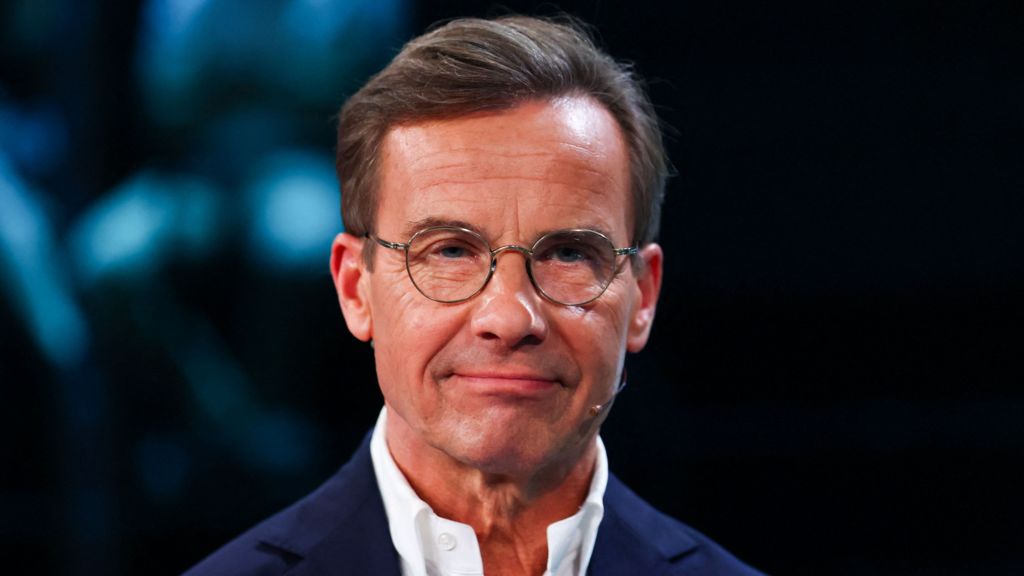
Sweden’s political landscape is facing a major shift following the outcome of the country’s recent general election, where incumbent Prime Minister Ulf Kristersson’s ruling right-wing alliance has been edged out by a centre-left opposition bloc led by former prime minister Magdalena Andersson of the Social Democrats. Kristersson formally announced his resignation in a public post on the social platform X on Thursday afternoon, just days after preliminary vote totals confirmed a razor-thin margin between the two competing coalitions.
In a nation of roughly 10 million people, official preliminary data from the Swedish Election Authority shows the two blocs are separated by only around 50,000 votes. When all preliminary counts are tallied, the centre-left opposition is projected to secure 176 seats in the 349-seat Riksdag, Sweden’s unicameral national parliament, while Kristersson’s right-wing bloc will hold 173 seats. While official formal certification of the results is still pending, with final confirmation expected by the end of this week, the projected outcome has already cleared the way for political transition negotiations.
The right-wing bloc was made up of four parties: Kristersson’s own Moderate Party, the hardline anti-immigration Sweden Democrats (SD), the Christian Democrats, and the Liberals. For the duration of the outgoing government, the SD only provided external parliamentary support to Kristersson’s centre-right coalition, which oversaw significant tightening of Sweden’s migration policy during its term. Kristersson had pledged to grant the SD full cabinet positions if his bloc secured re-election, a promise that will now go unfulfilled. In a notable shift for the far-right party, preliminary results show it lost popular support for the first time since it first entered the Riksdag in 2010, with its vote share dropping three percentage points compared to the 2022 general election.
Vote counting got underway immediately after polls closed on Sunday evening and continued through the first half of this week. By Wednesday, election officials had begun processing late-submitted early ballots and absentee votes from Swedish citizens living abroad that did not arrive before election day.
Sweden’s political system is structured around two competing multi-party blocs, with four major parties aligned on the right and four on the left, meaning coalition and minority governments are the norm rather than the exception. Even before the final results were confirmed, Andersson had already launched exploratory government formation talks with her three bloc partners: the Left Party, the Centre Party, and the Green Party. However, political analysts warn that these negotiations could stretch on for weeks, due to deep policy disagreements between the allied parties particularly on tax policy. Recent Swedish history bears this out: following the 2022 election, it took 37 days to agree on a governing coalition, and the 2018 election saw 134 days of drawn-out talks before a government could be formed.