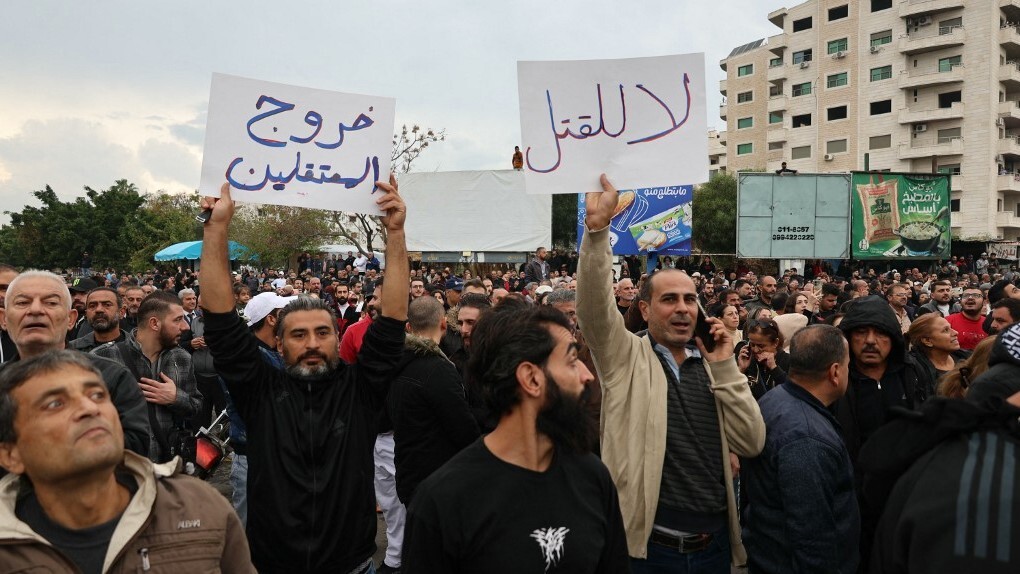
Nearly a year after brutal sectarian violence left at least 1,500 Alawites dead in coastal Syria, a military criminal court in the northern city of Aleppo has issued the first convictions in a widely watched mass trial, marking a pivotal moment for accountability amid ongoing post-conflict sectarian tensions across the country.
Four of the 14 defendants on trial received verdicts on Thursday, with additional rulings scheduled for September 24. Two former supporters of ousted president Bashar al-Assad were sentenced to death: one from Latakia, the historic heartland of Syria’s Alawite community, was condemned to death by hanging after being convicted of orchestrating aggression to incite civil war and stoke sectarian clashes. A second Assad loyalist also received a death sentence, while a third former regime supporter was handed a life prison term. One government officer, a serving member of the Syrian Ministry of Defence under current transitional president Ahmed al-Sharaa, was sentenced to 20 years in prison after being found guilty of intentional murder. A fourth defendant was acquitted of all charges.
The 14 defendants tried in this case are split evenly between seven current members of forces aligned with Sharaa’s transitional government and seven loyalists to the former Assad regime. When the trial launched in November, multiple defendants linked to the old regime entered not guilty pleas. One Assad supporter even claimed he was present in Lebanon at the time of the 2025 violence, with no connection to the bloodshed.
The massacre that sparked these trials unfolded last year, when small-scale armed attacks on Syrian security forces by suspected Assad loyalists in Latakia quickly escalated into widespread, targeted sectarian violence targeting the Alawite community, the minority religious group to which the Assad family has belonged for decades. A 2025 Reuters investigation later traced the bulk of the retaliatory violence to senior security officials based in Damascus, a finding that has raised questions about the role of current transitional government forces in the bloodshed.
The 2025 massacre came just months after Assad was ousted from power in December 2024, ending his family’s 50-year hold on power and forcing the former president to flee into exile in Moscow. Syria’s 13-year civil war, which began in 2011 when Assad’s forces launched a brutal crackdown on peaceful pro-democracy protesters, has already left hundreds of thousands dead and millions displaced both within Syria and across the globe.
While a small portion of Alawites initially backed the 2011 pro-democracy movement, rising persecution by the Assad regime and growing fears of sectarian armed factions within the opposition pushed most of the community to align with the former government over the course of the war. Since Assad’s fall, Alawite communities have repeatedly raised alarms over escalating sectarian revenge attacks, kidnappings and targeted violence targeting Alawite women and girls.
In July 2025, global human rights group Amnesty International published a report documenting credible evidence of at least 36 kidnappings of Alawite women and girls in the months following Assad’s ouster. The Syrian Feminist Lobby has put the number of missing Alawite women and girls at 80 since the start of 2025, confirming 26 of those cases as confirmed kidnappings. Multiple survivors have reported being subjected to sectarian abuse, with their attackers framing the assaults as revenge for decades of Assad regime repression against majority Sunni communities.
Leaders of Sharaa’s transitional government have pushed back against these reports, claiming that accounts of targeted sectarian violence and kidnappings have been heavily overstated. In an April interview with the *New York Times*, interior ministry spokesman Nour al-Din Baba said a government investigation into 42 reported kidnappings found only one case to be legitimate. The government’s handling of the massacre and ongoing sectarian tensions has drawn fierce international criticism from Alawite advocacy groups. During an official visit to London earlier this year, Sharaa was met with large protests from Alawite and Alevi communities — a related religious group prominent in Turkish and Kurdish communities — who accused his government of facilitating what they call a genocide against Alawites in post-Assad Syria.
“At a time when Syrians continue to endure displacement, insecurity, and marginalisation, allowing such a figure to enter the UK risks sending the wrong message: that accountability can be overlooked, and that those associated with violence can be normalised on the international stage,” explained Maher Hamadouch, director of the UK-based Syrian Coastal Society, an advocacy group representing Alawite interests. Hamadouch, who has previously defended Assad’s rule, told Middle East Eye that his group is calling on the UK government to refuse any platform or diplomatic legitimacy to individuals linked to extremist activity or human rights violations.
As the Syrian state navigates its first full year of transition after Assad’s departure, these first convictions have drawn close international attention, with stakeholders on all sides watching to see whether the transitional government will deliver impartial accountability for the sectarian violence that continues to deepen divides in the war-ravaged country.