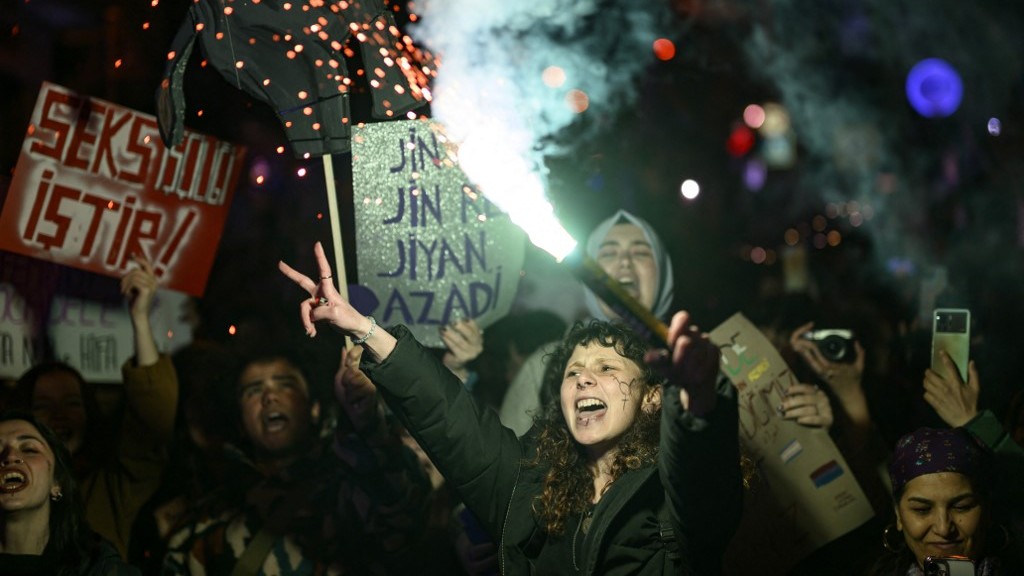
Human rights watchdog Amnesty International has made a landmark call for the international arrest of 87 senior Iranian officials, accusing them of direct involvement in crimes against humanity carried out during the brutal state crackdown on the 2022 “Woman, Life, Freedom” uprising. The demand is anchored in a sprawling 1,000-plus-page investigative report, titled *Architects of Atrocities: State Machinery Orchestrating Crimes Against Humanity in Iran’s 2022 Woman Life Freedom Uprising*, which lays bare the full scale of systematic repression deployed by Tehran to crush the mass anti-government movement. The 2022 nationwide protests were ignited by the death of 22-year-old Mahsa Amini, an Iranian-Kurdish woman who died in morality police custody shortly after being arrested for allegedly violating the country’s strict mandatory hijab regulations. In the months of unrest and state-led retaliation that followed, hundreds of protesters and bystanders lost their lives.
After years of meticulous evidence-gathering, Amnesty’s investigation has verified the deaths of 377 civilians caught up in the crackdown, 56 of whom were children. Disproportionately, the victims came from Iran’s marginalized Kurdish and Baloch ethnic minority communities, groups that have long faced systemic discrimination under the Islamic Republic. “Iranian authorities committed crimes against humanity, against protesters demanding dignity, human rights and fundamental political change,” Agnes Callamard, Amnesty International’s secretary general, told reporters at the report’s official launch press conference on Wednesday.
Callamard detailed the full scope of state abuses, confirming that Iranian security and political institutions carried out deliberate crimes against humanity including extrajudicial murder, widespread torture, enforced disappearances, arbitrary mass imprisonment, sexual violence including rape, and targeted persecution on the basis of political belief, gender identity, ethnicity, and religion—all in a coordinated campaign to annihilate the uprising. The rights group is pushing for two key international actions to deliver accountability: first, it calls on the United Nations General Assembly to create a dedicated international criminal justice mechanism that can investigate crimes, prosecute perpetrators, and deter future repressive crackdowns on dissent. Second, it demands the UN Security Council refer the entire situation in Iran to the International Criminal Court’s Office of the Prosecutor for formal investigation.
Joining Callamard at the press conference was Mahsa Piraei, an Iranian activist whose mother was shot and killed by security forces during protests in the western city of Kermanshah. Piraei emphasized that accountability cannot stop at low-level officers who carried out violence, arguing that blame extends all the way up Iran’s chain of command. “The person who fired the shot that killed my mother must be held accountable, but it must not stop there,” she said. “My mother was not killed by the actions of just one person – she was killed by a system.”
In a striking rebuke of outside military intervention, Callamard also warned that ongoing unlawful military attacks on Iran by the United States and Israel are severely undermining global efforts to secure justice for victims of the 2022 crackdown, and called for an immediate enduring ceasefire across Iranian territory. Since the US-Israeli military campaign launched in February, at least 3,600 Iranians—including both senior government officials and civilian non-combatants—have been killed. The US has publicly justified its military assault by pointing to a separate January 2025 crackdown on anti-government demonstrations, where Iranian security forces killed thousands of protesters within days.
But rights groups have documented that the US-Israeli war has also killed and wounded Iranian dissidents and opponents of the Islamic Republic, including political prisoners held in jails located in strategically targeted areas. In response to the external invasion, the Iranian government has also sharply ramped up internal repression against domestic dissent. Six of the 87 officials named in Amnesty’s report have already been killed in targeted strikes during the war, while other senior figures implicated in the 2022 crackdown—including Islamic Revolutionary Guards Corps chief Ahmad Vahidi—have received promotions within the Iranian government.
Callamard made clear that Amnesty opposes both the targeted killing of Iranian officials and the efforts by Washington and Tel Aviv to instrumentalize documented human rights abuses in Iran to justify their full-scale military assault. “No matter how complex the panorama is…we want to insist that international law should guide the path of action right now,” she said. “A principled response required rejecting both unlawful military attacks and impunity for crimes against humanity.”