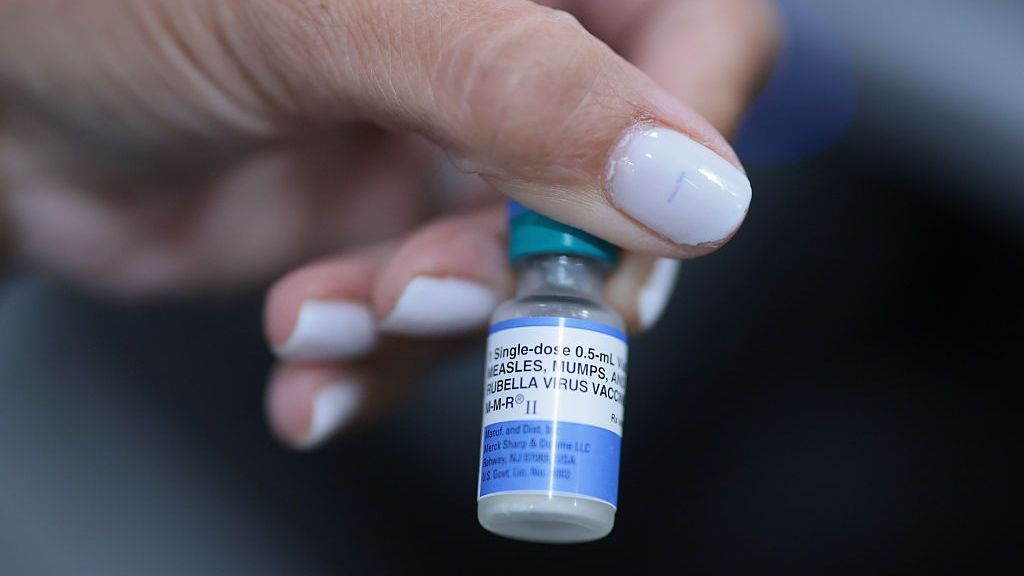
The United States is facing its most severe measles outbreak in decades, with a fourth death now confirmed in Pennsylvania, according to state public health officials. The latest fatality, an 18-year-old from Mifflin County, died from acute encephalomyelitis, a rare and life-threatening neurological complication triggered by the highly contagious measles virus, local coroner officials confirmed.
So far in 2025, Pennsylvania has recorded more than 600 confirmed measles cases, with the vast majority concentrated in Lancaster County. All four recent deaths in the state are tied to the ongoing outbreak: two unvaccinated adults — the 18-year-old and a 40-year-old woman who died of measles-induced respiratory failure last week — and two infants. Public health protocols recommend children receive their first dose of the combined measles, mumps, and rubella (MMR) vaccine at 12 months of age, meaning young infants are not yet eligible for protection. Local coroners and state health officials have verified that both infant deaths were directly linked to measles complications: one six-week-old child, born with the rare genetic condition Amish lethal microcephaly, died from measles infection in mid-August, while a second infant died after a measles-caused enlarged spleen ruptured, leading to fatal internal bleeding.
Once declared eliminated in the U.S. in 2000 through widespread successful vaccination programs, measles has made a devastating comeback in recent years. This year alone, the country has seen the highest number of measles deaths since the 1990s. In 2024, an outbreak centered in Texas’ Mennonite community claimed three lives, including two children. Public health experts universally attribute this resurgence to rising vaccine hesitancy across the country, which has driven immunization rates below the 95% threshold required to maintain herd immunity — the level of vaccination needed to stop sustained community spread of the virus.
The rising death toll has sparked open political tension between Pennsylvania’s Democratic Governor Josh Shapiro and U.S. Health Secretary Robert F. Kennedy Jr., a prominent vaccine skeptic. Shapiro has publicly accused Kennedy of spreading dangerous misinformation about MMR vaccines, and confirmed he would withhold personal details about the deceased from the top federal health official to protect victim families’ privacy. Kennedy has cast doubt on official findings that the two infant deaths were caused by measles, claiming the deaths were due to unrelated preexisting conditions and accusing Shapiro of political grandstanding.
Following the public dispute, Pennsylvania’s Department of Health released a statement defending its death investigations, noting that it had conducted rigorous joint reviews with local coroner offices to confirm each death was measles-related. “These investigations included confirming clinical evidence of a measles infection, a positive laboratory test, and that the death was not due to an unrelated cause,” the department said. The U.S. Centers for Disease Control and Prevention has so far declined to update its national death count pending completion of formal reviews, a position Kennedy has cited to back his questioning of the state’s findings.
A November review by global health bodies will decide whether the U.S. will officially lose its measles elimination status, a designation Canada lost in 2024. Kennedy, who has led a major overhaul of U.S. vaccine policy since taking office, has faced widespread condemnation from public health experts who argue his ambiguous and often critical messaging around the safe, effective MMR vaccine has undermined national efforts to contain the growing outbreak. While Kennedy has acknowledged that the worsening measles crisis is a global issue, telling a Senate committee last month that “the whole world had their worst measles year,” critics say his policy changes and anti-vaccine rhetoric have accelerated the outbreak in the U.S.